
Standing Seam Metal Roof Flashings in Los Angeles: Where Metal Roofs Actually Leak
A standing seam panel almost never leaks. The places it connects to everything else do.
Metal roofs leak at transitions and penetrations: chimneys, sidewalls, valleys, skylights, and vents. We hand-fabricate flashings, z-bars, and cleats on site so the system sheds water by design instead of depending on a bead of caulk that dries, shrinks, and cracks after a few years.
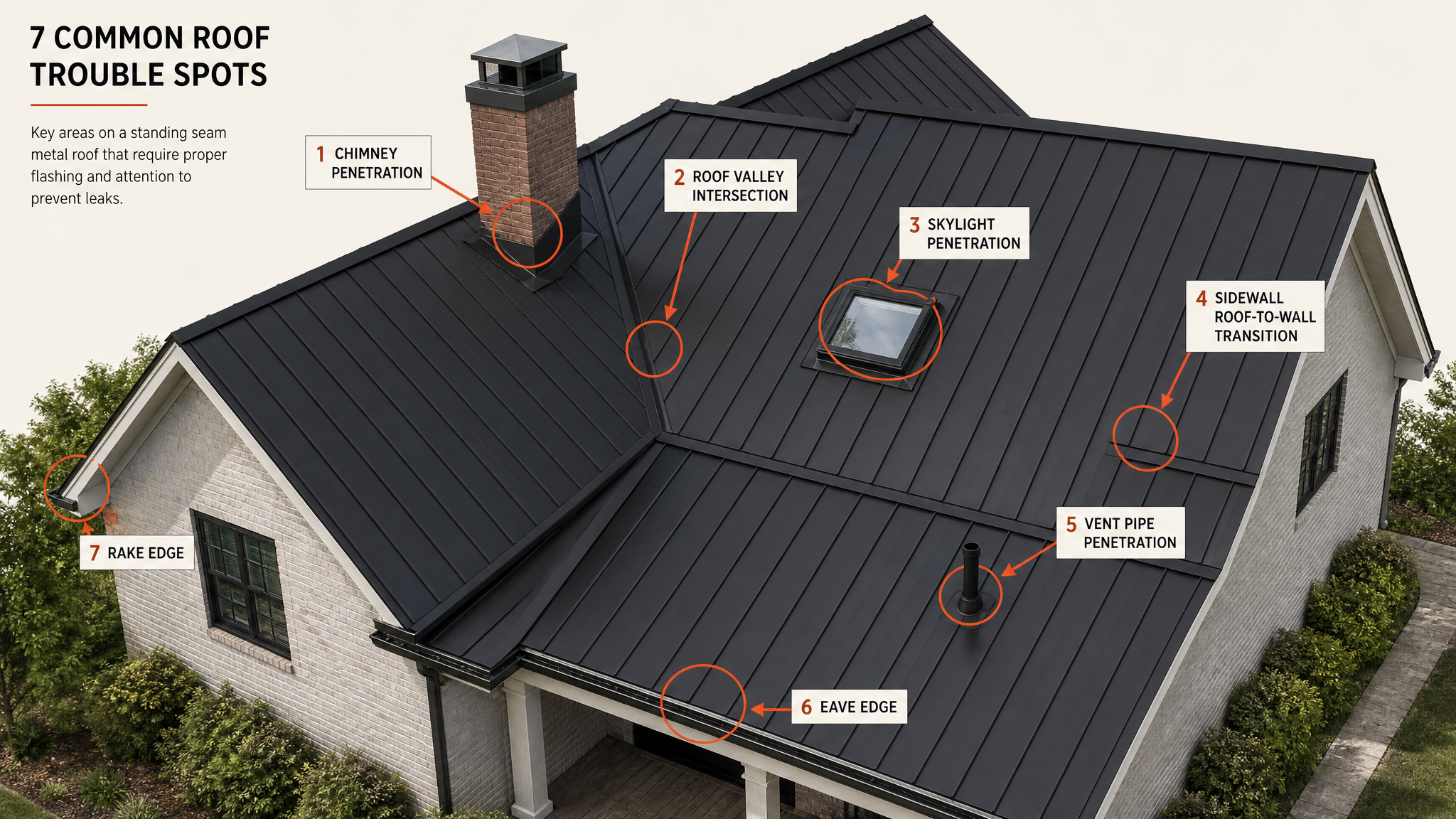
Standing Seam Flashing Trouble Spots
Where Do Metal Roofs Actually Leak?
Standing seam panels almost never leak across the open field of the roof. Leaks occur where the roofing system changes direction or passes around an obstacle. Every transition creates another opportunity for water to enter if the flashing is not built correctly.
The highest-risk locations include:
- Chimneys
- Roof-to-wall intersections
- Sidewalls
- Valleys
- Skylights
- Plumbing vent pipes
- Eaves and rakes
These areas collect, redirect, or interrupt the natural flow of water.
A metal panel is designed to shed water downhill.
Once the roof encounters a chimney, valley, wall, or penetration, the waterproofing depends on the flashing details rather than the panel itself.
That is why flashing workmanship determines whether a metal roof remains watertight for decades or develops recurring leaks.
The good news is that these areas can be built to last.
The key is using properly designed flashing that becomes part of the roofing system instead of relying on sealants as the primary defense against water intrusion.
Why Do Caulk and Pre-Bent Flashings Fail on a Metal Roof?
Most metal roof leaks are caused by flashing details that depend on caulk instead of proper sheet-metal design. Factory-made flashing pieces and heavy beads of sealant are quick to install, but they create future maintenance instead of a permanent waterproofing system.
Many contractors install stock flashing that is designed to fit dozens of different roof conditions.
When the flashing does not fit perfectly, they bridge the gaps with caulk.
The roof may look watertight when the job is finished.
Over time, it is not.
Caulk is exposed to constant sunlight, heat, and movement.
It dries out.
It shrinks.
It cracks.
Once the sealant fails, water follows the same joints that were supposed to be protected.
Common shortcuts include:
- Factory-made flashing bent to "close enough"
- Heavy beads of exposed caulk
- Face-nailed flashing with exposed fasteners
- Flashing details that rely on sealant instead of overlapping sheet metal
A properly built standing seam roof should shed water because of its design, not because a bead of caulk is expected to remain flexible for decades.
That difference separates a permanent flashing system from one that becomes a recurring maintenance item.
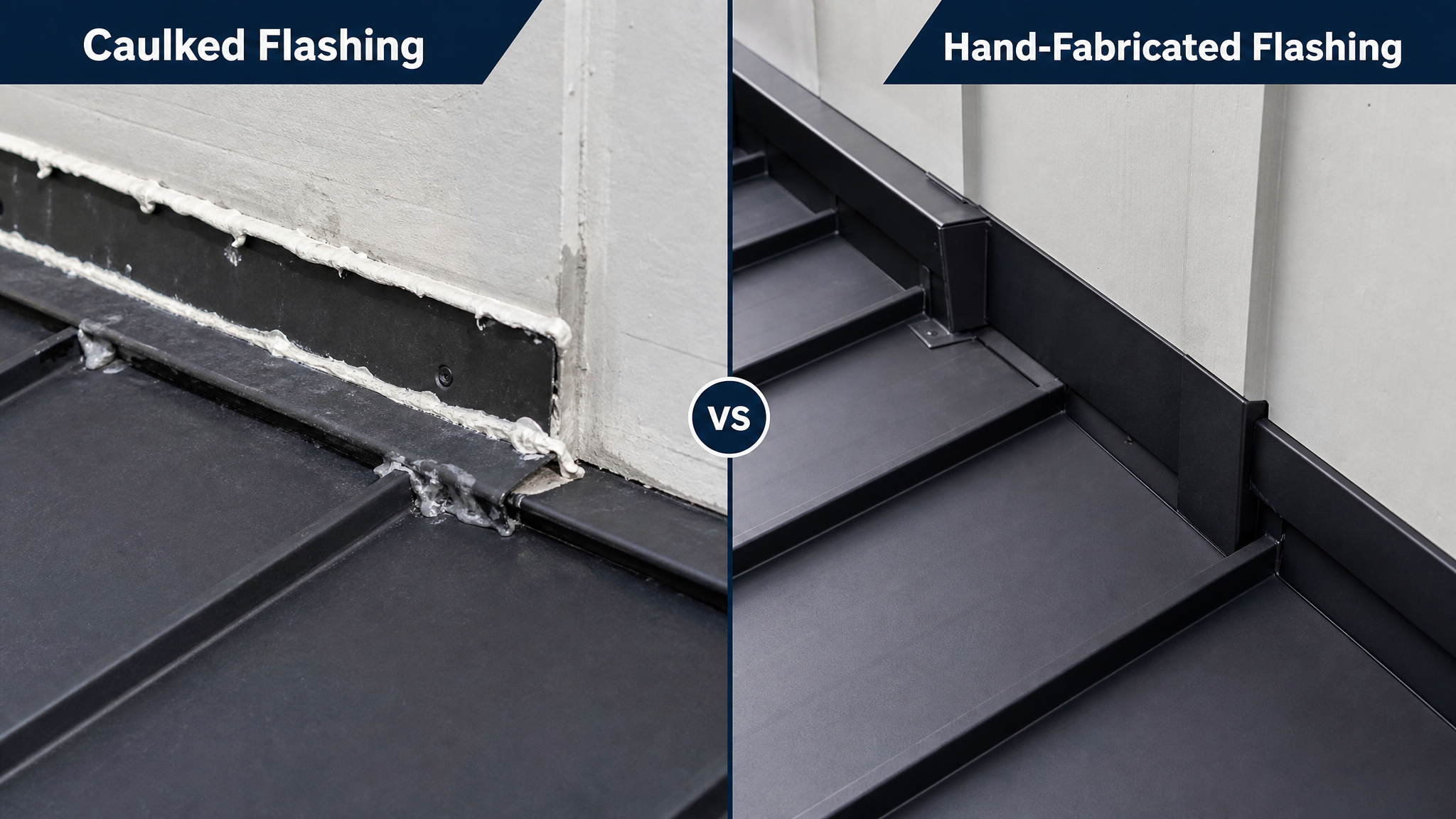
Caulked Flashing vs Hand-Fabricated Flashing
How Do We Fabricate Flashings, Z-Bars and Cleats?
Flashing is sheet metal. That sounds obvious, but most roofers do not have a sheet-metal specialist, which is exactly why their flashings end up relying on caulk. We do. Our C-43 sheet-metal specialist forms every flashing, z-bar, and cleat on site.
Every roof is different.
Roof pitches change.
Wall intersections vary.
Chimneys, skylights, and valleys are never located at exactly the same angle or in exactly the same position.
That is why we do not install one-size-fits-all flashing.
Every flashing component is fabricated specifically for your roof from matching Kynar-coated steel, or matching aluminum or copper on coastal projects where those materials are specified.
Instead of face-nailing flashing to the roof and sealing the edges with caulk, we build a mechanically integrated system.
Our flashing details include:
- Hand-fabricated flashings
- Custom z-bars
- Continuous cleats
- Hemmed edges that lock mechanically into the roofing system
Each piece overlaps the next so water naturally flows back onto the roof and continues downhill.
The waterproofing comes from the way the sheet metal is designed and assembled, not from exposed sealant.
Every standing seam panel is also formed on site to the exact length required before these custom flashing details are integrated into the roof.
Learn more: Standing Seam Metal Roof Installation
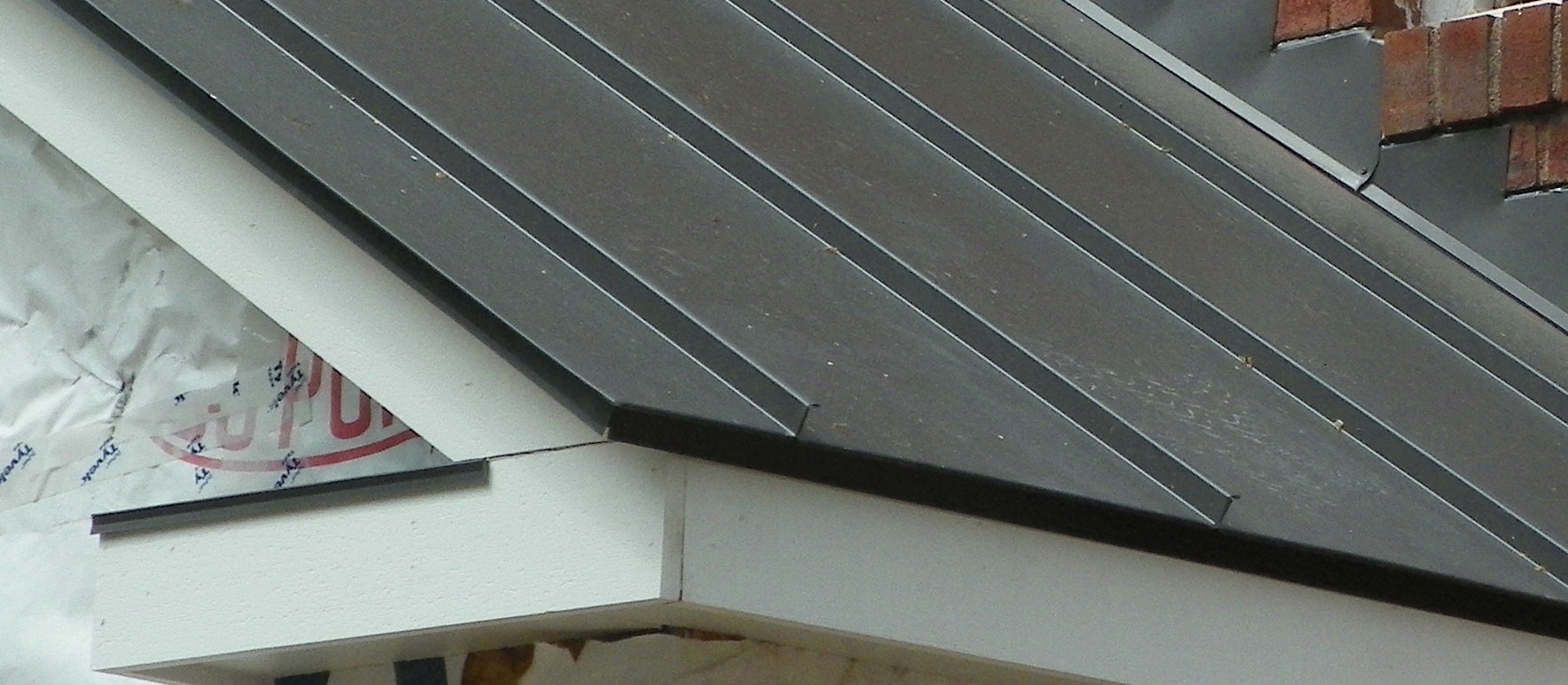
Hand-Fabricated Standing Seam Flashings
Where Do Metal Roofs Actually Leak?
Every transition on a roof requires a different flashing detail. Water behaves differently around a chimney than it does in a valley or along a sidewall, so each location demands sheet metal that is fabricated for that specific purpose.
Chimneys
A properly flashed chimney uses step flashing, not a single wrapped piece of metal.
Step flashing consists of a series of individual metal pieces that overlap each other, with each piece directing water onto the one below it. A separate counterflashing is cut into the masonry and covers the top edge of the step flashing, preventing water from getting behind it.
Larger chimneys also require a cricket (saddle) on the uphill side to split the flow of water and prevent pooling behind the chimney.
Many leaking chimneys are built with a single piece of flashing sealed with caulk instead of a layered step-flashing system.
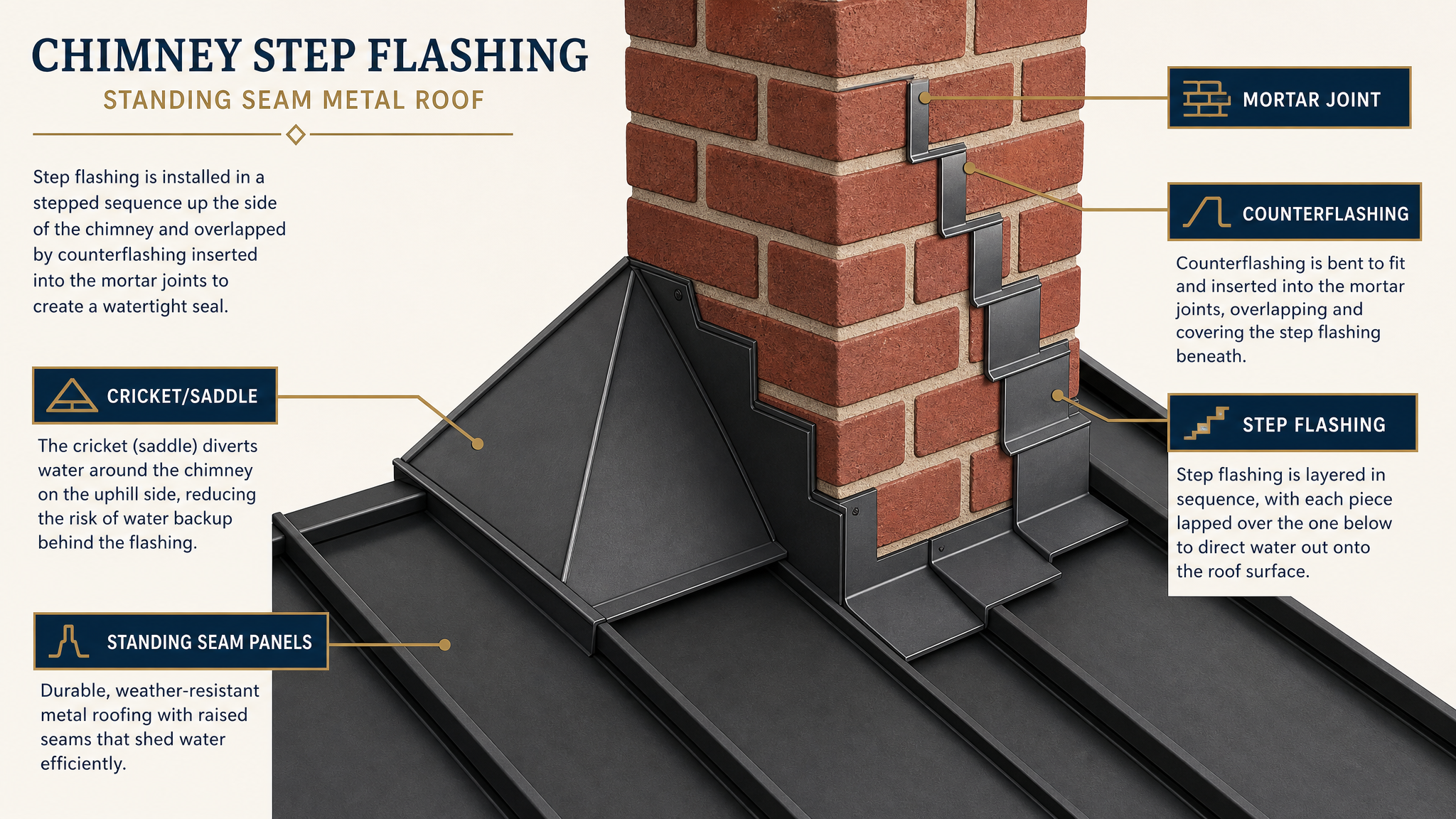
Proper Chimney Step Flashing
Roof-To-Wall And Sidewalls
Where a roof meets a vertical wall, flashing must redirect water away from the wall and back onto the roof surface. Properly fabricated roof-to-wall and sidewall flashings are mechanically integrated into the standing seam system instead of depending on exposed sealant.
Valleys
Roof valleys carry more water than any other part of the roof. Custom valley flashing controls that concentrated flow and keeps water moving safely off the roof without allowing it beneath the panels.
Skylights And Plumbing Vents
Every roof penetration interrupts the roofing system. Custom flashing is fabricated for each skylight and vent so water is directed around the opening rather than underneath it.
Eaves And Rakes
The roof perimeter completes the waterproofing system. Hand-fabricated eave and rake flashings, working together with continuous cleats and hemmed panel edges, create durable roof edges while directing runoff into the gutter system.
How Do Flashing and Ice and Water Shield Work Together?
Flashing and ice-and-water shield serve different purposes, but they are designed to work as one waterproofing system. The flashing sheds water back onto the roof surface, while the ice-and-water shield provides a secondary waterproof layer beneath the flashing in the areas most exposed to water.
The flashing is the first line of defense.
Its shape, overlaps, hems, and mechanical connections direct water safely around chimneys, valleys, skylights, roof-to-wall transitions, and other roof details.
Beneath those critical areas, a high-temperature self-adhered ice-and-water membrane provides backup protection if wind-driven rain ever gets past the flashing.
Neither system replaces the other.
Together, they create a layered waterproofing system that protects the roof where leaks are most likely to occur.
Learn more: Ice & Water Shield On A Metal Roof
What Other Questions Should I Ask?
Get a Free Quote by Email
Every flashing detail on your roof will be hand-fabricated on site by our C-43 sheet-metal specialist. We will show you exactly how we waterproof every chimney, valley, sidewall, and penetration so nothing depends on a bead of caulk.
No salesperson.
No pressure.
You're hiring the contractor other roofers hire.
Helpful Resources
CSLB #1234567 · (818) 937-4500