Ice and Water Shield on a Los Angeles Metal Roof: Where It Belongs
Water doesn't leak through the middle of a panel. It collects in the valleys, rushes off at the eaves, and pools wherever the roof is interrupted.
Ice-and-water shield is a self-adhered membrane that adds a second waterproof layer exactly where water concentrates: in valleys, at the eaves, in low spots where it can pool or sit, and around chimneys, skylights, and vents. It bonds to the deck beneath the metal, backing up the roof where leaks actually start.
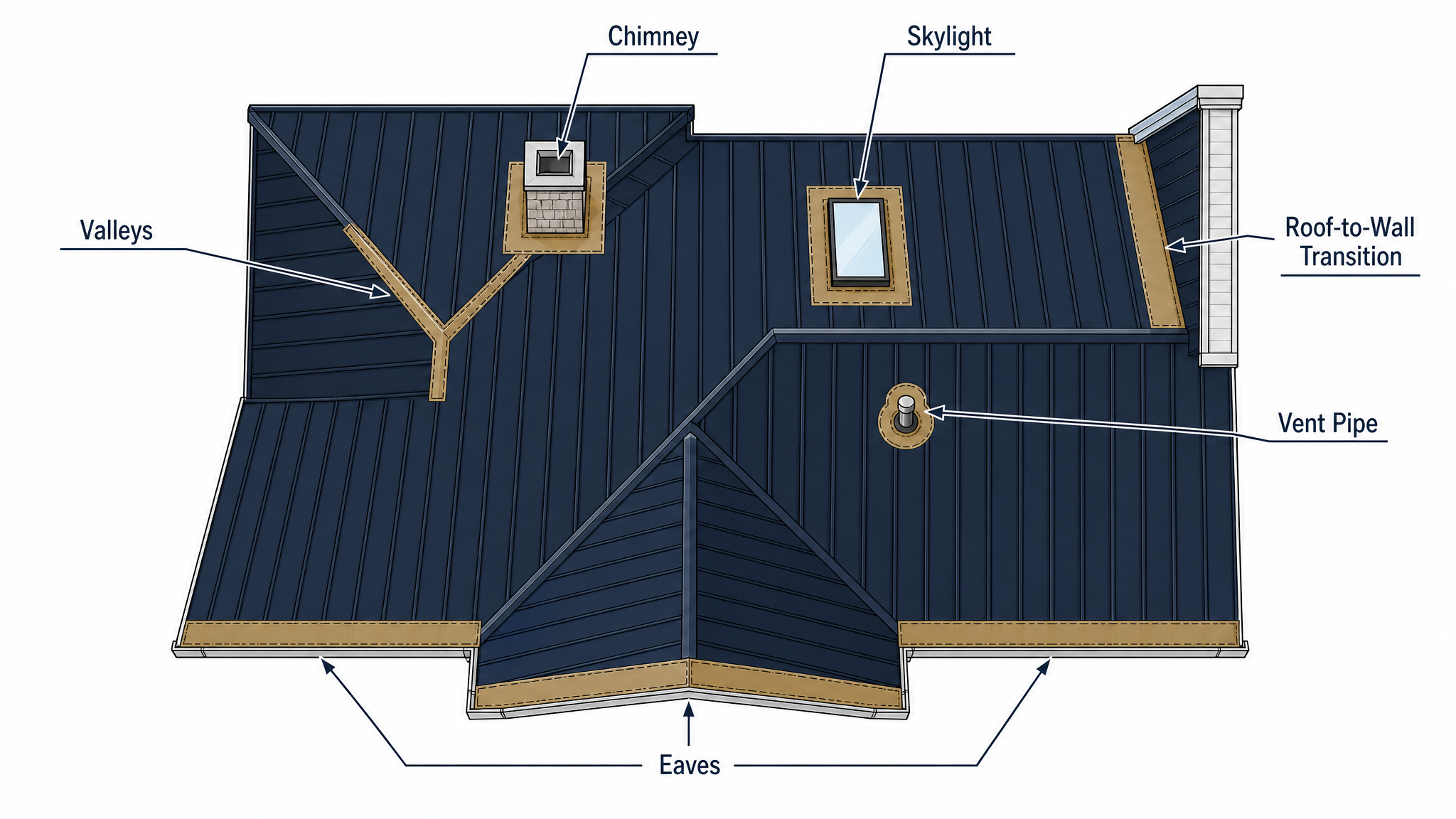
Ice & Water Shield Placement Diagram
What Is Ice & Water Shield?
Ice-and-water shield (also called an ice and water barrier) is a self-adhered waterproof membrane installed directly on the roof deck before the metal roofing system. It creates a second layer of protection beneath the finished roof in the places where water is most likely to collect or enter.
Unlike conventional roofing underlayment, the membrane bonds tightly to the roof deck.
If nails or screws pass through it, the material seals tightly around the fastener instead of leaving an open hole.
That self-sealing ability is what makes it especially effective beneath standing seam metal roofing.
Its job is not to protect the entire roof.
Its job is to reinforce the roof's highest-risk areas with an additional waterproof layer beneath the metal.
When seasonal storms move through Southern California, valleys, eaves, low spots, and roof penetrations receive far more water than the middle of a roof panel.
That is exactly where this membrane belongs.
Where Does It Go On A Metal Roof?
Ice-and-water shield belongs where water naturally concentrates, rushes off the roof, or has an opportunity to pool. It reinforces the roof's highest-risk areas with a second waterproof layer beneath the metal. It is not a replacement for full-deck underlayment.
Water does not flow evenly across a roof.
As rain moves downhill, certain areas collect far more water than others.
Those locations deserve additional protection beneath the finished roofing system.
We install high-temperature self-adhered membrane at:
- Valleys, where water concentrates and rushes off
- Eaves, where water sheds off the roof in the greatest volume
- Low-slope areas and any location where water can pool or sit
- Chimneys, skylights, and plumbing vent pipes
- Roof-to-wall transitions
These areas experience the greatest water exposure during heavy storms and wind-driven rain.
Ice-and-water shield adds another waterproof layer beneath the metal exactly where the roof works hardest.
It is important to understand what this membrane is not.
It is not installed across the entire roof as a substitute for underlayment.
The full roof deck is protected by a dedicated high-temperature underlayment, while ice-and-water shield reinforces the locations where water naturally concentrates.
Proper flashing details complete the waterproofing system around these roof transitions.
Learn more:
Standing Seam Flashings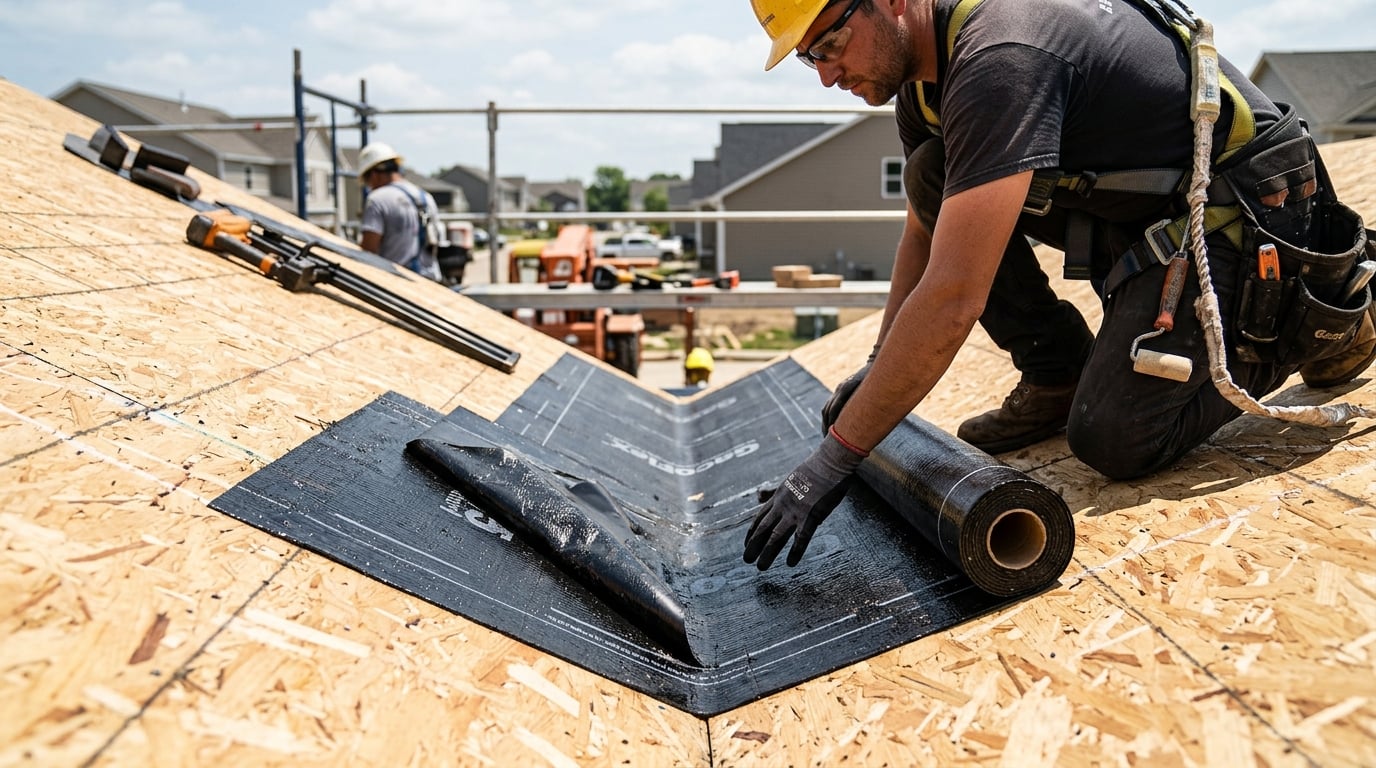
High-Temperature Ice & Water Shield Installed In A Roof Valley
Why Does Ice and Water Shield Matter on a Dry Los Angeles Roof?
Los Angeles does not need ice-and-water shield because of snow. It needs it because heavy seasonal downpours, wind-driven rain, and roof geometry concentrate water in predictable locations. Valleys carry the greatest volume, eaves shed it, and low spots can allow it to pool.
Water always follows the path of least resistance.
As it moves down the roof, it converges into valleys, accelerates toward the eaves, and lingers wherever drainage slows.
Those areas experience far more water exposure than the rest of the roof during every significant storm.
Wind-Driven Rain
Strong winds can force water uphill beneath roofing components and into the roof's most vulnerable areas, increasing the demand on the waterproofing beneath the metal.
Roof penetrations also require additional protection because they interrupt the roof surface, but the driving force is still the same.
Water collects, concentrates, and changes direction around them.
That is why a properly installed standing seam roof reinforces the places where water naturally flows instead of treating every square foot of the roof the same.
How Does Ice and Water Shield Pair With Full-Deck Underlayment?
Ice-and-water shield and full-deck underlayment are designed to work together, not replace one another. Ice-and-water shield adds a second waterproof layer where water concentrates, while high-temperature underlayment protects the entire roof deck beneath the metal panels.
Each material has a different job.
The self-adhered membrane reinforces valleys, eaves, low areas, and other vulnerable roof details.
The high-temperature underlayment provides continuous protection across the rest of the roof deck.
A properly built standing seam roofing system uses both, with each installed where it performs best.
Learn more:
Metal Roof UnderlaymentWhere Do We Place Ice and Water Shield on a Metal Roof?
Not every self-adhered membrane is designed for a metal roof.
A membrane installed beneath standing seam metal must be high-temperature rated. Standard asphalt ice-and-water products can soften, flow, or deteriorate under the heat generated by a metal roof. We install a high-temperature self-adhered membrane anywhere additional waterproof protection is required.
A dark standing seam roof can heat the materials beneath it far beyond the temperatures seen under asphalt shingles.
That is why products intended for conventional roofing are not the right choice beneath metal panels.
A high-temperature membrane maintains its performance under the heat produced by the roofing system while continuing to provide a durable waterproof barrier.
This is one of the details that separates a standing seam roof built for decades of service from one built to meet a lower price.
What Other Questions Should I Ask?
Get a Free Quote by Email
For an existing home, we measure your roof from high-resolution satellite imagery and email you a detailed written quote. For new construction, upload your architectural plans and we will prepare your quote from those.
No site visit until you're ready.
No sales calls.
No pressure.
You're hiring the contractor other roofers hire.
Helpful Resources
CSLB #1234567 · (818) 937-4500