Solar
Solar for Standing Seam Metal Roofs in Los Angeles
Most people assume every roof works about the same for solar. They do not. The roof under your solar panels determines how they're mounted, how long the system lasts before major work is needed, and how much you'll spend maintaining both over the decades.
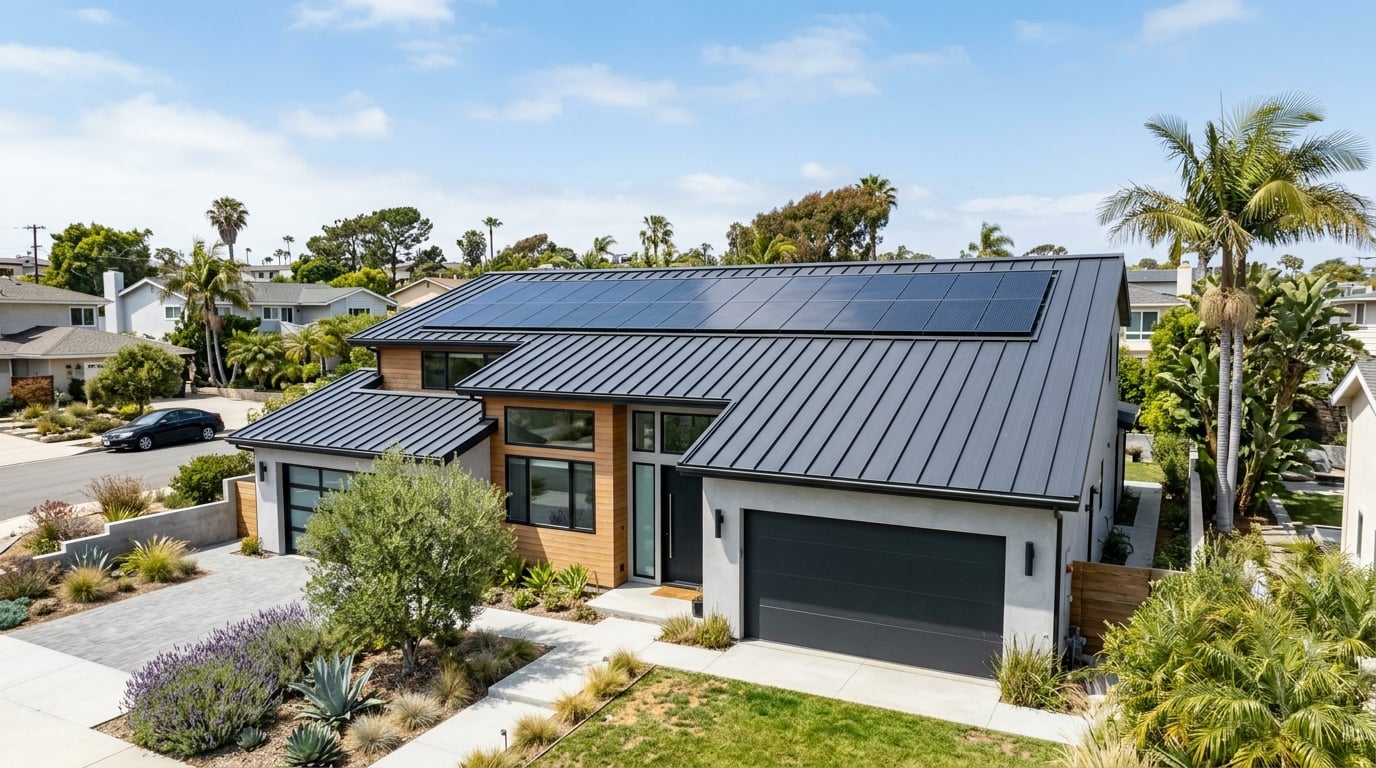
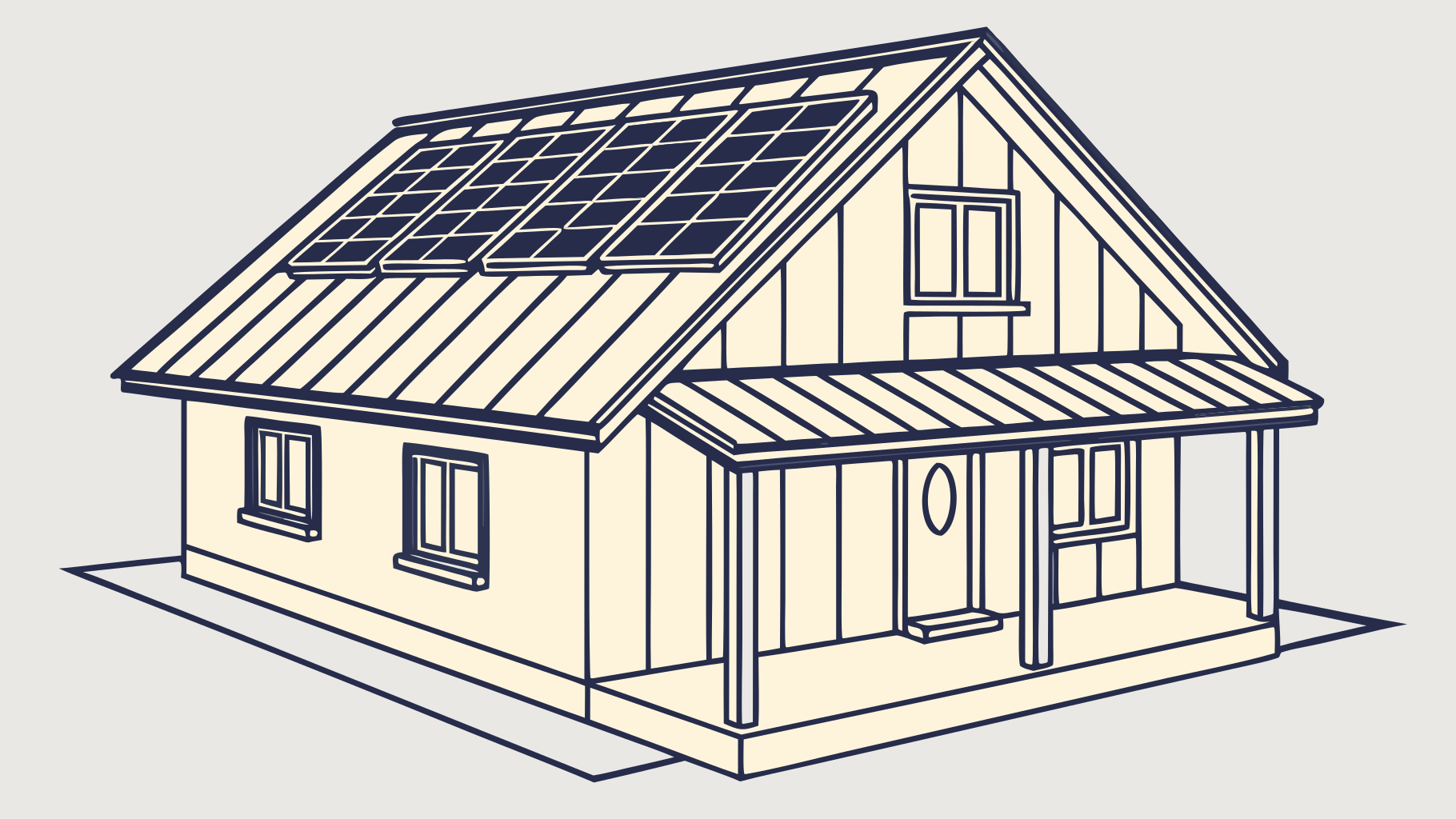
A standing seam metal roof is the best platform for solar because it solves the two biggest long-term problems homeowners face. The panels mount without drilling through the roof, and the roof itself lasts long enough that it typically outlives the solar system by decades.
That makes the roof just as important as the solar panels sitting on top of it.
We install both the standing seam roof and the solar system. Instead of coordinating separate contractors, you work with one company that understands every part of the project from roofing to electrical.
If you're comparing a new standing seam roof against clay tile or concrete tile, this page explains exactly why metal has become the preferred platform for residential solar and how it saves homeowners money over the life of the system.
For more about how we build our standing seam roofs, see standing seam installation.
How Do Solar Panels Attach to a Standing Seam Metal Roof?
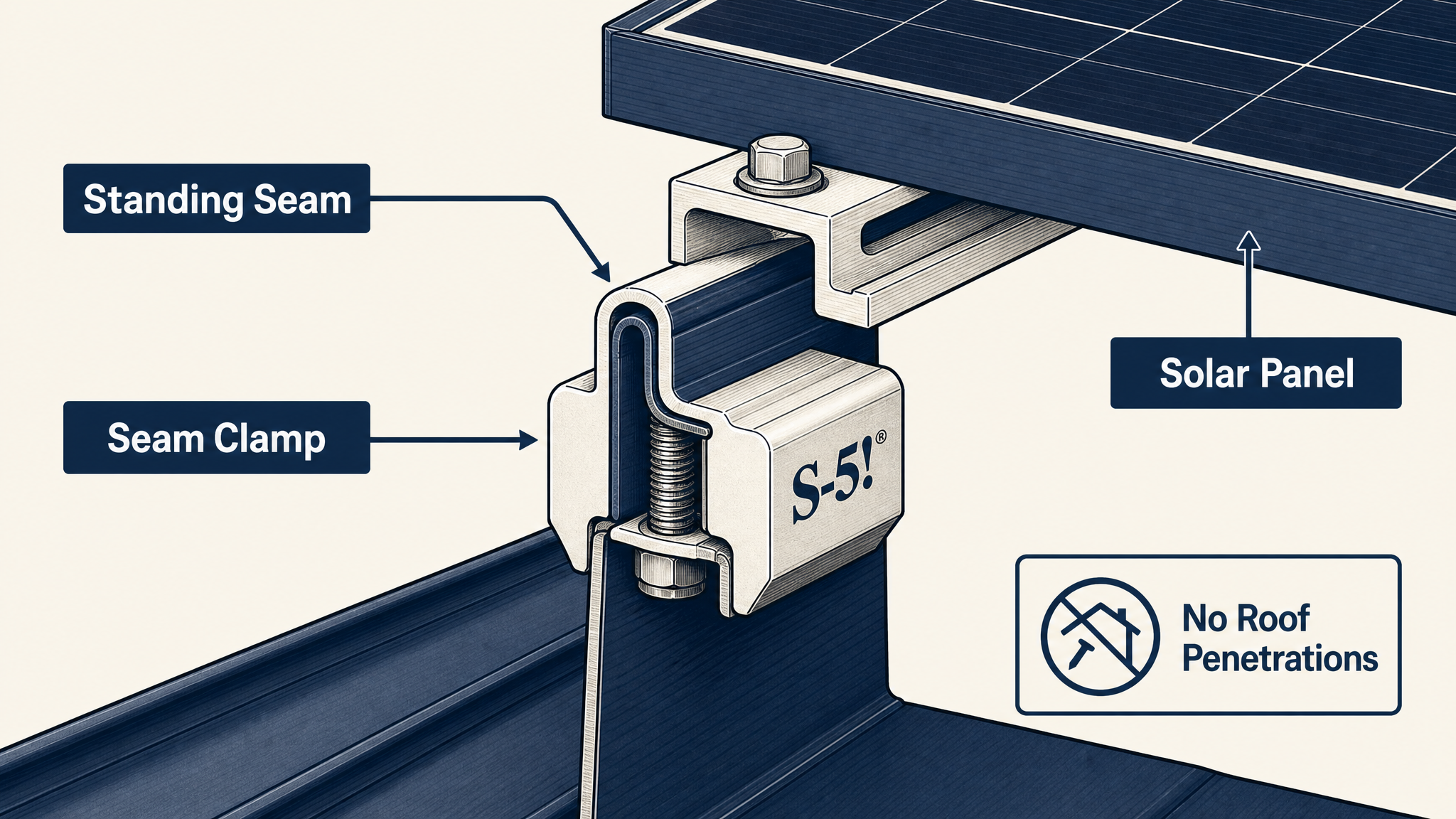
Solar panels attach to a standing seam metal roof with non-penetrating seam clamps instead of bolts drilled through the roof. The S-5! system is the industry standard, and many systems are installed using rail-less mounting, creating one of the cleanest and most reliable solar installations available.
This is the biggest difference between a standing seam roof and clay tile or concrete tile.
On tile roofs, every mounting bracket is bolted through the roofing material into the roof structure below. A typical residential solar system can require dozens or even hundreds of roof penetrations.
Every one of those penetrations must be protected with flashing or sealant to keep water out for decades. Those systems perform well when installed correctly, but every penetration depends on that waterproofing remaining intact throughout the life of the roof.
A standing seam roof eliminates that concern entirely.
The S-5! seam clamp grips the raised standing seam without drilling through the metal panel. Because nothing penetrates the roofing surface, no new leak points are created.
Many installations also eliminate traditional rails altogether. Instead, the solar panels attach directly to the seam clamps using rail-less mounting systems, reducing rooftop hardware while maintaining exceptional strength.
The result is a cleaner installation, a stronger mounting system, and a roof that remains exactly as it was manufactured.
What Do You Save When Your Metal Roof Outlives Your Solar?
A standing seam metal roof lasts 50+ years. A typical solar system lasts about 25 to 30 years. That difference can save you thousands of dollars because the roof usually outlasts the solar panels instead of forcing you to remove and reinstall them during their service life.
The comparison becomes even clearer when you look at the alternatives.
Clay and concrete tile roofs typically last about 30 years, but they often need repairs long before that. Cracked or slipped tiles can allow water intrusion, and the resulting gaps can let wind-driven embers reach the underlayment, reducing the roof's fire resistance.
Every time a tile roof is repaired or replaced, the solar panels have to come off first and go back on after the roofing work is complete.
That process is expensive. Solar panel removal typically costs about $150 per panel, and reinstallation typically costs about $200 per panel. On a 25-panel system, that works out to roughly $8,750 in additional labor every time the roof needs major work.
| Example: 25-Panel Solar System | Cost |
|---|---|
| Remove panels (25 x $150) | $3,750 |
| Reinstall panels (25 x $200) | $5,000 |
| Typical Total | About $8,750 |
These figures are examples of typical industry costs, not our pricing.
The important point is that the expense repeats. Every major roof repair or replacement means paying to remove and reinstall the solar array before the roofing contractor can begin.
A standing seam metal roof breaks that cycle. Because the roof is built to last more than 50 years, it typically remains in service long after the original solar panels have reached the end of their own 25 to 30-year lifespan. Instead of paying thousands of dollars to remove perfectly good panels so you can replace the roof underneath them, you simply replace the solar system when it reaches the end of its normal life while the roof continues protecting your home.
Roof and Solar System Lifespan Comparison
A standing seam metal roof outlasts both the solar system and a tile roof.
Lifespans are typical estimates and can vary based on material quality, installation, maintenance, and environmental factors.
Who Installs the Roof and the Solar on a Metal Roof Solar Project?
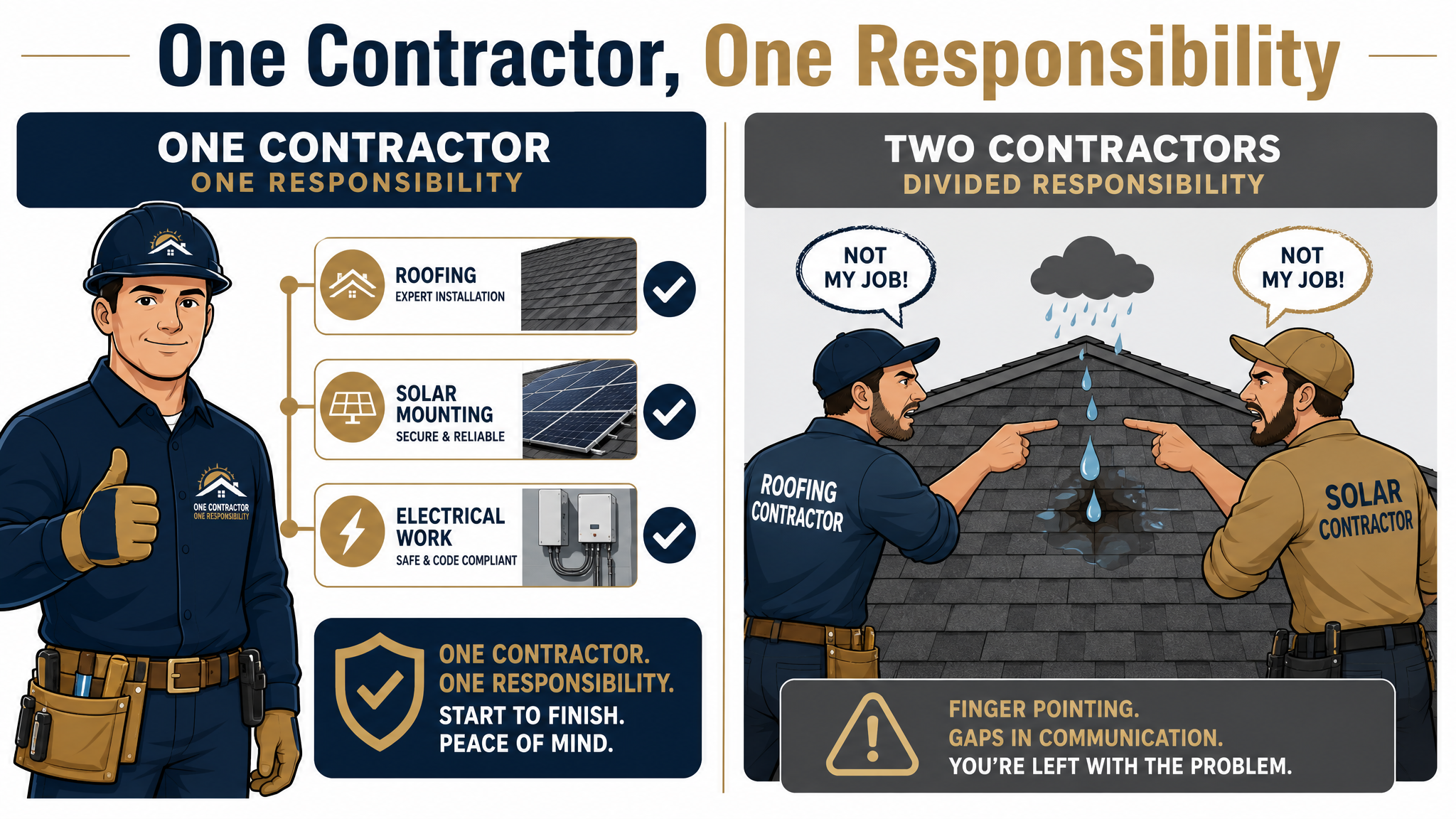
We install the roof, the solar mounting system, and the electrical work under one contractor. Because we hold a C-10 Electrical Contractor license, which goes beyond the limited solar-only C-46 license, every part of the project is completed in-house.
That means the roof and the solar system are designed together from the beginning instead of being handed from one contractor to another.
The biggest advantage is accountability.
When a solar-only contractor drills through a tile roof, and a leak appears later, the roofing contractor often blames the solar penetrations while the solar contractor blames the roof. Those disputes can drag on for months or even years, and sometimes end up in court before anyone actually repairs the leak.
A standing seam roof starts from a much better position because the solar panels attach without drilling through the roofing surface. On tile roofs, penetrations can affect the roofing manufacturer's warranty. In practice this is usually manageable, because major roofing manufacturers provide approved installation methods for solar mounting, and most solar contractors warranty their own roof work.
The larger issue is not the warranty. It is knowing who is responsible if something goes wrong.
When we install both the standing seam roof and the solar system, there is no finger-pointing, no second contractor, and no argument over who caused the problem. If an issue ever develops, it is our responsibility to resolve it. That gives you one point of contact, one schedule, and one company standing behind the completed project.
Already Have Solar and Need a New Roof?
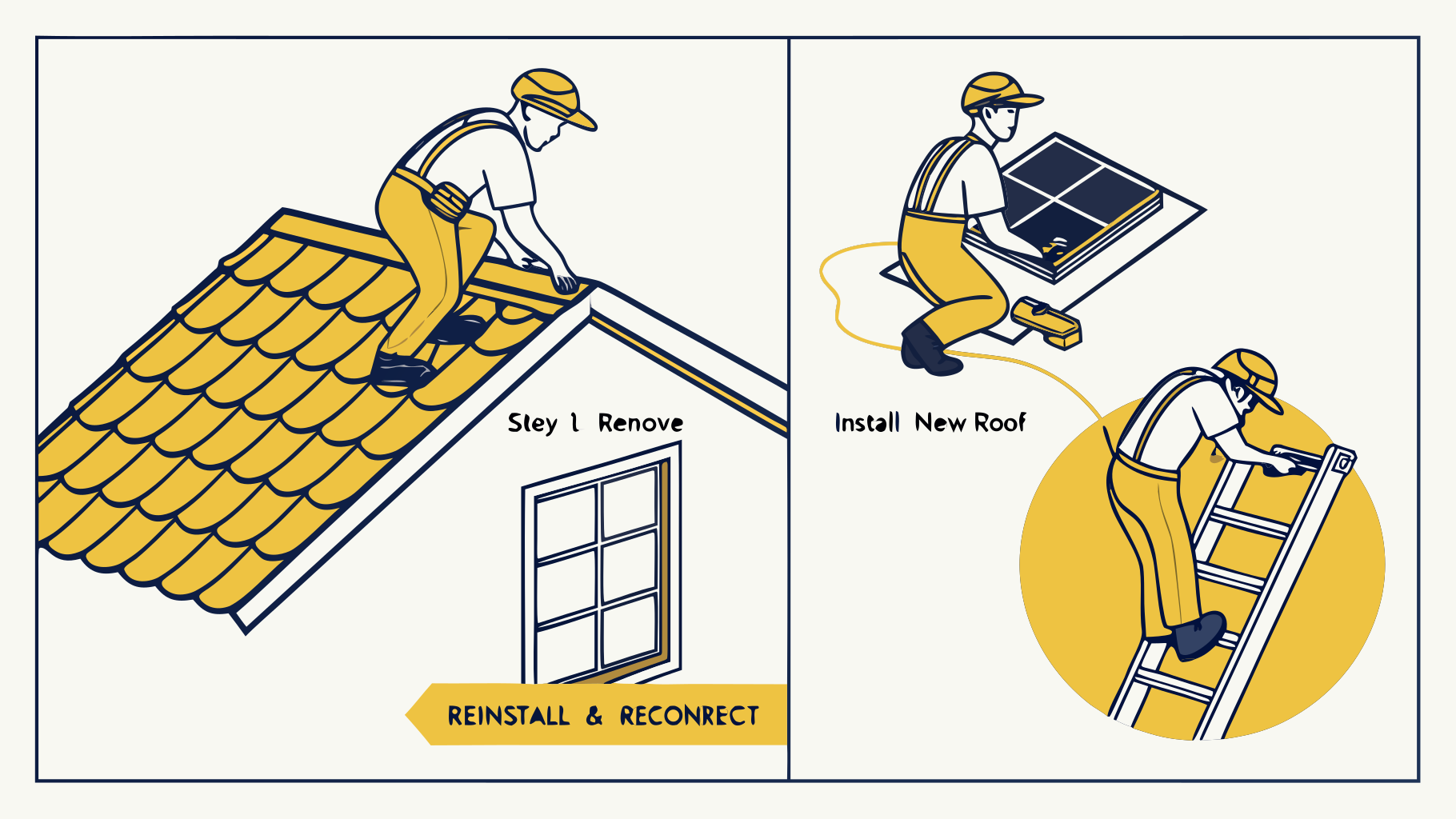
If you already have solar panels and need a new roof, we remove the panels, install your new standing seam metal roof, reinstall the panels, and reconnect the electrical system, all in-house. This service is available for an additional charge.
That is a capability very few roofing contractors can offer.
Most roofing companies do not hold a C-10 Electrical Contractor license, so they cannot legally disconnect, remove, reinstall, and reconnect a residential solar system themselves. They have to hire a separate solar contractor before the roofing work begins and again after the new roof is complete.
That adds another company to coordinate, another schedule, another invoice, and another opportunity for delays.
Because we perform every phase ourselves, the entire project moves under one schedule with one point of contact from beginning to end. We safely remove the existing solar array, install your new standing seam metal roof, reinstall the solar panels, and reconnect the electrical system. Instead of coordinating multiple contractors, you work with one team that manages the entire reroofing process.
How Does a Metal Roof Handle Heat Under Solar Panels?
A standing seam metal roof is ready for solar whenever you are, and it creates a better environment for solar panels to operate efficiently. The roof is built for today's solar systems while remaining ready for future technology without needing to be replaced.
You do not have to install solar immediately. Many homeowners choose a standing seam roof first and add solar years later. When the time is right, the roof is already prepared.
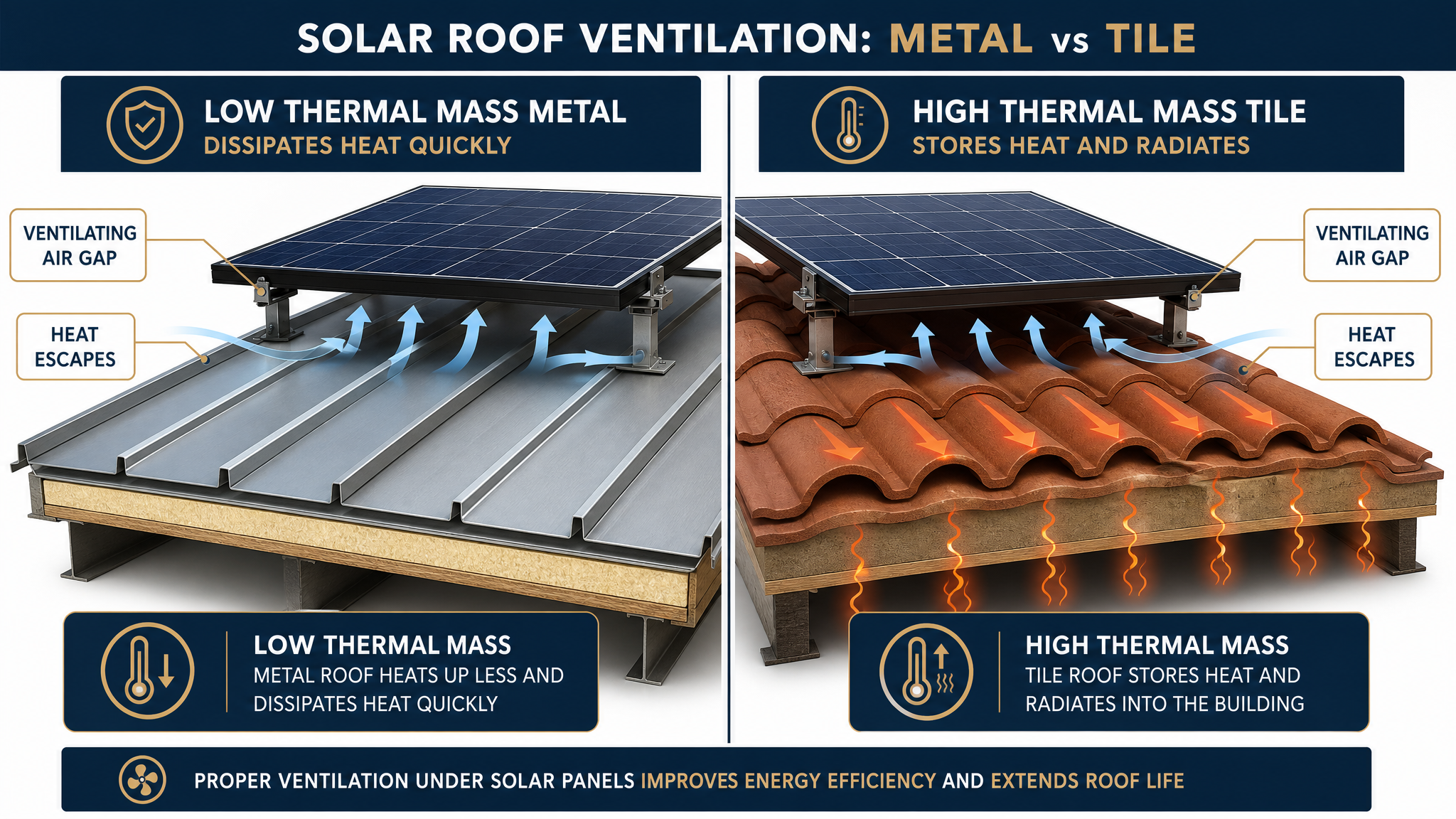
Heat also matters. As solar panels become hotter, they become less efficient, so keeping them cooler helps them perform better throughout the day.
A standing seam metal roof helps in two important ways. First, the solar panels are rack-mounted above the roof, creating a continuous air gap underneath the array that lets heat escape instead of becoming trapped beneath the panels. Second, metal has very low thermal mass. Unlike clay tile and concrete tile, metal sheds heat quickly instead of storing it and radiating it back into the solar panels after hours of direct sunlight.
The roof finish also contributes. Every standing seam roof we install uses a 70% Kynar 500 PVDF finish, which reflects more sunlight than tile roofing. Lighter colors reflect the most solar energy, and even darker Kynar colors reflect more sunlight than conventional tile roofs.
We do not claim a specific increase in solar output, because every home, roof color, panel layout, and climate is different. What we can say is simple: a cooler roof creates a better operating environment for solar panels than one that stores and radiates heat throughout the day.
Should You Choose Solar Panels or Solar Shingles on a Metal Roof?
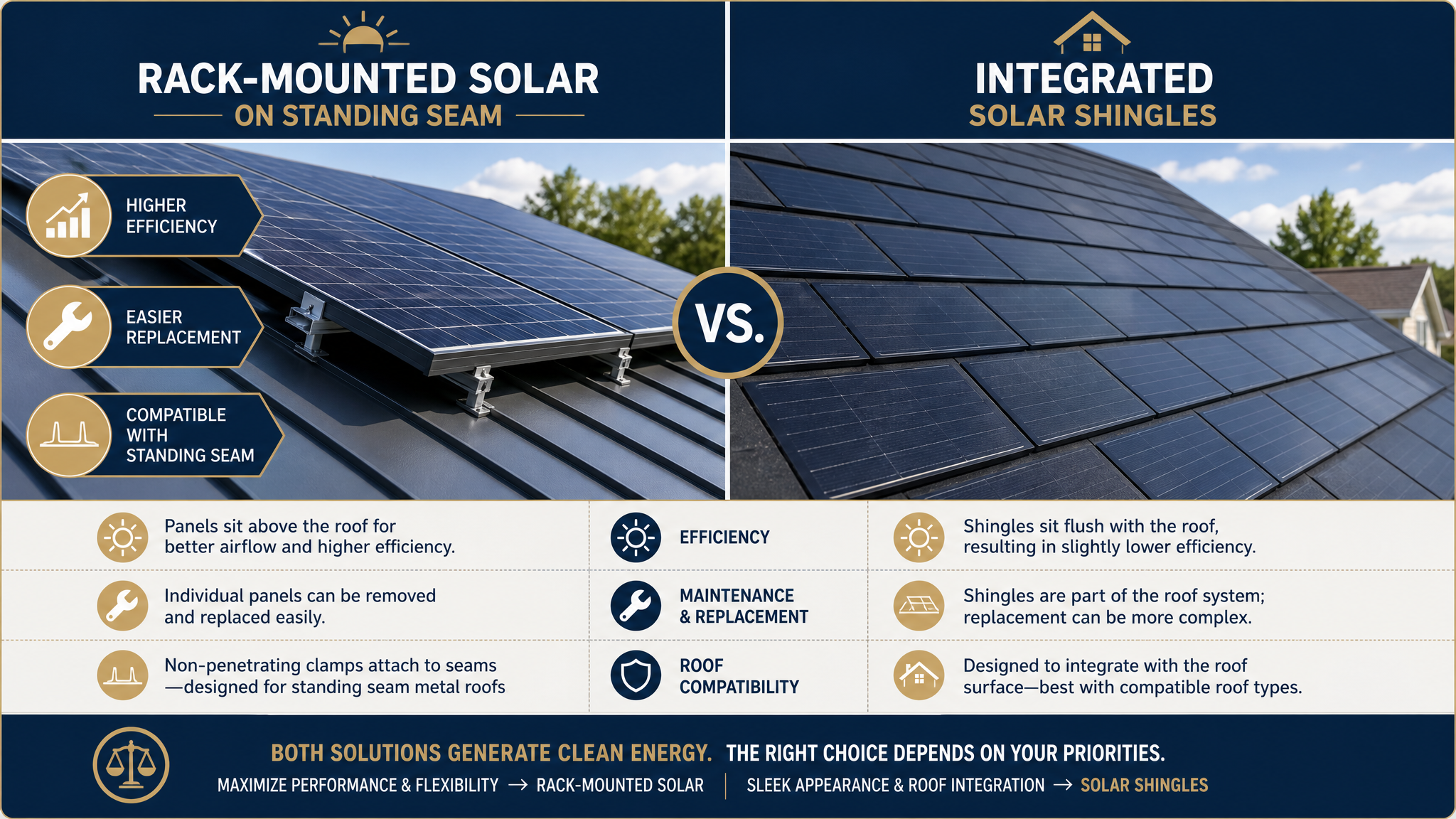
We install premium mounted solar panels, not solar shingles or integrated solar tiles. Mounted panels are more efficient, easier to service, and fully compatible with a standing seam metal roof.
Solar shingles and integrated solar tiles are roofing materials themselves. They replace the roof instead of mounting above it. A standing seam metal roof is also the roof. Because both systems serve as the roof covering, they cannot be installed together.
Mounted solar panels also provide practical advantages throughout their service life. If a panel is damaged, it can be replaced without disturbing the roof. If newer, more efficient panels become available years from now, individual panels can be upgraded while the standing seam roof continues protecting your home. Routine maintenance is also much simpler because the roofing system and the solar equipment remain separate.
For homeowners choosing a standing seam metal roof, premium mounted solar panels remain the most efficient, serviceable, and practical solar solution available today.
Will Solar Actually Save You Money?
For many homeowners, yes. We can typically reduce your electric bill by 30 to 40%. If our analysis shows we cannot save you that much, we tell you honestly that solar is probably not the right choice for your home.
Every home is different. Your roof size, orientation, shading, electricity usage, utility rate, and current manufacturer promotions all influence the system design and your projected savings.
That is why we do not quote a price per watt. Equipment pricing and manufacturer promotions change throughout the year, and a price per watt tells you little about what matters most: how much electricity your system will actually offset.
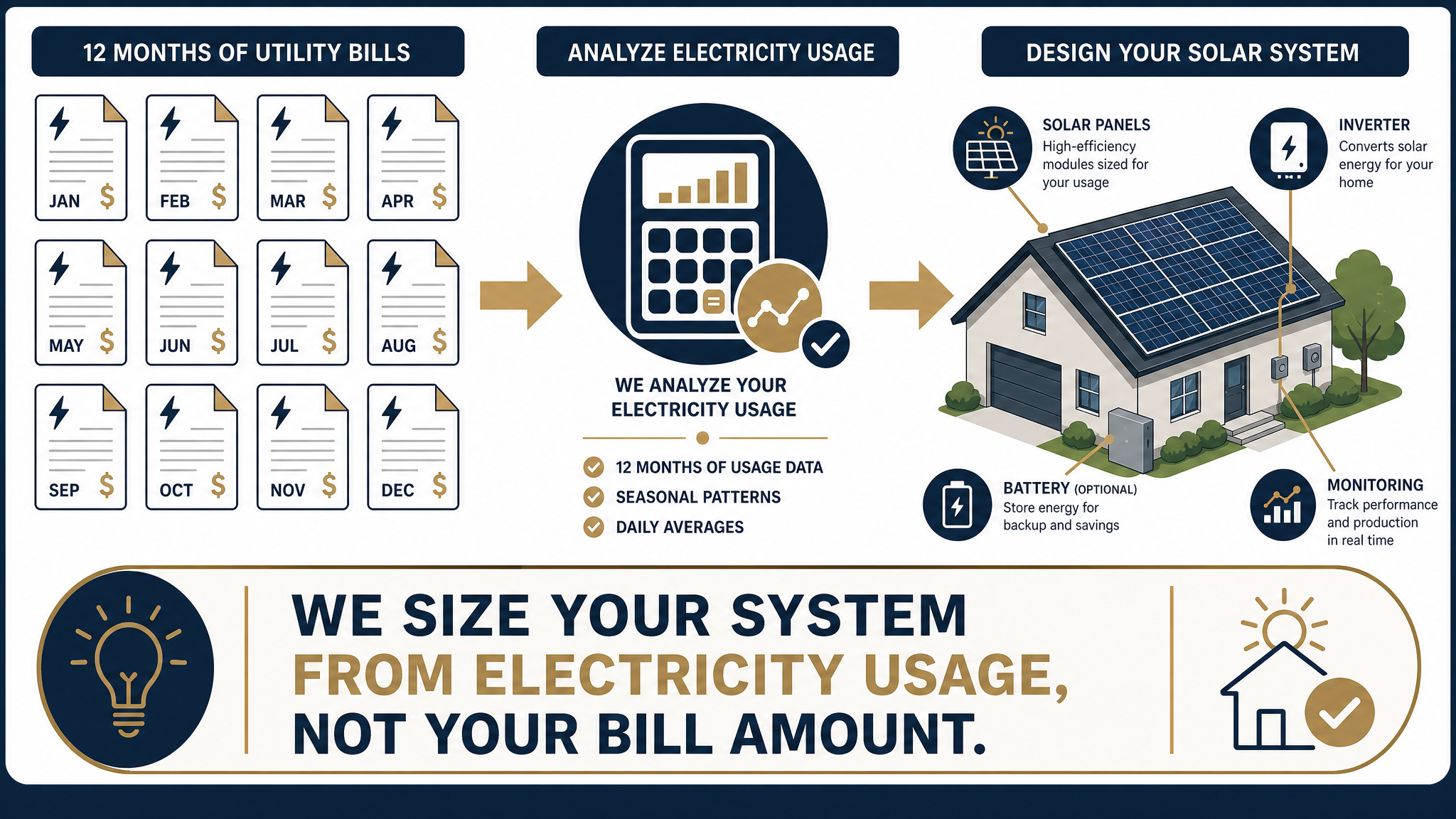
Instead, we design your system around your real electricity usage, sized to cover your needs without adding panels you do not need.
What Other Questions Should I Ask?
Get a Free Metal Roof Solar Quote
Whether you're planning a new standing seam metal roof, a new solar system, or both together, we prepare a detailed written proposal before anyone visits your home.
For a roofing quote, we measure your roof with high-resolution satellite imagery and prepare an estimate based on your home's size, roof geometry, and the standing seam system you choose.
For a solar quote, we also need your property address and at least your last 3 utility bills, or a full 12 months if you have them. We do not size a system from the dollar amount of your bill. We read the kilowatt-hours you use each month so we can recommend a system that matches your home's needs without oversizing it.
Your proposal is emailed directly to you. No pushy salesperson. No high-pressure presentation. Just the information you need to decide whether a standing seam metal roof, solar, or both are right for your home.
You are hiring the contractor other roofing contractors hire.
We require separate first name, last name, and detailed property address fields to pull accurate 3D satellite measurements remotely and send your guaranteed wholesale price quote directly to your inbox.