Wildfire Protection for Your Home
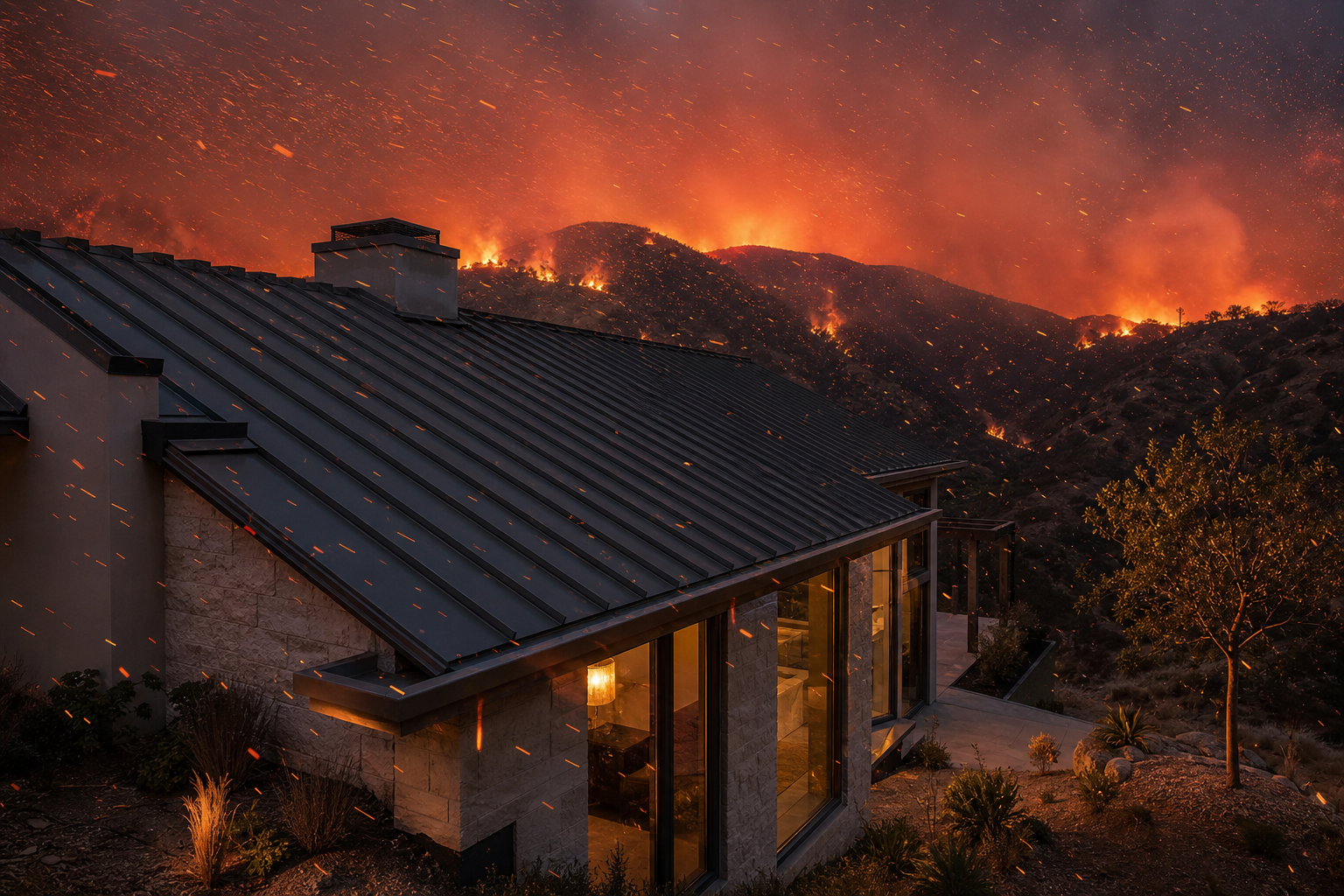
In Southern California, most homes lost during a wildfire are not ignited by the flame front. They are ignited by wind-driven embers that land on the roof or enter through vents, gutters, and eaves. The best defense starts with non-combustible, fire-resistant building materials, beginning at the roof. We install only standing seam metal roofing and build every roof as a layered system with fire-resistant underlayment and ember-resistant vents so embers have nowhere to go.
Learn more about our residential metal roofing systems.
Most homes threatened by wildfire face embers first. A wildfire-resistant roof is designed to stop those embers before they become a fire.
How Do Wildfires Actually Destroy Homes?
Most homes are not destroyed because a wall of flames reaches them. They are destroyed because wind-driven embers travel a mile or more ahead of the fire, land on the home, and find a way inside through the roof, vents, gutters, and eaves.
According to CAL FIRE, embers are the leading cause of home ignition during wildfires. Carried by strong winds, they can accumulate on the roof, collect in gutters, or be pulled through ordinary attic vents where they land on combustible materials inside the home.
That is why the roof deserves the most attention. It is the largest surface exposed to embers and one of the first places they attack. A wildfire-resistant roofing system closes those entry points before embers have the chance to ignite the home.
One of the most common ember pathways is through attic ventilation. Learn more about ember-resistant roof vents.
For more information about how embers ignite homes, see CAL FIRE Home Hardening.
What Are the Most Fire-Resistant Building Materials?
The most fire-resistant building materials are non-combustible materials, and the roof is the first place they matter. A standing seam metal roof gives wind-driven embers very little to ignite, making it one of the strongest choices for wildfire-prone areas.
Not all roofing materials respond to wildfire the same way.
Clay and concrete tile are non-combustible, but individual tiles can crack, shift, or leave openings where wind-driven embers collect along the roof edges. A properly detailed standing seam metal roof forms a continuous, interlocking surface with far fewer places for embers to lodge.
For a complete comparison of standing seam metal roofing versus tile, visit Metal vs. Tile Roofing.
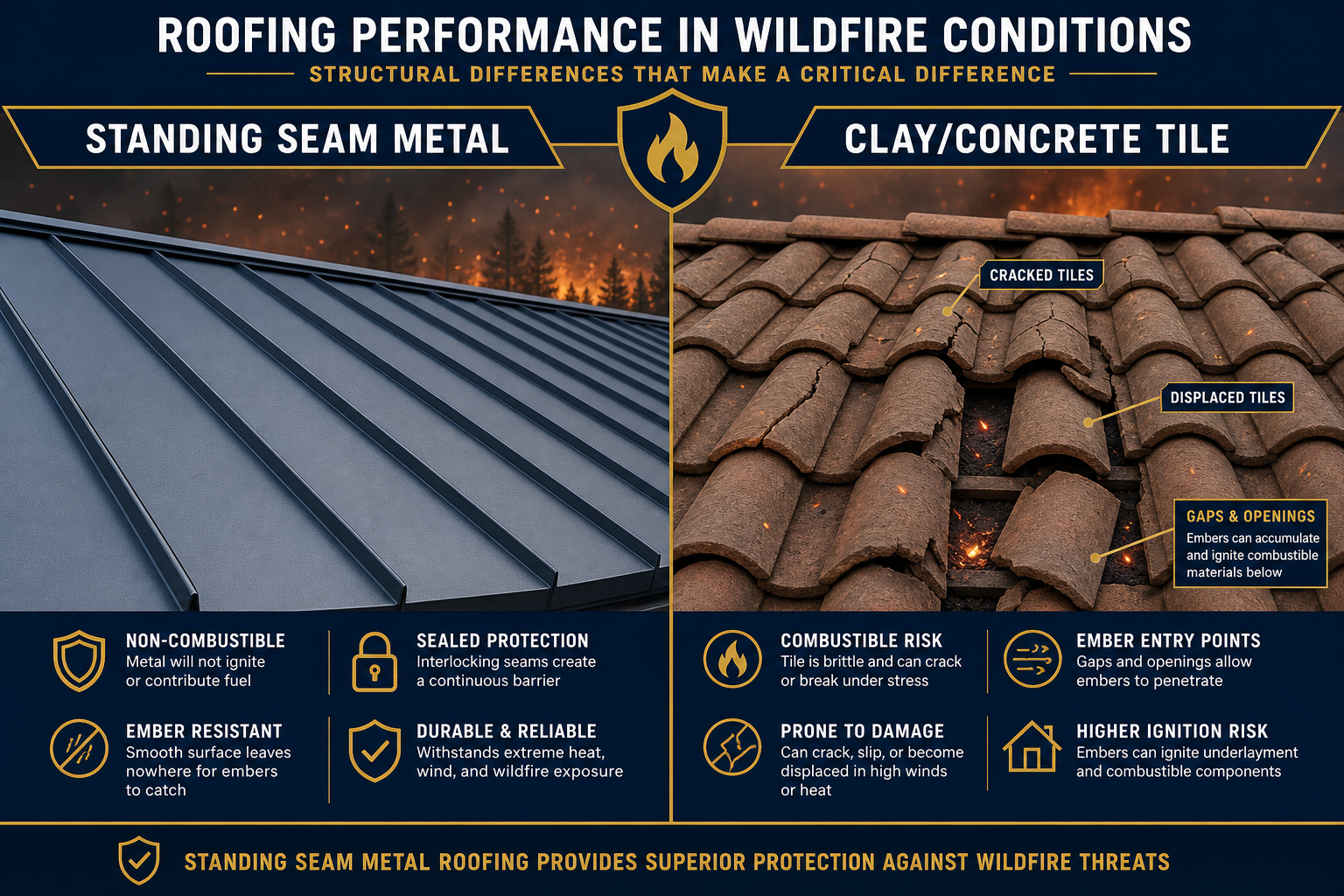
Wildfire protection begins with non-combustible materials and a roofing system designed to minimize ember entry points.
Why Is the Roof Your First Line of Defense?
Your roof is the largest surface exposed to wind-driven embers. Protecting it with a non-combustible Class A standing seam metal roof gives your home its strongest defense where wildfire attacks most often begin.
When embers land on a roof, every opening, joint, and combustible surface becomes a potential ignition point. A properly installed standing seam metal roof creates a continuous, interlocking surface that helps minimize those opportunities.
Learn more about Class A fire-rated roofing.
“The roof deserves the most attention. It is the largest surface exposed to embers and one of the first places they attack.”
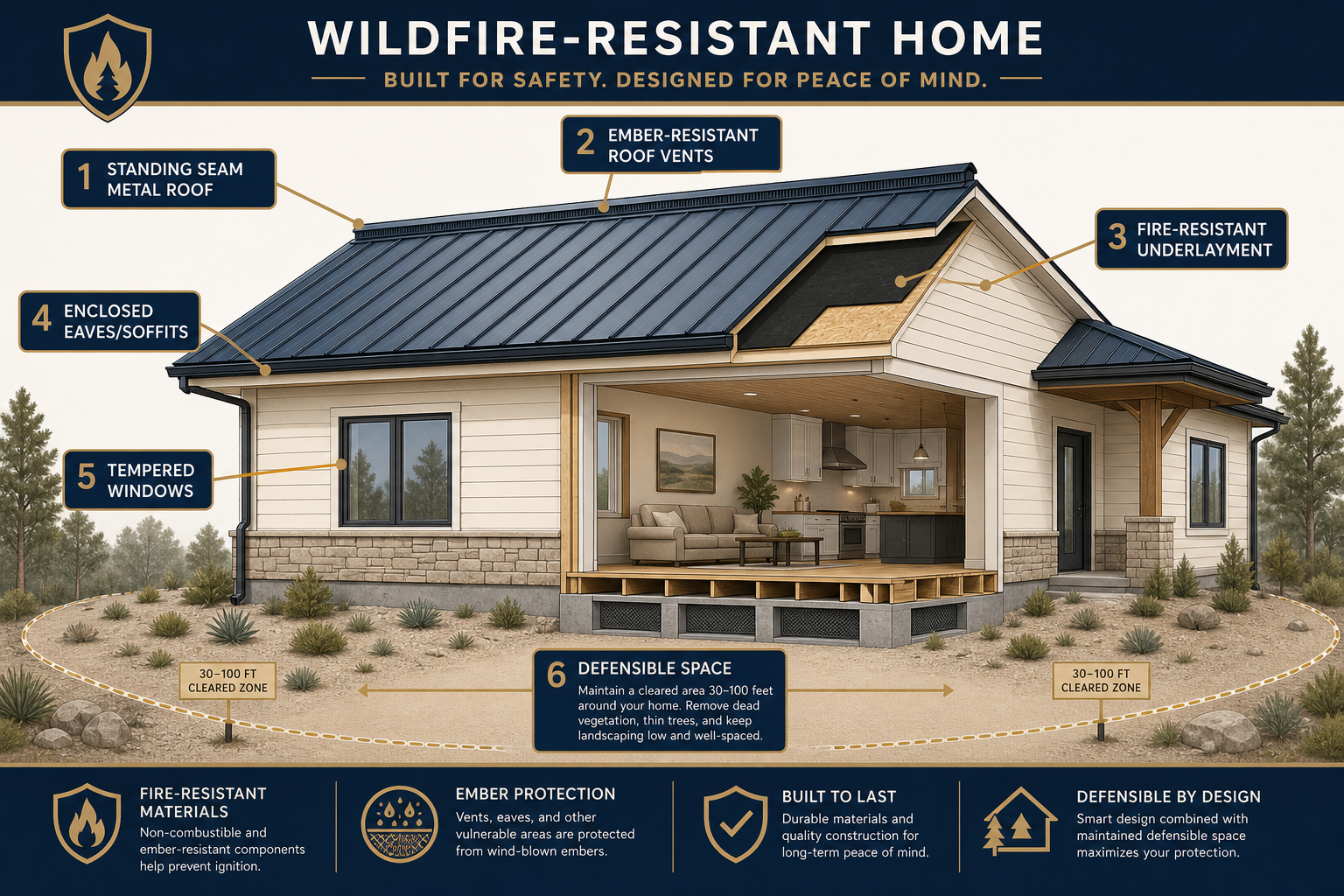
A wildfire-resistant home relies on multiple layers working together, with the roof and attic forming the foundation of the system.
What Is a Fire-Resistant Home?
A fire-resistant home is built as a system. The roof, attic, vents, eaves, walls, windows, decks, and the area surrounding the home all work together to reduce the chance that wind-driven embers can start a fire. The roof and attic come first because they are where embers most often enter.
Wildfire protection is strongest when every layer supports the next.
The rest of the home matters too. Fire-resistant exterior materials, tempered windows, properly detailed decks, and defensible space all contribute to a more wildfire-resistant property.
We focus on the roof and attic because they are our specialty and because strengthening those areas gives homeowners the greatest return in wildfire protection.
What Is in Our Layered Wildfire Roof System?
Wildfire protection is strongest when every layer has a job. We build a complete roofing system, not just a metal roof. Each layer protects the next so wind-driven embers have fewer opportunities to reach combustible materials.
Class A Standing Seam Metal Roof
Non-combustible surface that gives embers nothing to ignite
Polyglass Polystick XFR Underlayment
Fire-resistant underlayment to protect the roof deck
Ember-Resistant Roof Vents
California State Fire Marshal-listed vents to block embers at ventilation openings
Our system starts with a Class A standing seam metal roof. Beneath the panels, we install Polyglass Polystick XFR fire-resistant underlayment to protect the roof deck. At every ventilation opening, we install California State Fire Marshal-listed ember-resistant roof vents that maintain attic airflow while helping block embers.
Together, these three layers provide a defense that is far stronger than any single product alone.
How Do Ember-Resistant Roof Vents Protect a Home?
A wildfire-resistant roof still needs attic ventilation. The answer is not to seal the vents shut. The answer is ember-resistant roof vents that maintain airflow while helping block wind-driven embers from entering the attic.
Standard roof vents are designed to move air, not stop embers. Ember-resistant vents are engineered specifically for wildfire conditions and are tested to California's Wildland-Urban Interface (WUI) standards. We typically install California State Fire Marshal-listed Vulcan ember-resistant vents on our standing seam metal roofs because they integrate exceptionally well with ridge ventilation while providing outstanding ember protection.
The vent is only one part of the system. Combined with a Class A metal roof and fire-resistant underlayment, it becomes another layer in a complete wildfire defense designed to keep embers from entering the attic.
What Does Home and Attic Fire Hardening Involve?
A wildfire-resistant roof is only part of the solution. The attic and eaves must be hardened too because they contain some of the most common pathways wind-driven embers use to enter a home.
Our fire hardening services focus on the roof and attic. That includes ember-resistant roof vents, enclosed eaves and soffits, attic insulation, and proper attic ventilation. Each component reduces opportunities for embers to enter while helping the roofing system perform as designed.
We do not harden every part of the home. We specialize in the roof, attic, and eaves because they are our trade and because they are where our work has the greatest impact on wildfire protection.
What Is Defensible Space?
Defensible space is the managed area around your home that helps reduce the intensity of an approaching wildfire. By removing combustible vegetation and maintaining clearance around structures, firefighters have a better chance to defend the home, and wind-driven embers have fewer places to ignite.
Defensible space complements a wildfire-resistant roof but does not replace it. The landscape protects the outside of the property, while the roof, attic, vents, and eaves protect the structure itself. Both are important parts of a complete wildfire protection strategy.
We specialize in the roof and attic. For defensible space requirements, vegetation management, and the latest wildfire preparedness guidance, follow CAL FIRE's recommendations.
“You are hiring the contractor other roofing companies hire. We engineer every layer of the roofing system because every layer matters when wildfire embers arrive.”
Why The Metal Roof Pros for Wildfire Protection?
Wildfire protection depends on how the entire roofing system is built, not just the roofing material. We only install standing seam metal roofs, and every component is designed to work together as one integrated wildfire-resistant system.
Our C-43 sheet metal specialist hand-forms the panels, flashings, vent details, and eave transitions on site so every component fits precisely. The result is a cleaner, tighter roofing system where the panels, underlayment, ember-resistant vents, and flashings all work together.
We are licensed and specialized in every part of the system. Our team holds the C-39 Roofing, C-43 Sheet Metal, Class B General Building, and C-10 Electrical licenses, allowing us to integrate roofing, sheet metal, structural details, and electrical work without relying on outside trades.
That is why you are hiring the contractor other roofing companies hire. We engineer every layer of the roofing system because every layer matters when wildfire embers arrive.
Do You Serve High-Fire Areas in Southern California?
Yes. We install wildfire-resistant standing seam metal roofing systems throughout Los Angeles, Orange, Ventura, and Riverside counties, including many homes located in Wildland-Urban Interface (WUI) and other high-fire hazard areas.
Southern California's dry climate and Santa Ana wind conditions make wildfire protection an important consideration for homeowners throughout the region. We build roofing systems that combine a Class A standing seam metal roof, fire-resistant underlayment, ember-resistant roof vents, and carefully detailed flashings and eaves into one coordinated system designed for these conditions.
Whether your home is in the hills, along the coast, or in a designated WUI zone, we can recommend the roofing and attic components that best fit your property's wildfire exposure and local building requirements.
Get a Free Quote
Getting your quote is simple, with no pushy salesperson. For an existing home we measure your roof from high-resolution satellite imagery and email you a detailed written quote. Building new? Upload your architectural plans and we will prepare your quote from those. If you are looking for better wildfire protection, we will include recommendations for the roof and attic components that fit your property.
No site visit until you are ready.
No sales calls.
No pressure.
You are hiring the contractor other roofers hire.
CSLB #1234567