Metal Roof Underlayment in Los Angeles: Why Synthetic Beats Felt
Your underlayment is the backup waterproofing you will never think about, until a panel is damaged and it is the only thing between water and your ceiling.
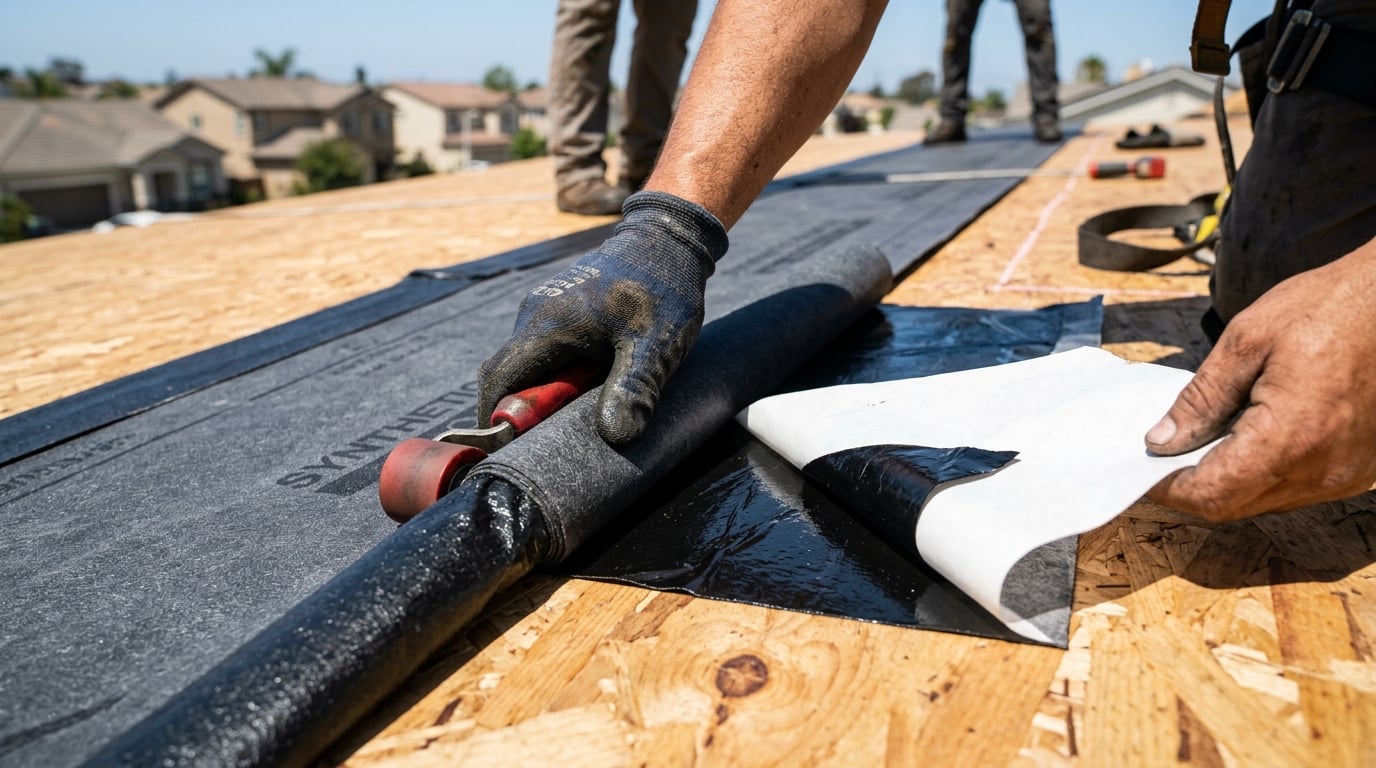
We install Polyglass Polystick XFR, a self-adhered, fire-rated high-temperature membrane, across the entire deck. A dark metal panel can radiate more than 160 degrees F onto what is beneath it, and 30-pound felt bakes brittle and crumbles in about 10 years. XFR is rated to 265 degrees F, seals around every fastener, and is Class A fire-rated.
What Does Underlayment Do On A Metal Roof?
Metal roof underlayment is the secondary waterproof barrier between the roof deck and the metal panels. If the roofing panels are ever damaged, the underlayment becomes the last line of defense protecting your home from water intrusion.
Most homeowners never see the underlayment.
Once the roof is complete, it is completely covered by the metal roofing system.
Its job is to protect the roof deck whenever water gets past the exterior roofing material.
That can happen because of storm damage, fallen branches, flying debris, or repairs that temporarily expose the roof.
Without quality underlayment, water reaches the wood deck almost immediately.
The right underlayment for a metal roof keeps the deck protected until the roofing system can be repaired.
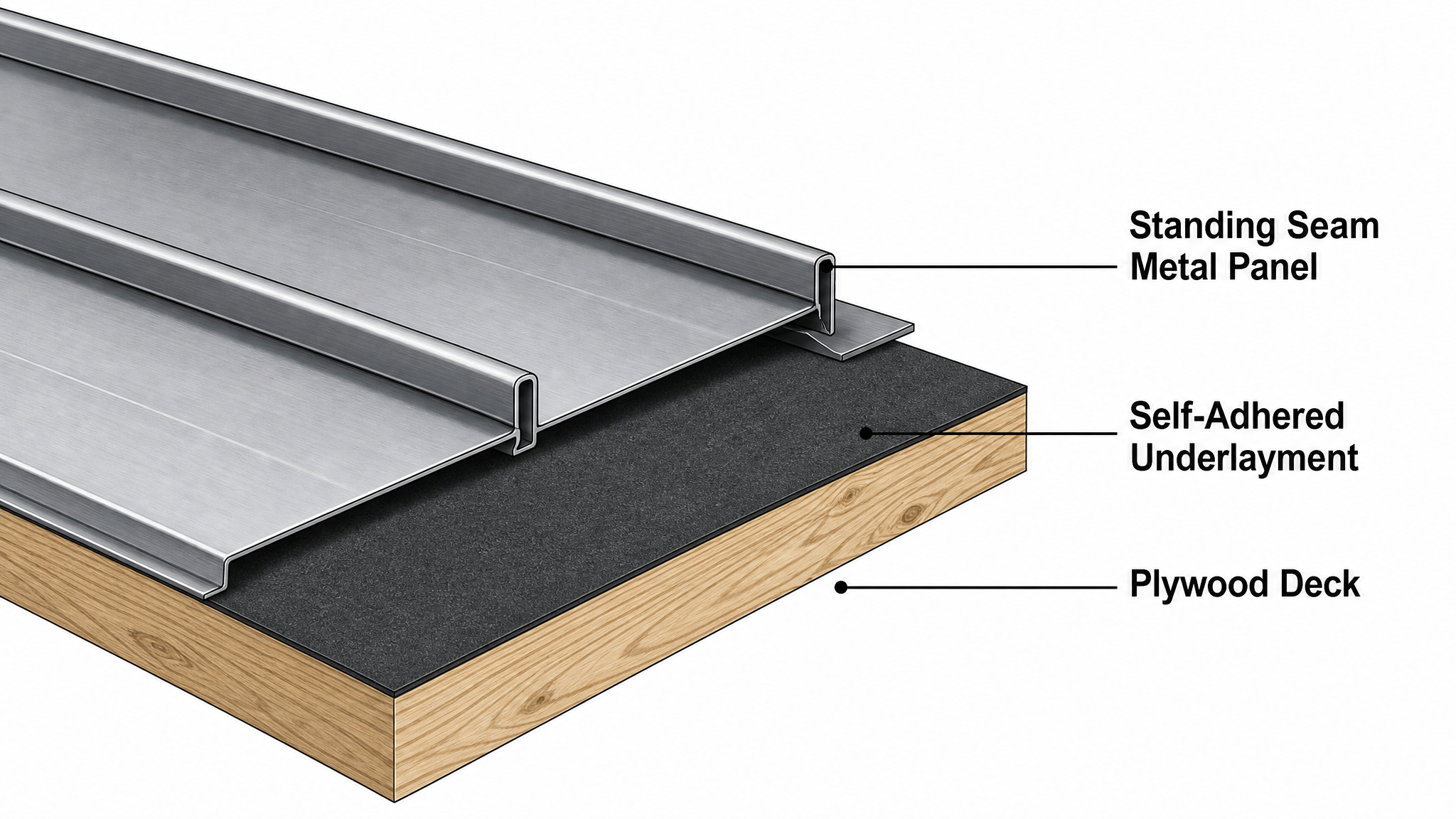
Metal roof underlayment cutaway
A quality underlayment also provides:
- A Continuous Secondary Water Barrier
- Protection For The Roof Deck
- Additional Air And Water Resistance
- Improved Temporary Weather Protection During Construction
- A Stable Surface Beneath The Roofing Panels
Why Does Felt Fail Under Metal?
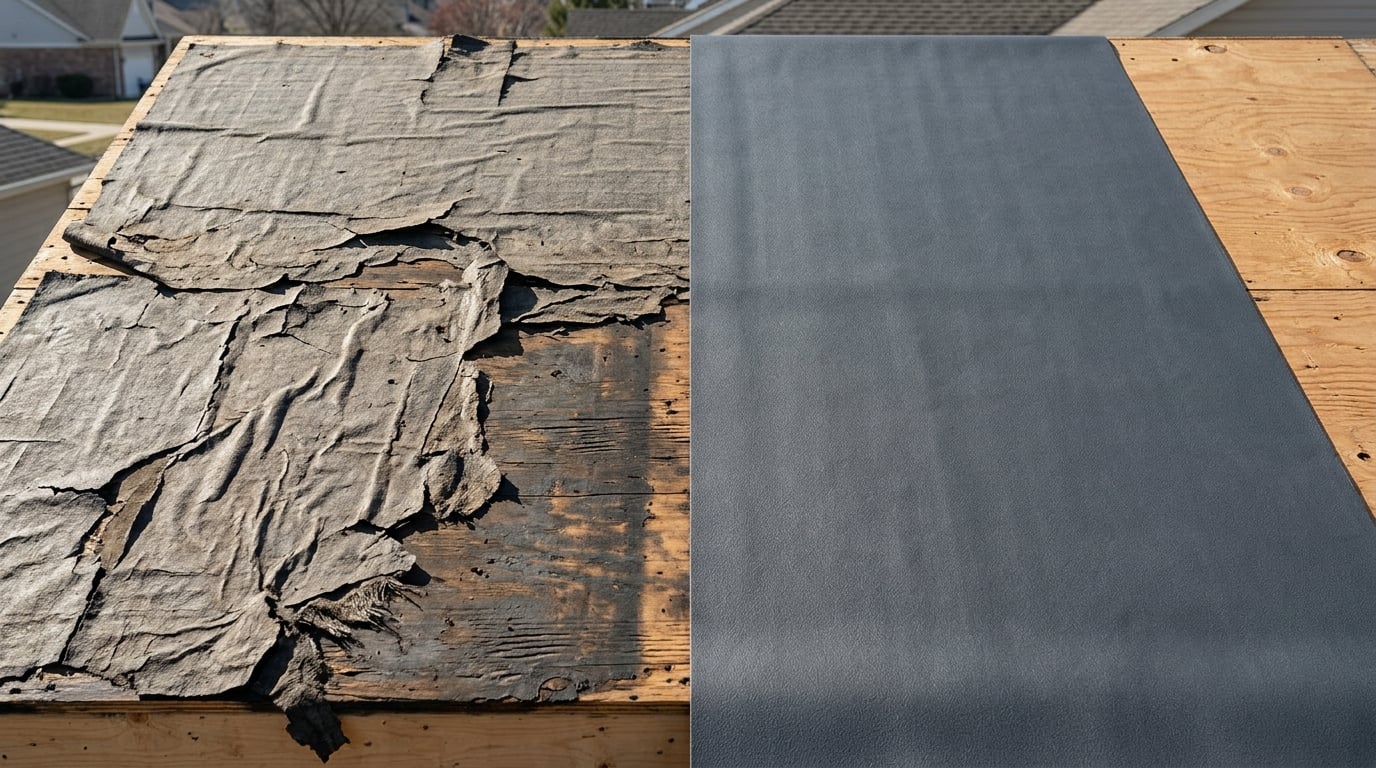
Felt vs high-temperature underlayment
Felt was designed for roofing systems that run much cooler than metal. Under a standing seam roof, temperatures can exceed 160 degrees F. That heat causes felt to dry out, become brittle, wrinkle, and eventually lose its ability to protect the roof deck.
A dark metal roof absorbs solar heat throughout the day.
That heat is transferred directly to the underlayment beneath it.
Traditional 30-pound asphalt felt simply is not built for those temperatures.
As the asphalt dries out, the felt becomes brittle.
It can crack when walked on.
It can wrinkle or bubble if exposed to sunlight during construction.
It also has a much shorter service life beneath a metal roof than most homeowners expect.
Under metal roofing, felt often deteriorates in about 10 years.
A premium standing seam roof is designed to last 50 years or more.
That means the underlayment could fail decades before the roof itself.
Felt has another disadvantage.
It is petroleum-based.
Unlike modern fire-rated membranes, it can contribute fuel during a fire event.
That is one reason we do not install it beneath our standing seam roofing systems.
Common Problems With 30-Pound Felt
- Becomes Brittle Under High Heat
- Can Bubble And Wrinkle During Installation
- Can Crack As It Ages
- Approximately 10-Year Service Life Beneath Metal
- Petroleum-Based And Combustible
For homeowners replacing an older tile roof, deteriorated underlayment is often the reason the roof has reached the end of its life.
Learn more: Why Tile Roof Underlayment Fails
Why Do We Install Polyglass Polystick XFR Underlayment?
The best underlayment for a metal roof is a high-temperature synthetic like Polyglass Polystick XFR. We install it, a self-adhered, fire-rated membrane, across the entire roof deck. We do not use felt, and we do not use ordinary nail-down synthetic underlayment. XFR provides better waterproofing, better heat resistance, and better long-term performance.
Most underlayments are held in place with staples or cap nails.
Every one of those fasteners creates a hole through the underlayment.
If the seal around that fastener ever fails, water has a path to the roof deck.
Polystick XFR works differently.
It is a fully adhered peel-and-stick membrane that bonds directly to the plywood deck.
When roofing screws and standing seam clips pass through it, the membrane self-seals around the penetrations.
Instead of thousands of open holes, the deck remains protected.
It Seals Around Every Fastener
Because the membrane is fully adhered, it seals tightly around the screws and clips that pass through it. Nail-down underlayment cannot do that.
It Creates One Continuous Waterproof Membrane
The entire roof deck is covered with a bonded waterproof layer. If a panel is ever damaged during a storm, the deck underneath remains protected while repairs are made.
It Is Built For Metal Roofing
Polystick XFR is rated to 265 degrees F. Dark metal roofing regularly produces temperatures that would quickly damage traditional felt.
It Prevents Panel Bonding
Its anti-skid surface helps prevent metal panels from bonding to the underlayment as the roof heats and cools through seasonal expansion and contraction.
It Improves Fire Performance
Polyglass Burn-Shield technology allows XFR to be used in Class A fire-rated roof assemblies over combustible plywood decks.
For more information about complete roof assemblies, see: Class A Fire Ratings
It Is Built To Last
Polystick XFR is an 80-mil, fiberglass-reinforced ADESO dual-compound membrane rated for up to 180 days of UV exposure during construction. It is engineered specifically for demanding roofing applications.
It Is Backed By A Warranty
Polystick XFR includes a 10-year material and labor warranty, with assemblies available that extend coverage up to 30 years.
The Honest Trade-Off
Polystick XFR costs more than felt.
It also costs more than ordinary nail-down synthetic underlayment.
It takes longer to install because the entire membrane is bonded to the roof deck instead of being fastened with staples or cap nails.
That is exactly why low-bid contractors often skip it.
We do not.
Every standing seam roof we install receives full-deck Polyglass Polystick XFR, not just strips at the eaves or valleys.
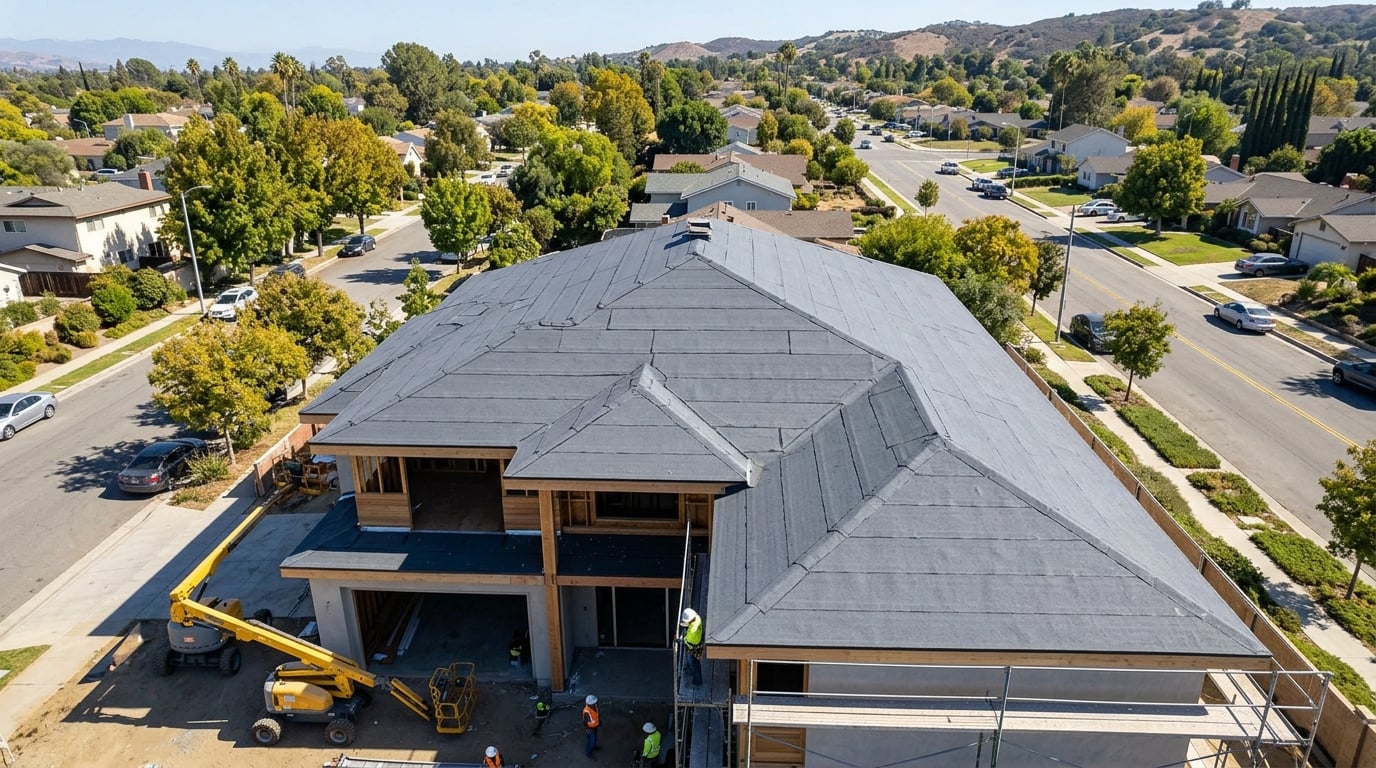
Full-deck Polyglass Polystick XFR installation
What Is the Difference Between Underlayment and Ice and Water Shield?
Underlayment protects the entire roof deck. Ice and water shield provides additional protection in the roof's most vulnerable areas. They work together, not as replacements for one another.
We install Polyglass Polystick XFR across the entire roof deck as the primary underlayment.
Additional self-adhered waterproofing is then installed at valleys, roof-to-wall transitions, chimneys, skylights, plumbing penetrations, and other critical areas where water naturally concentrates.
The two products perform different jobs.
The underlayment provides continuous protection beneath the entire roofing system.
The ice and water membrane reinforces the areas most likely to experience concentrated water flow.
Learn more: Ice & Water Shield
How Do Metal Roof Underlayment Options Compare?
| Specification | 30-lb Felt | Nail-Down Synthetic | Polystick XFR (Our Standard) |
|---|---|---|---|
| Attachment | Nailed / Stapled | Cap-Nailed / Stapled | Self-Adhered (Peel-And-Stick) |
| Holes In The Deck | Thousands | Thousands | None. Self-Seals Around Fasteners |
| Heat Rating | Low. Becomes Brittle | Varies. Often Not Metal-Rated | Rated To 265 degrees F For Metal Roofing |
| Service Life | About 10 Years Under Metal | Longer Than Felt | Decades. 80-Mil Fiberglass-Reinforced |
| Fire Performance | Combustible | No Added Fire Protection | Class A Rated With Burn-Shield Technology |
| If A Panel Is Damaged | Deck Exposed | Depends On Cap Seal | Deck Remains Sealed |
Quote Tip
A professional proposal identifies the underlayment by brand and product name, not simply "synthetic underlayment."
It should also include a per-sheet price for plywood deck replacement if damaged decking is discovered after tear-off.
A vague line item such as "deck repair as needed" without a unit price is often the setup for an expensive change order after the project has already started.
Your Questions Answered
What Other Questions Should I Ask?
Get a Free Quote by Email
Your metal roof is only as reliable as the waterproofing beneath it.
The underlayment is installed before a single panel goes on, and once the roof is finished, replacing it means removing the entire roofing system.
That is why we install Polyglass Polystick XFR on every standing seam roof we build.
Our Work
How Is Polyglass Polystick XFR Underlayment Installed?
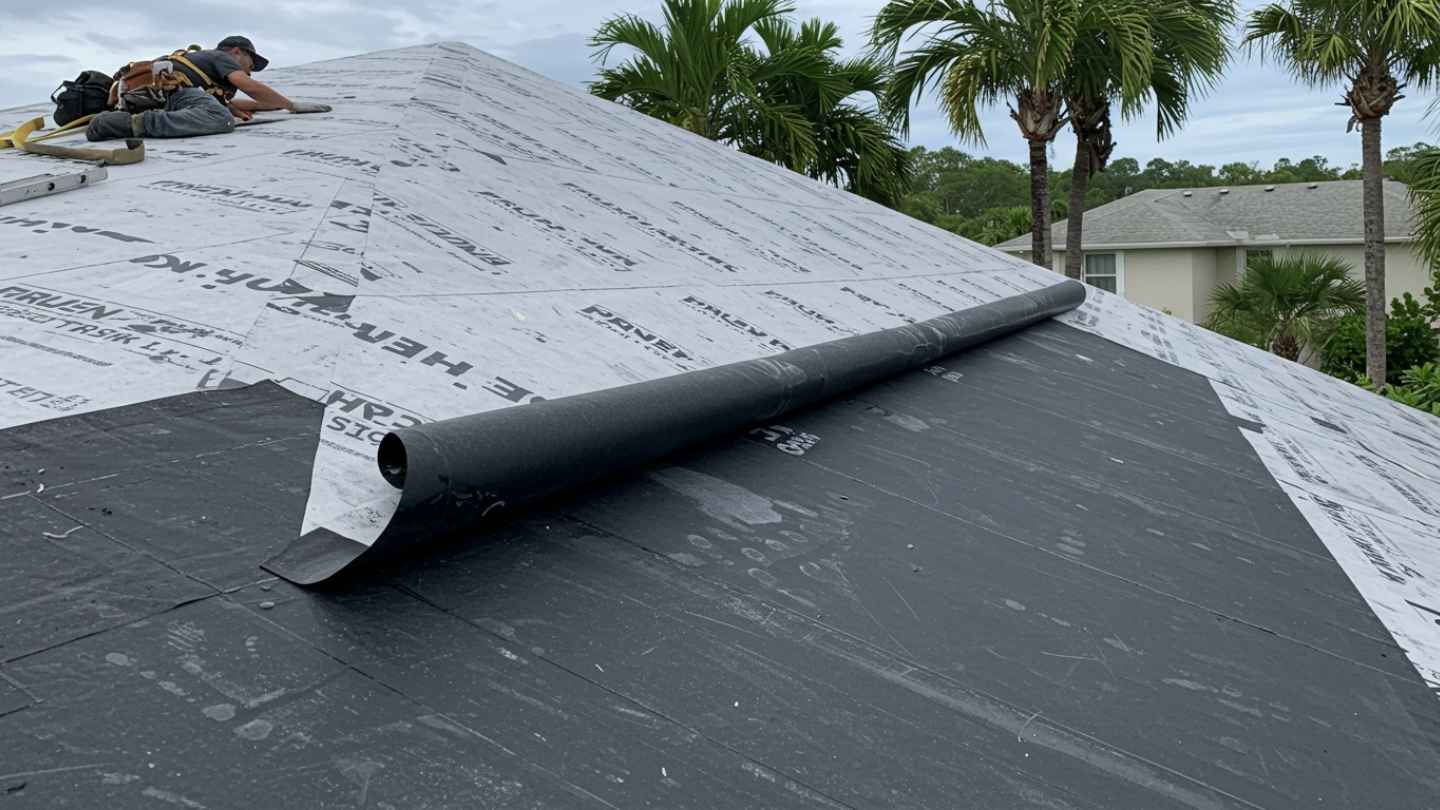
Full-Deck Peel-And-Stick Installation
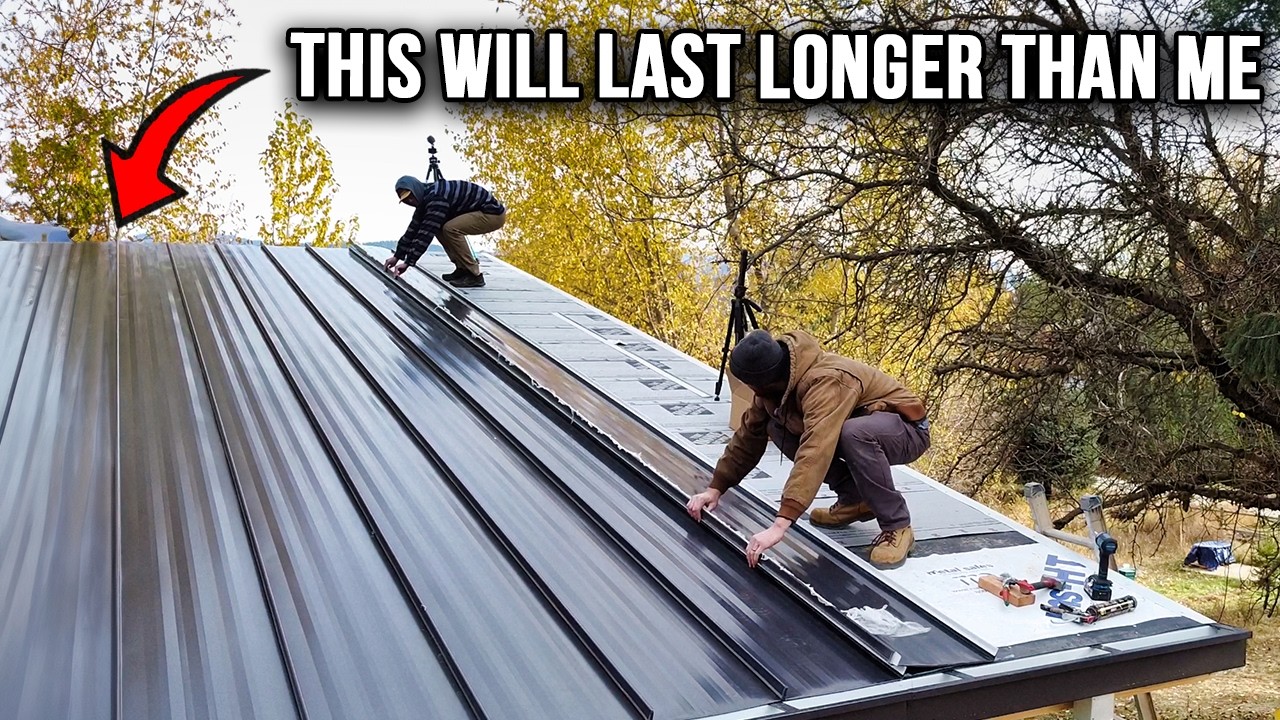
Standing Seam Roof Preparation
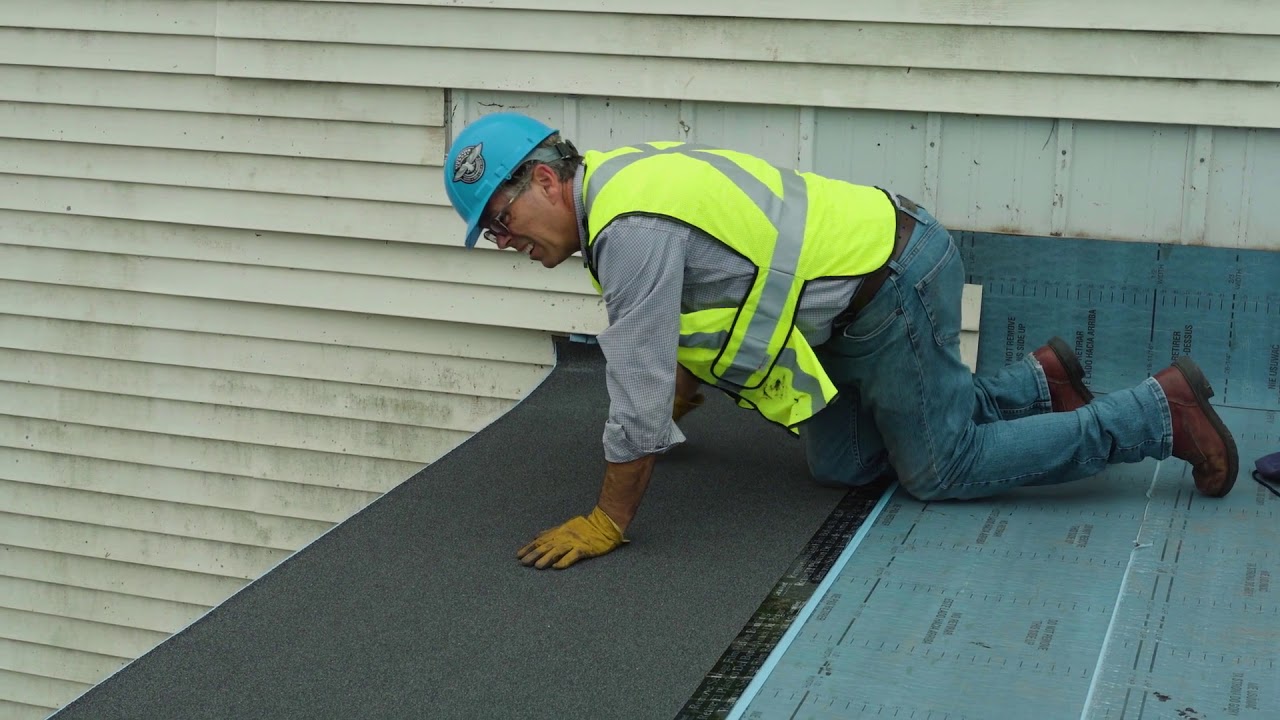
Self-Adhered Membrane Application
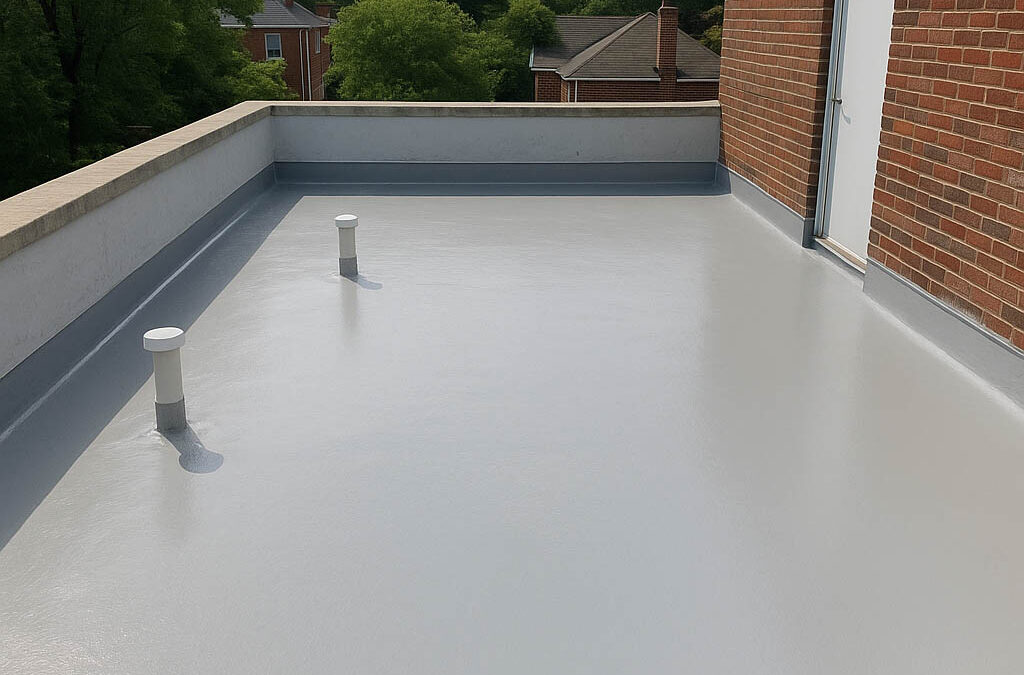
Residential Roof Deck Waterproofing
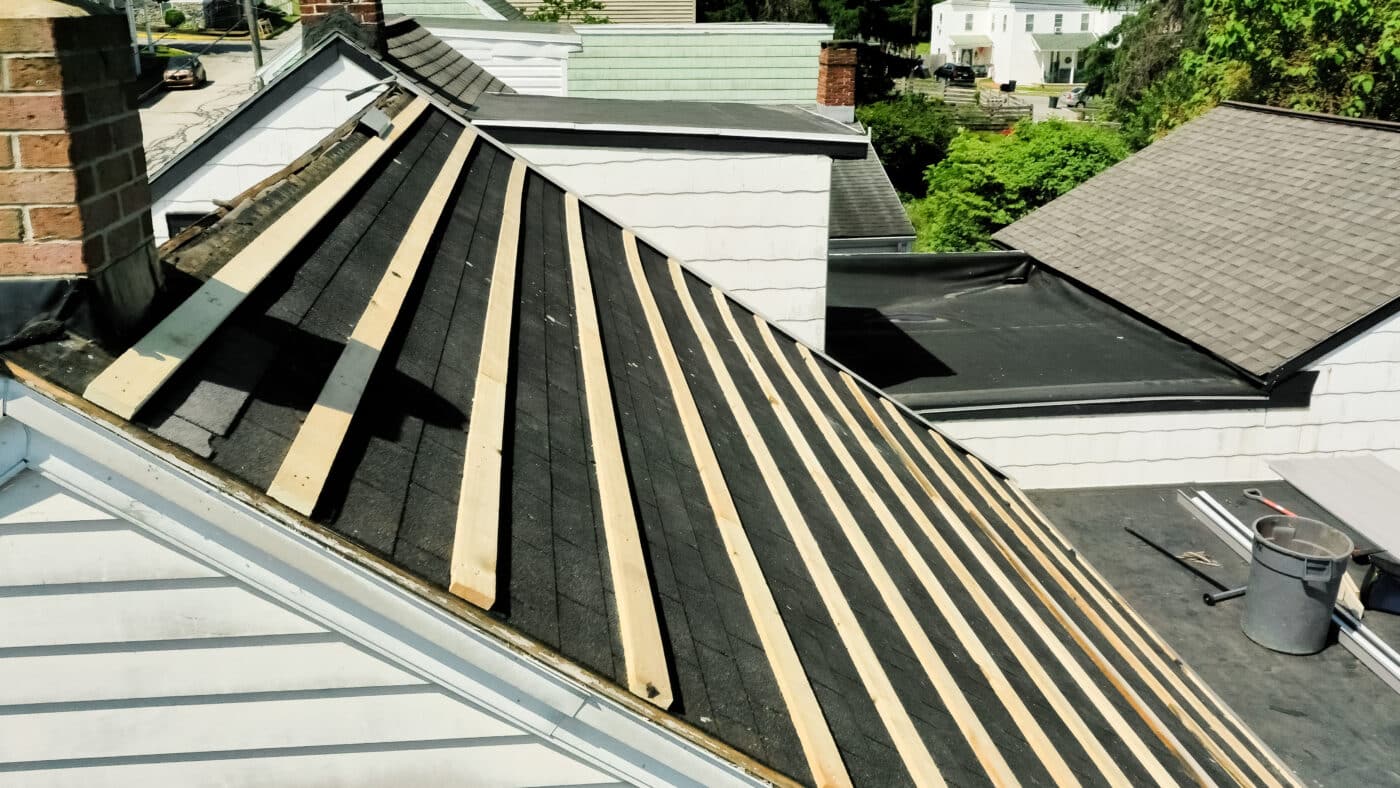
New Construction
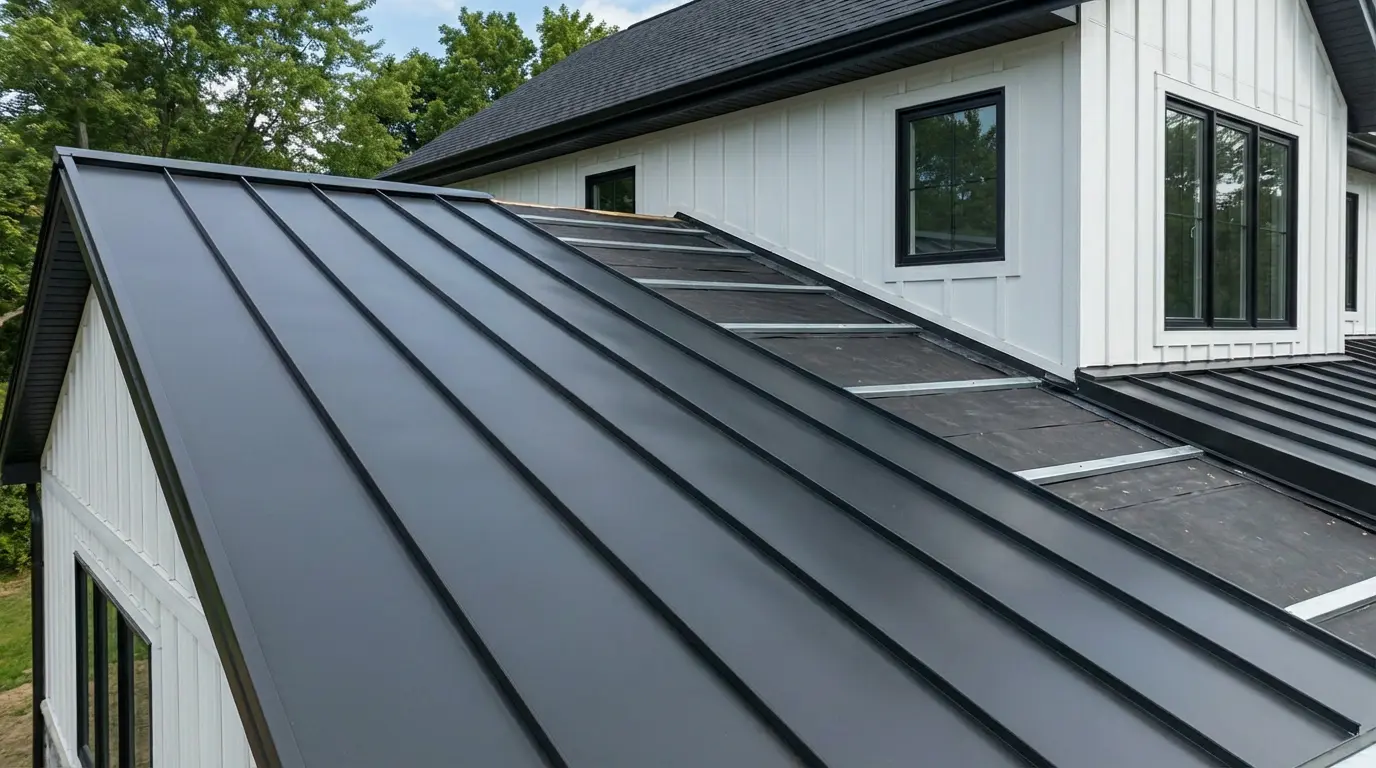
Roof Replacement Projects
Ready To Get Started?
Get a Free Roof Quote
We will review your roof, explain the waterproofing system beneath the panels, and show you exactly what is included in your proposal.
No high-pressure sales presentation. No hidden shortcuts. No guessing.