Standing Seam Panel Profiles in Los Angeles: Snap-Lock vs Mechanical Seam
Two standing seam roofs can look identical from the street and lock together in completely different ways. The seam is the part that keeps water out, and not all seams are equal.
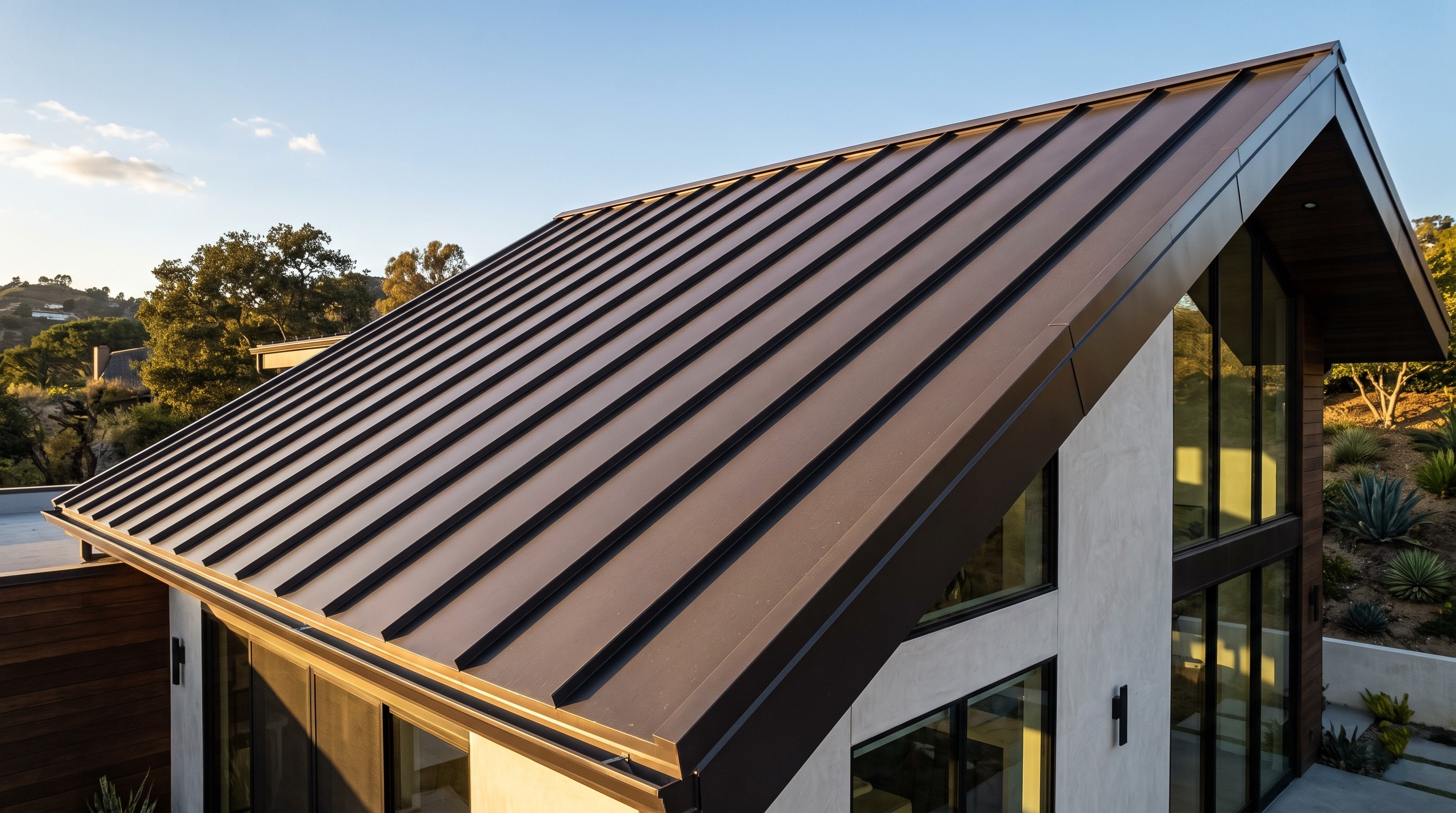
A standing seam panel profile is the way the seams lock together. Snap-lock panels press together over concealed clips and are the best choice for most residential roofs with slopes of 3:12 and steeper. Mechanical seam panels are folded shut with a seaming machine for lower-slope roofs and the highest wind exposure. We install both. We do not install clip-less nail strip panels.
What Is A Standing Seam Panel Profile?
A standing seam panel profile is the shape of the seam where two metal roof panels meet and the method used to lock them together. The profile determines how the roof resists water, allows for thermal expansion and contraction, and which applications the panel is designed for.
Metal roofing falls into two basic categories: exposed-fastener panels and concealed-fastener standing seam panels.
We install standing seam roofing because every fastener is hidden beneath the finished roof, protecting the attachment system from weather while creating a clean architectural appearance.
Learn more:
Why Standing Seam Instead Of Exposed FastenersWithin the standing seam category, there are three primary metal roofing panel types, or profiles.
- Snap-lock roofing panels lock together by pressing one seam over the other.
- Mechanical seam panels are folded closed with a seaming machine for maximum weathertightness.
- Nail strip panels fasten through an integral flange instead of using concealed floating clips.
Each profile looks similar once installed, but they perform differently.
The locking method affects roof slope requirements, weather resistance, thermal movement, and long-term durability.
Choosing the correct profile is just as important as selecting the right metal. The seam is the heart of a standing seam roof, and the profile determines how that seam performs for decades.
What Is a Snap-Lock Standing Seam Panel?
Snap-lock standing seam is the profile we install on most residential roofs. The panels snap together over concealed floating clips without the need for a mechanical seaming machine. We install snap-lock on roofs with slopes of 3:12 and steeper.
Each panel is first secured to the roof deck with concealed clips.
The next panel is then pressed into place, where its seam locks over the previous panel with an audible snap.
Once installed, the clips disappear beneath the standing seam, leaving no exposed fasteners on the finished roof.
Because the panels are attached with floating clips instead of being fastened directly to the deck, they are free to expand and contract as temperatures change.
That movement reduces stress on the metal and helps prevent oil canning, fastener fatigue, and long-term distortion.
Snap-lock metal roofing has become the workhorse of residential standing seam roofing because it combines excellent weather protection with efficient installation.
Its advantages include:
- Concealed floating clips
- No exposed fasteners
- Clean architectural appearance
- Faster installation than mechanically seamed panels
- Built to accommodate thermal expansion and contraction
- Ideal for residential roofs with slopes of 3:12 and steeper
The floating clip system is a major reason snap-lock performs so well over time.
Learn more:
Metal Roof Clips & Concealed Fasteners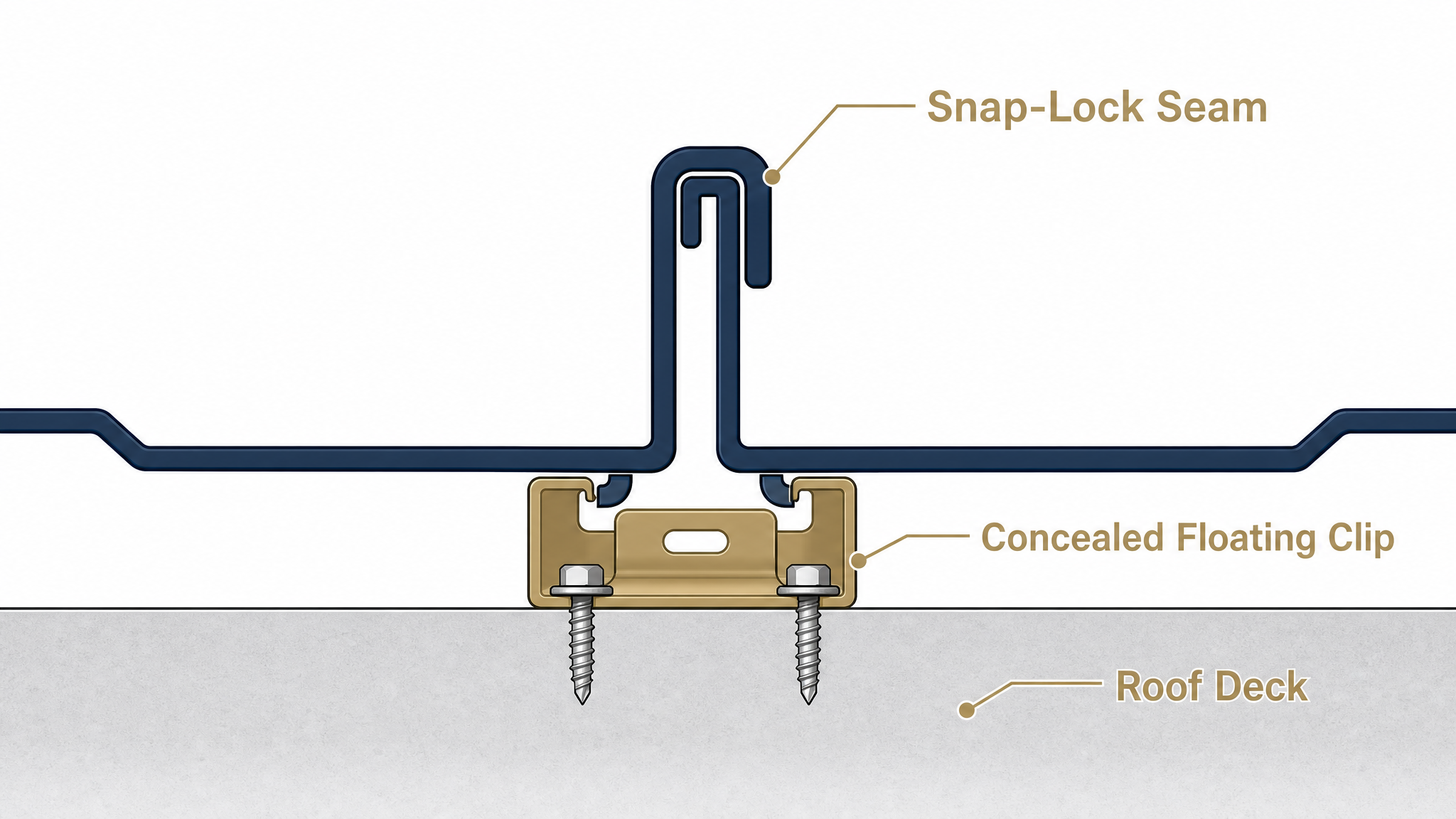
Snap-Lock Standing Seam Profile
What Is a Mechanical Seam Standing Seam Panel?
Mechanical seam is the most weathertight standing seam profile available. Instead of snapping together, the panel seams are folded closed with a mechanical seaming machine. We use double-lock mechanical seam for lower-slope roof planes and the highest wind exposure.
After the panels are installed over concealed floating clips, a powered seaming machine travels the length of each seam.
The machine folds the metal together to create either:
- Single-lock, a 90-degree folded seam
- Double-lock, a full 180-degree folded seam
Double-lock creates the tightest mechanical connection between adjacent panels and offers the highest level of weather resistance.
Because the seam is mechanically folded instead of simply pressed together, it provides exceptional protection against wind-driven rain and demanding weather conditions.
We specify mechanical seam when a roof requires maximum performance, including:
- Lower-slope roof planes
- Homes with the highest wind exposure
- Commercial buildings
- Projects where the most weathertight standing seam profile is required
Like snap-lock, mechanical seam panels are also installed over concealed floating clips.
The difference is the seam itself.
Instead of snapping together, it is mechanically folded into a permanent interlock.
For projects exposed to the strongest Santa Ana winds, learn more about our wind-engineered installation standards:
High-Wind Standing Seam Systems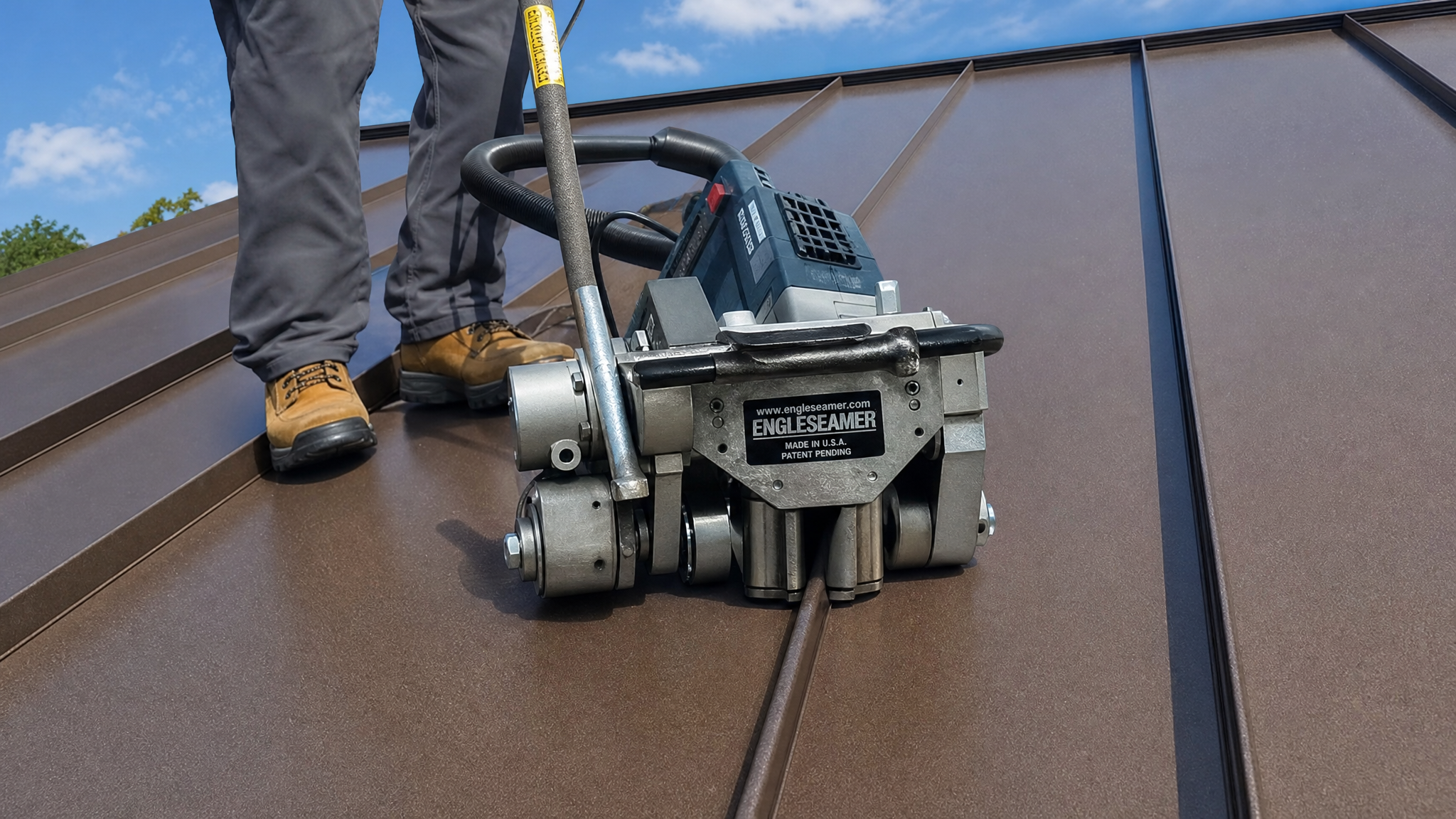
Mechanical Seaming Machine Closing A Standing Seam
What Is a Nail Strip or Fastener-Flange Panel?
Nail strip, also called fastener-flange, eliminates the separate floating clip. Instead, each panel is fastened directly to the roof through an integral flange built into the panel itself. It is less expensive to manufacture and install, but it cannot move like a clip-based standing seam system. We do not install nail strip panels.
With a nail strip profile, screws are driven through the panel's fastening flange.
The next panel snaps over that flange, hiding the fasteners from view.
Although the roof appears similar to other standing seam systems after installation, the attachment method is fundamentally different.
Because the panel is fastened directly to the roof deck, it cannot float as temperatures change.
Steel and aluminum naturally expand and contract as they heat and cool throughout the day.
Floating clip systems allow that movement to occur without placing stress on the panels.
Nail strip panels restrict that movement, increasing stress on the panel over time.
Compared with clip-based standing seam systems, nail strip panels offer:
- Lower initial cost
- Faster installation
- No separate floating clips
- Reduced ability to accommodate thermal expansion and contraction
For those reasons, we install clip-based snap-lock and clip-based mechanical seam systems on our standing seam roofs instead of nail strip panels.
Learn more about the concealed clip systems we use:
Metal Roof Clips & Concealed Fasteners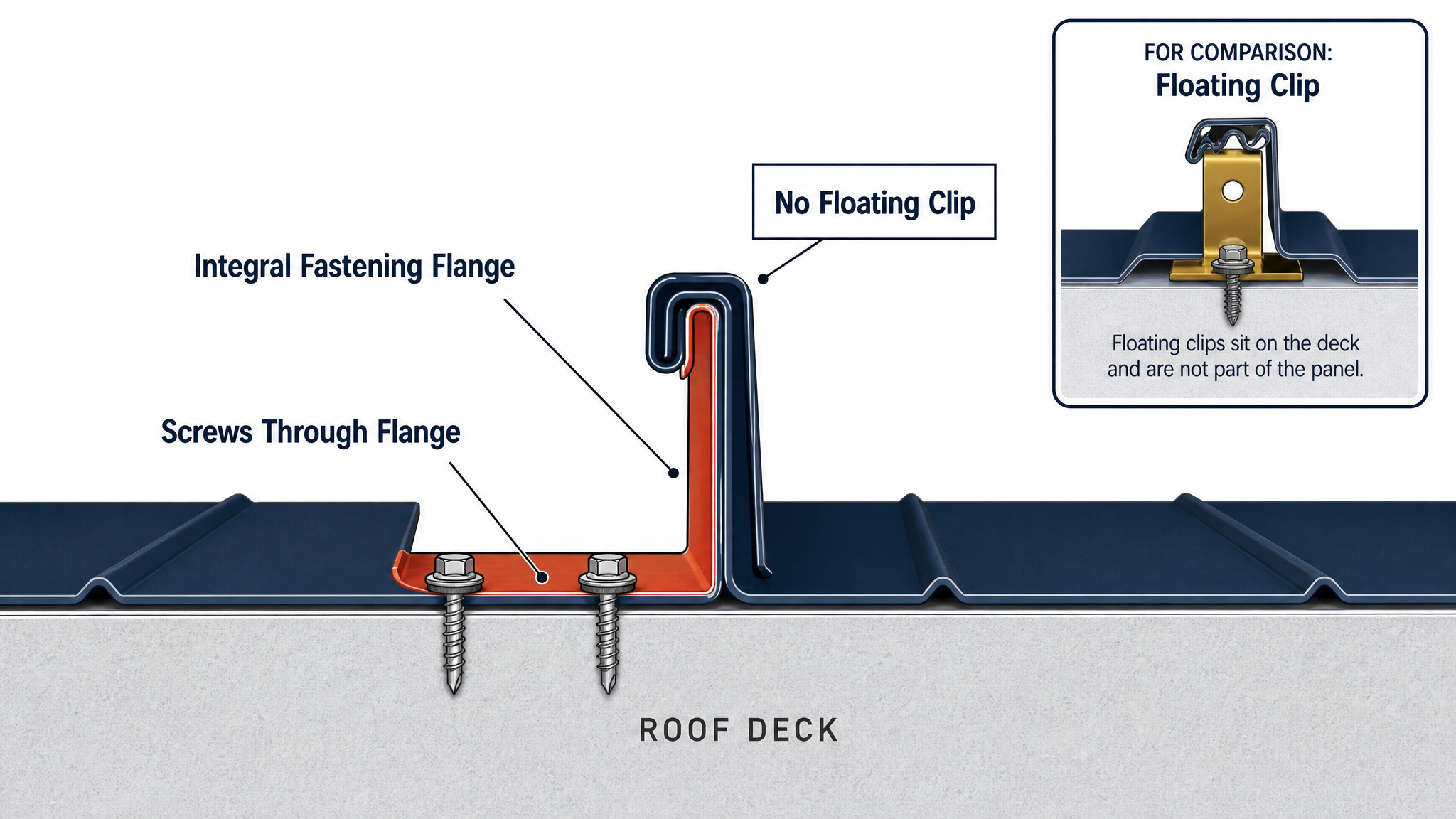
Nail Strip (Fastener-Flange) Standing Seam Profile
How Do Standing Seam Panel Profiles Compare?
Each standing seam profile locks differently and is designed for a specific application. The right choice depends on roof slope, weather exposure, and long-term performance requirements.
| Profile | How It Locks | Min. Roof Slope | Weather & Wind | Attachment | Typical Use |
|---|---|---|---|---|---|
| Snap-Lock | Panels snap together over concealed floating clips | 3:12 and up | Excellent for most residential applications | Concealed floating clips | Most residential standing seam roofs |
| Mechanical Seam (Double-Lock) | Seams are mechanically folded closed with a powered seaming machine | Lower slopes (below 3:12) | Maximum weathertightness and the best choice for demanding wind exposure | Concealed floating clips | Low-slope roof planes, commercial projects, and high-wind applications |
| Nail Strip (Fastener-Flange) | Panels fasten through an integral flange that is covered by the next panel | Not used by The Metal Roof Pros | Less thermal movement because panels cannot float | Integral fastening flange | Budget installations; not part of our standard roofing systems |
The profile determines how the roof locks together, how it accommodates thermal expansion and contraction, and which applications it is designed to serve. That is why selecting the correct profile is one of the most important decisions in a standing seam roofing system.
Which Profile Do We Use, And When?
We match the panel profile to the roof, not the other way around. Most residential homes receive snap-lock standing seam. For lower-slope roof planes, commercial buildings, and projects with the highest wind exposure, we specify double-lock mechanical seam. Every roof we install uses a concealed clip system.
For most homes throughout Los Angeles, Orange, Ventura, and Riverside Counties, snap-lock is the ideal choice.
It provides excellent weather protection and is designed for roofs with slopes of 3:12 and steeper.
When a roof presents more demanding conditions, we move to double-lock mechanical seam.
That includes:
- Lower-slope roof planes
- Commercial roofing projects
- Homes in the highest wind-exposure areas
- Roofs requiring the most weathertight standing seam profile
No Nail Strip
What you will not find on our projects is nail strip. Because nail strip panels are attached through an integral fastening flange instead of concealed floating clips, they cannot move as freely with temperature changes. We install clip-based standing seam systems because they deliver better long-term performance.
Every panel is formed on site to the exact length required for your roof.
Learn more:
Standing Seam Metal Roof InstallationFor roofs in the most demanding wind conditions, see our high-wind engineering standards:
High-Wind Standing Seam SystemsWhat Other Questions Should I Ask?
Get a Free Quote by Email
For an existing home, we measure your roof from high-resolution satellite imagery and email you a detailed written quote. For new construction, upload your architectural plans and we will prepare your quote from those. Either way, we include the panel profile we recommend for your roof and why.
No site visit until you're ready.
No sales calls.
No pressure.
You're hiring the contractor other roofers hire.
Helpful Resources
CSLB #1234567 · (818) 937-4500