Metal Roof Clips and Concealed Fasteners in Los Angeles: What Actually Holds Your Roof Down
On a standing seam roof, the parts doing the hardest work are the ones you can never see.
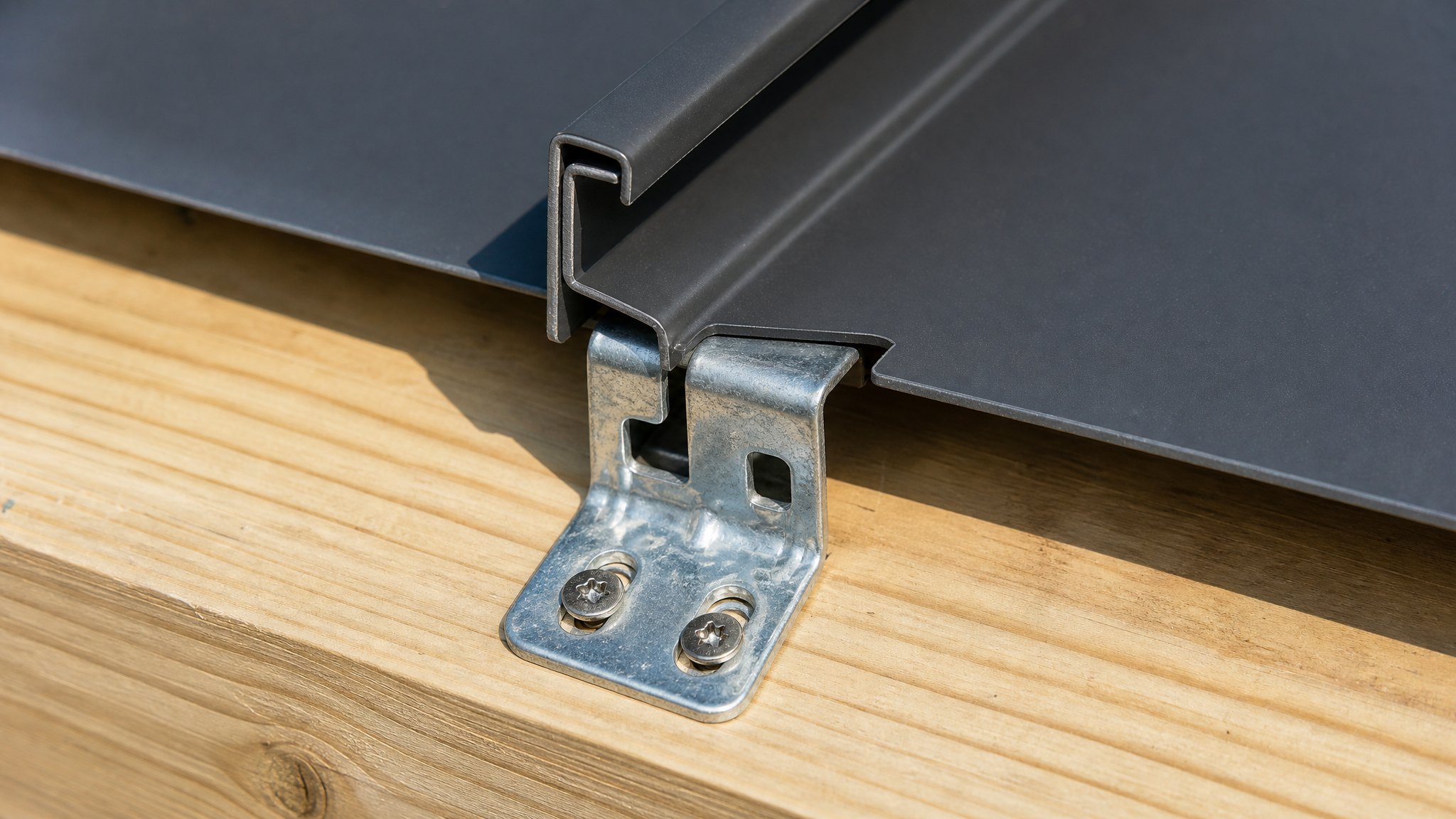
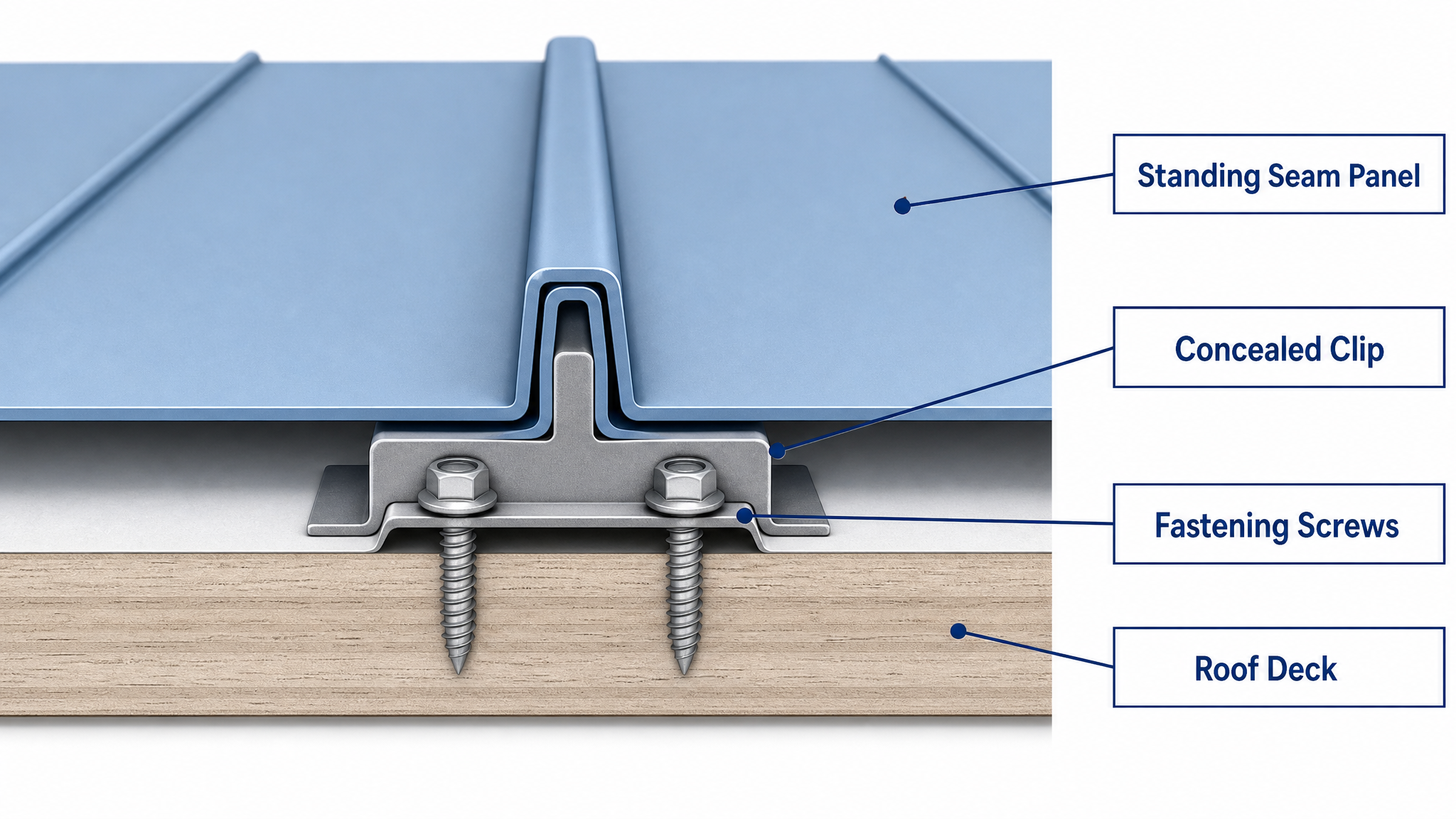
A standing seam roof is anchored by concealed clips, small metal anchors screwed to the deck that the panel locks over, so no fastener ever pierces the panel face. We use heavy 16/18-gauge clips with two screws each. Exposed-fastener roofs put hundreds of holes through the metal; ours has none.
What Is A Metal Roof Clip?
A metal roof clip is a concealed anchor that attaches a standing seam roof to the structure. It performs two jobs at the same time: it holds the panel down and allows the metal to expand and contract as temperatures change.
The panels themselves are not screwed through the face of the metal.
Instead, the clips are fastened to the roof deck, and the standing seam panel locks over them.
Once installation is complete, the clips are completely covered by the roofing panels.
A metal roof clip is sometimes called a cleat.
Most clips are manufactured from:
- Galvanized Steel
- Galvalume Steel
- Stainless Steel
The material matters because these components spend decades beneath the roof system.
For coastal projects, we typically use stainless steel standing seam clips because salt air accelerates corrosion.
What Does The Clip Actually Do?
Job #1: Hold The Roof Down
The clip transfers wind loads from the metal panel into the roof structure. Without clips, the panel would have no secure attachment point.
Job #2: Allow Thermal Movement
Metal expands when it gets hot and contracts when it cools. A standing seam roof must be able to move without stressing the attachment system. The clip allows that movement while keeping the roof securely attached.
This is one of the biggest differences between standing seam roofing and exposed-fastener systems.
Learn more: Why Standing Seam Roofing Is Different
Clip spacing also plays a major role in wind resistance, but that topic is covered separately.
Learn more: High-Wind Standing Seam Systems
A properly designed clip system allows a standing seam roof to stay secure while accommodating decades of thermal expansion and contraction.
What Is the Difference Between Concealed and Exposed Fasteners?
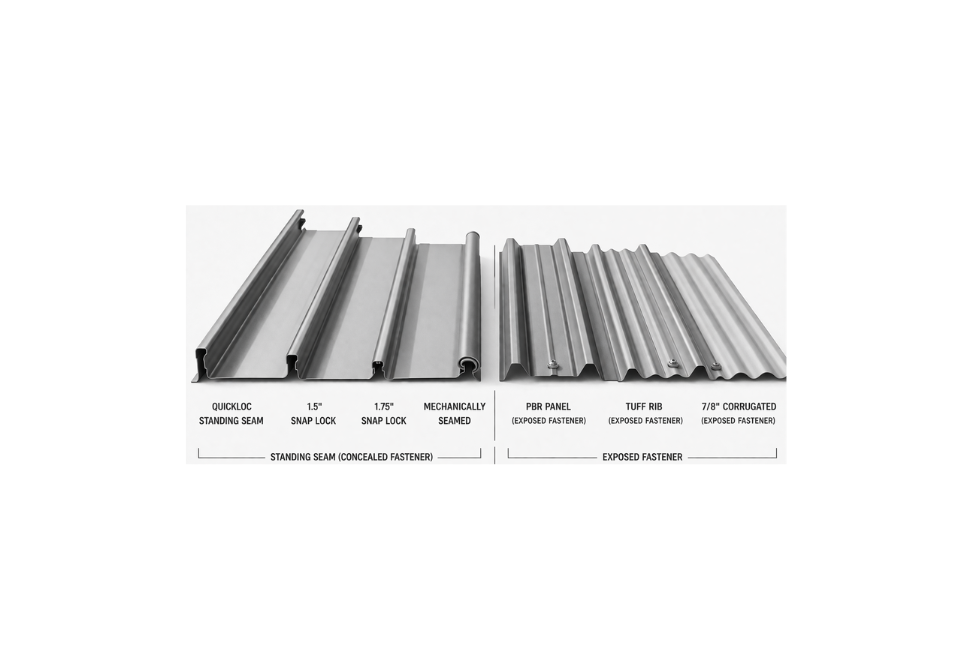
Concealed fasteners stay hidden beneath the standing seam panel. Exposed fasteners pass directly through the face of the metal and rely on a rubber washer to keep water out. One system eliminates a leak path. The other creates hundreds of them.
Every exposed screw creates a hole in the roof panel.
That hole is sealed by a neoprene or rubber washer compressed beneath the screw head.
When the roof is new, the system works.
Over time, sunlight, heat, expansion, contraction, and weather cause the washer to harden, shrink, and eventually crack.
When that happens, water has a direct path into the roof system.
That is why exposed-fastener roofs often require periodic screw replacement and ongoing maintenance.
A standing seam roof avoids that problem entirely.
The metal roofing clips and hidden fasteners remain beneath the panel. No screw penetrates the exposed face of the metal. No exposed washer sits in direct sunlight for decades. No visible fastener field exists across the roof surface.
Exposed Fastener Roofing
- Screw Through The Panel Face
- Rubber Washer Creates The Seal
- Hundreds Of Exposed Penetrations
- Ongoing Maintenance Requirements
- Higher Long-Term Leak Risk
Standing Seam Roofing
- Concealed Attachment
- No Face Penetrations
- No Exposed Washers
- Cleaner Appearance
- Reduced Leak Potential
This is one of the biggest reasons homeowners choose standing seam roofing over exposed-fastener systems.
Learn more: Why Standing Seam Roofing Is Different
A standing seam roof removes hundreds of exposed penetrations from the weather side of the roofing system, which is exactly where leaks typically begin.
Why Two Screws Per Clip And 16/18-Gauge?
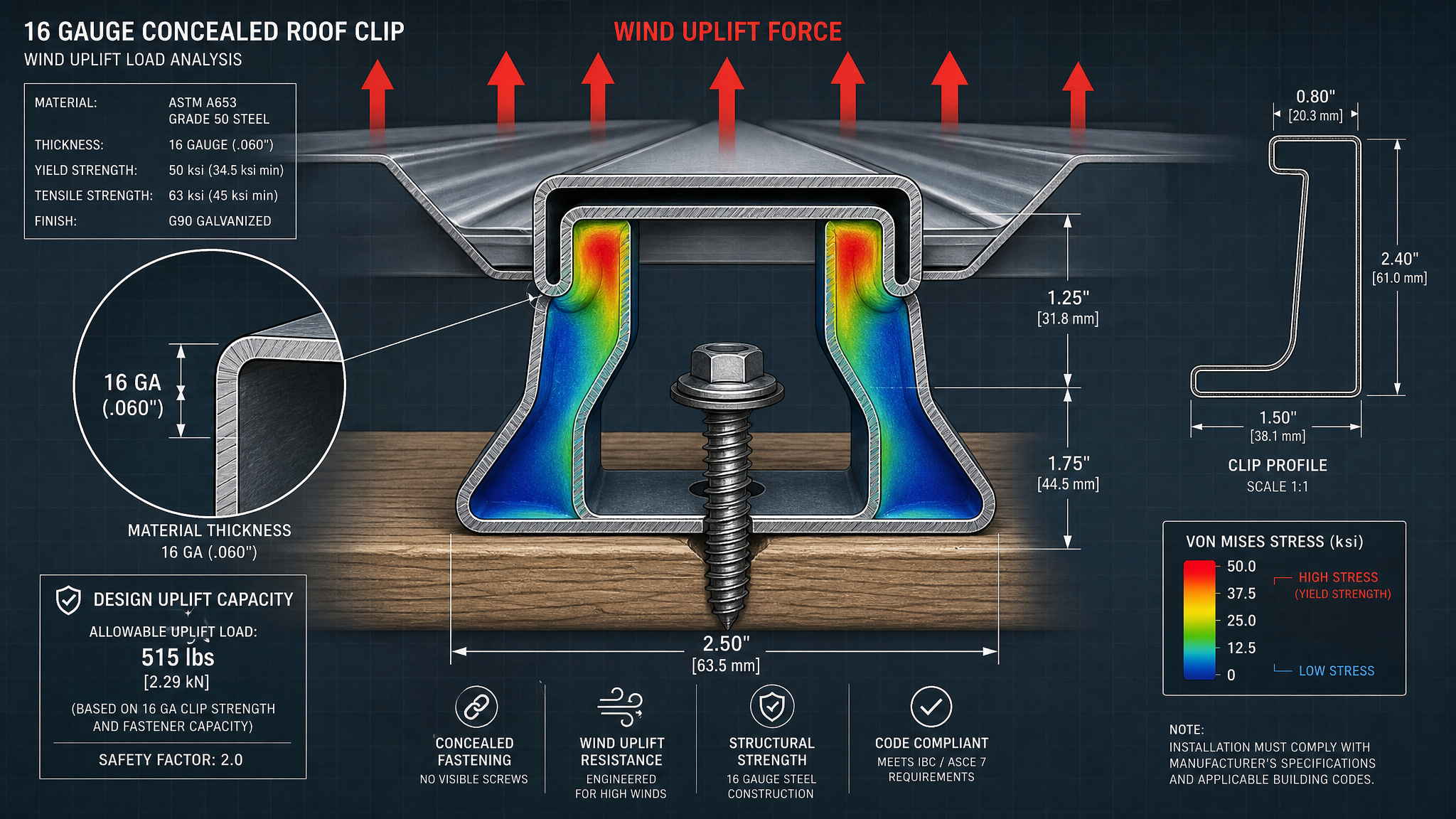
A standing seam clip is only as strong as the steel it is made from and the metal roof fasteners holding it in place. We use heavy 16/18-gauge clips with two screws per clip because uplift failures often begin at the attachment point.
Many roofing systems use lighter clips or fewer fasteners.
That reduces material cost. It also reduces attachment strength.
Think of it this way: A clip secured by a single fastener can pivot under load. A clip secured by two fasteners remains far more stable.
The second fastener helps resist twisting, rotation, and uplift forces during wind events.
Why Clip Thickness Matters
A clip transfers wind loads from the roof panel into the structure below. The clip itself must be strong enough to resist bending under stress.
Heavy 16/18-gauge clips provide:
- Greater Rigidity
- Better Uplift Resistance
- Less Deflection
- Better Long-Term Performance
A lighter clip can deform under load. Once movement begins, additional stress is transferred to surrounding clips and fasteners. That is how attachment failures spread across a roofing system.
Why We Use Two Screws Per Clip
Each clip receives two coated fasteners. This creates a stronger attachment point and distributes loads more effectively.
Benefits include:
- Increased Holding Strength
- Reduced Rotation
- Better Wind Resistance
- Improved Long-Term Reliability
Our Clip Spacing Specification
We set heavy-duty clips with two coated fasteners each, spaced 12 inches on center in the field and 9 inches at the perimeter (eaves, rakes, and ridges).
The "Zipper Failure" Problem
Attachment failures rarely occur everywhere at once. They usually begin at a single weak point.
One failed clip increases stress on adjacent clips. That sequence can continue across a roof section like a zipper opening.
The goal is simple: Build every attachment point strong enough that the failure never starts.
Clip spacing also affects uplift resistance, but that topic is covered separately.
Learn more: High-Wind Standing Seam Systems
A stronger clip and a stronger attachment method create a stronger roofing system.
When Do You Need Fixed Clips Versus Sliding Clips?
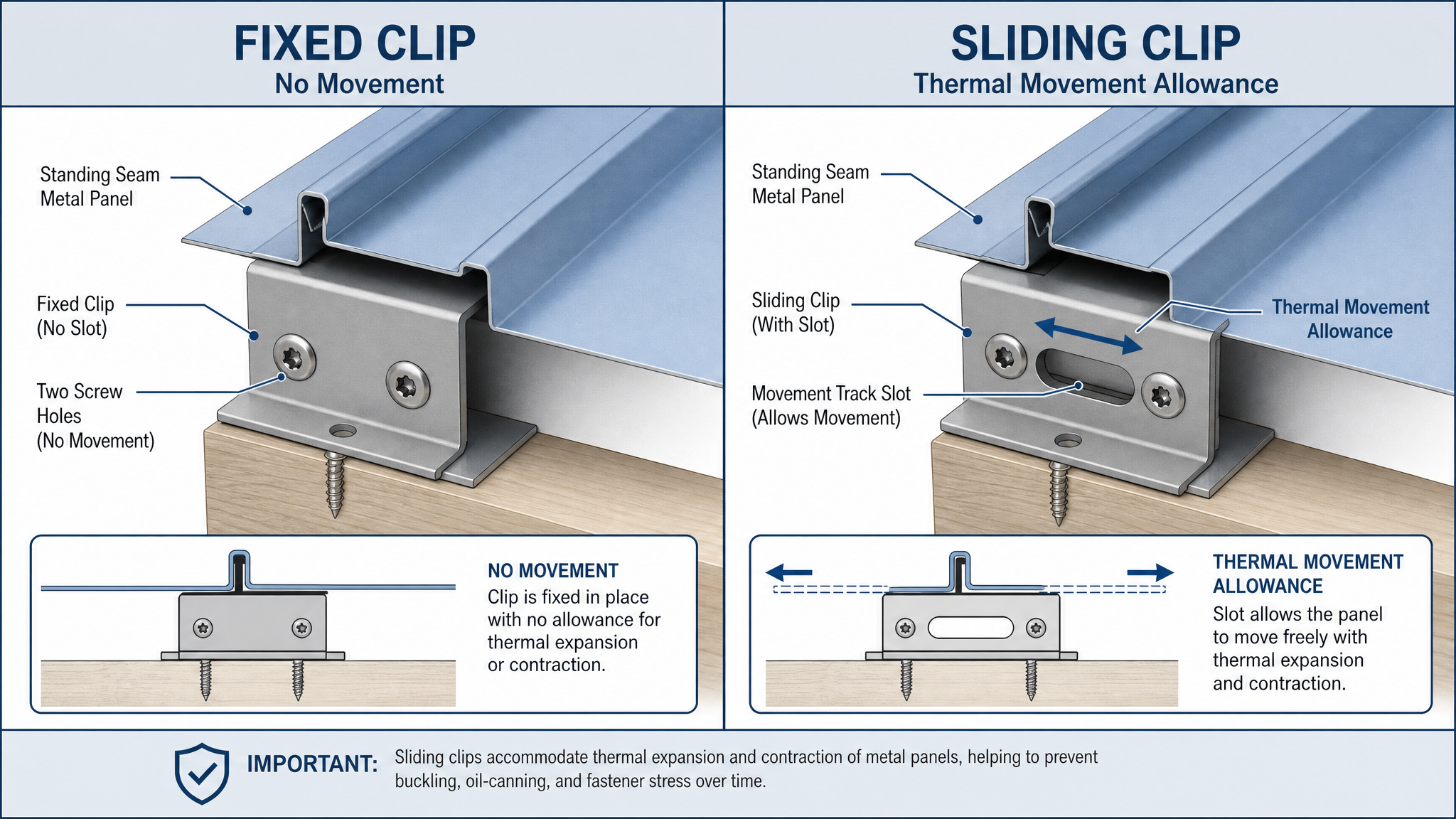
Fixed clips lock the panel in place. Sliding clips allow the panel to expand and contract as temperatures change. Most standing seam roofs use a combination of both to manage thermal movement across long panel runs.
Metal moves. A roof panel that is 20, 30, or 40 feet long does not stay the same length throughout the year. As temperatures rise, the panel expands. As temperatures fall, the panel contracts. A standing seam roofing system must accommodate that movement.
Fixed Clips
Fixed clips anchor the panel at a designated location. They establish the panel's reference point on the roof. Their job is to hold the panel firmly in position while the rest of the system manages thermal movement around it.
- Positive Panel Location
- Strong Attachment
- Controlled Movement Strategy
Sliding Clips
Sliding clips contain a slot or movement mechanism that allows the panel to travel slightly as temperatures change. The panel remains securely attached while still being able to move.
- Thermal Expansion Relief
- Reduced Stress On Panels
- Reduced Stress On Fasteners
- Better Long-Term Performance On Long Runs
Why Does This Matter?
Without proper thermal-movement management, a roof can experience:
That is why clip selection is an engineering decision, not just a purchasing decision.
The appropriate clip depends on panel length, roof geometry, temperature exposure, and system design.
Long panel runs typically benefit most from sliding clips because they allow movement without transferring excessive stress into the attachment system.
The Goal: Hold the roof down while allowing the metal to move naturally.
A properly designed clip system accomplishes both. When it does, the roof remains secure, watertight, and structurally stable for decades.
Fixed Clips vs Sliding Clips
| Feature | Fixed Clip | Sliding Clip |
|---|---|---|
| Holds Panel In Position | Yes | Yes |
| Allows Thermal Movement | Limited | Yes |
| Best For Long Panel Runs | No | Yes |
| Reduces Expansion Stress | No | Yes |
| Common In Premium Standing Seam Systems | Yes | Yes |
| Used By The Metal Roof Pros | Yes | Yes |
Selecting the correct clip type allows the roof to handle decades of expansion and contraction without placing unnecessary stress on the panels or attachment system.
How Do Our Clip Specifications Compare to a Typical Install?
The clip itself is a small piece of metal. The specifications behind that clip determine whether it remains secure through decades of wind, thermal movement, and weather exposure.
Most homeowners never see the clips. That does not make them less important.
| Component | Typical Installation | The Metal Roof Pros |
|---|---|---|
| Clip Gauge | Light-Gauge Clip | Heavy 16/18-Gauge Clip |
| Screws Per Clip | One Fastener Common | Two Coated Fasteners |
| Fastener Type | Exposed Or Concealed | Concealed Only |
| Panel Face Penetrations | Possible Depending On System | None |
| Fixed Clip Usage | Varies | Engineered As Required |
| Sliding Clip Usage | Varies | Used On Long Panel Runs |
| Coastal Hardware | Standard Materials | Stainless Steel When Required |
| Roof Appearance | Visible Fasteners Possible | Clean Standing Seam Surface |
Typical Exposed-Fastener Roof
- Hundreds Of Exposed Screws
- Rubber Washers Exposed To UV
- Ongoing Maintenance Requirements
- Potential Leak Paths At Every Fastener
TMRP Standing Seam System
- Concealed Clips
- Hidden Fasteners
- No Panel Face Penetrations
- Two Fasteners Per Clip
- Heavy 16/18-Gauge Clips
- Stainless Hardware Available For Coastal Projects
- Engineered Thermal Movement Management
Why These Specifications Matter
Every roof panel is ultimately connected to the structure through the clip system. If the clips are undersized, poorly attached, or improperly selected, the entire roofing system is affected.
What Other Questions Should I Ask?
What are the clips and fasteners on a standing seam metal roof?
Clips are small metal brackets that lock each standing seam panel to the roof deck from inside the raised seam, and the fasteners are the screws that hold those clips to the deck. We use double the number of clips compared to other less experienced installers and we use 2 screws per clip instead of 1. We hem the edges, which means tuck the ends under. This makes the panels perform better in heavy winds and makes the entire roof system more watertight. It also slams the door on embers from fire.
How are standing seam metal roof panels attached to the deck?
Standing seam panels are attached with concealed clips, not by screwing through the face of the metal. Each panel locks over a row of clips that are screwed to the deck, and the next panel seams over the same row, hiding every fastener inside. This is what lets the panels run unbroken from ridge to eave, with no holes across the flat of the roof for water or embers to find.
Why are the fasteners hidden on a standing seam roof?
A standing seam roof hides its fasteners inside the raised seams, so there are no screw holes through the flat of the panel. Where there are holes, there is an opportunity for water and embers to get inside. Each panel is held by concealed clips with two screws in each clip. Cheaper exposed-fastener roofs rely on rubber-washered screws that dry out, back out, and leak.
What is the difference between a standing seam and an exposed-fastener (screw-down) metal roof?
A standing seam roof hides its fasteners inside the seams, while an exposed-fastener or screw-down roof is bolted straight through the face of the panel, leaving hundreds of visible screws on the surface. Those rubber-washered screws dry out, back out, and leak within years, and each hole is a spot where embers can get in. Standing seam is the premium, longer-lasting system with nothing exposed to fail.
How many clips and screws do you use, and how far apart?
We use two screws in every clip, where most installers use one, and we set the clips far closer together than standard. Most installers place clips every 24 inches; we place ours every 12 inches, so we use about twice as many. At the eaves, rakes, and ridges where wind uplift is strongest, we tighten the spacing to every 9 inches, so the roof holds in the worst wind.
Because you use double clips and screws, does that increase the cost?
No. Using double clips and two screws per clip is our standard on every roof, so it is already built into our price. In fact, our pricing is typically far lower than competitors. Most of them are general roofing companies with no metal expertise or machinery, so they subcontract the metal work (often us) and mark it up. Working directly with us cuts out that middleman markup, so you get the expert trusted by other experts for far less (often 30% less). Standing seam metal roofs generally run about $14 to $18 per square foot. Check out our free satellite quote to get an exact quote for your new roof without ever having to speak with a person until you are ready.
Do standing seam panels expand and contract, and how do the clips handle it?
Metal panels expand and contract with heat and cold, and the clips are built to let them move without buckling, also known as oil-canning. Each panel is locked down at the clips but can still slide slightly as it warms and cools through the day, so it never bulges or pulls its fasteners loose. This is one reason a concealed-clip roof outlasts a screw-down roof, whose fixed screws fight that movement and slowly work loose.
Why do you require the old roof to be removed before installing a standing seam metal roof?
The clips can only grip if they are screwed into a solid, sound roof deck, which is why we never install over old tiles or shingles. Screwing clips through an existing roof gives the fasteners nothing firm to bite, so the panels are not truly anchored. A standing seam roof is only as strong as the deck its clips are fastened to, so we start with a clean, solid deck every time.
Can you walk on a standing seam metal roof?
No, you should not walk on a standing seam metal roof. Stepping on the panels or the raised seams can dent them, and only a trained metal roofing professional knows exactly where and how to step without causing damage. If your roof ever needs to be inspected or accessed, call us and we will send a crew that can walk it safely. Leave the roof to the professionals.
Related Resources
Get a Free Quote by Email
The clips and fasteners beneath a standing seam roof are invisible once the job is finished. They are also what keeps the roof attached to your home for decades.
Standing Seam Attachment Systems
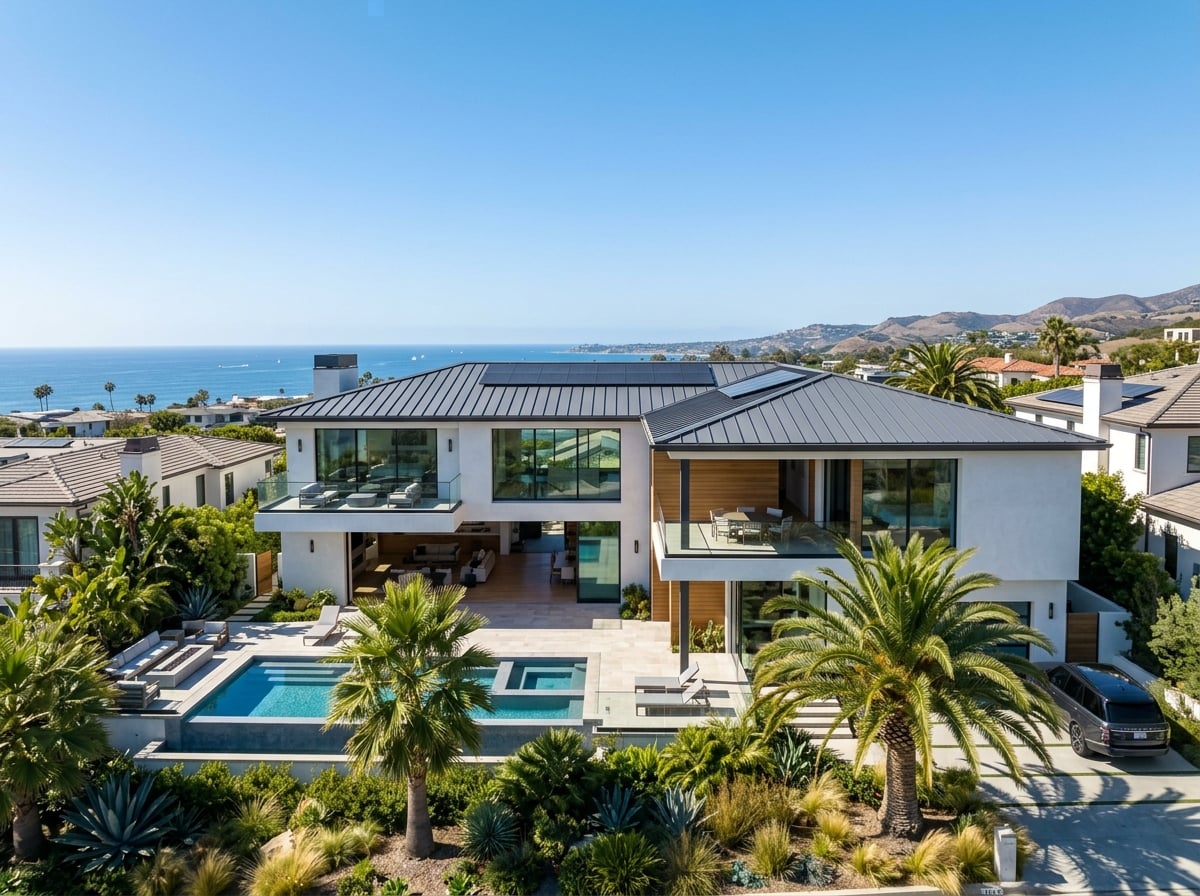
Luxury Residential
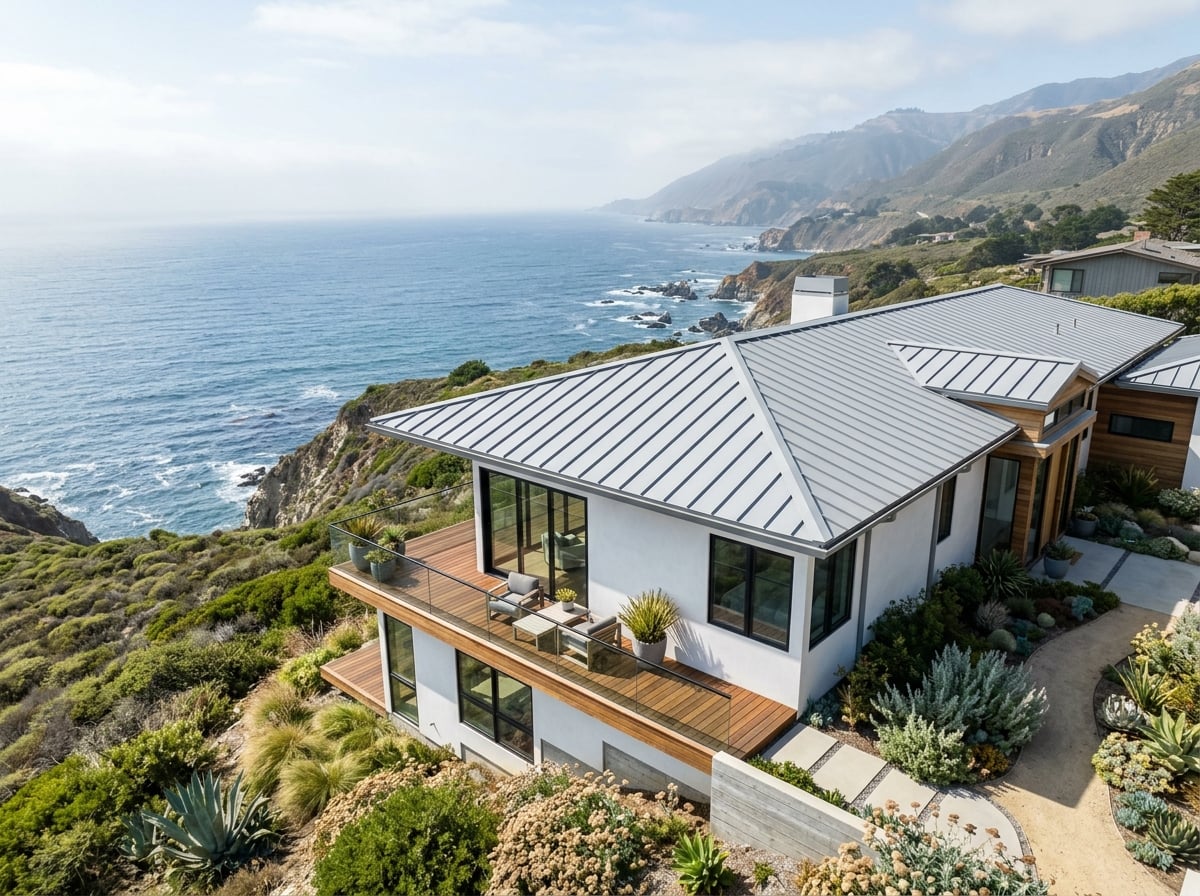
Coastal Roofing
Modern Architecture
Hillside Homes
Helpful Resources
CSLB #1234567 · (818) 937-4500