Commercial Metal Roofing
Metal Gauge for Los Angeles Commercial Standing Seam Roofs
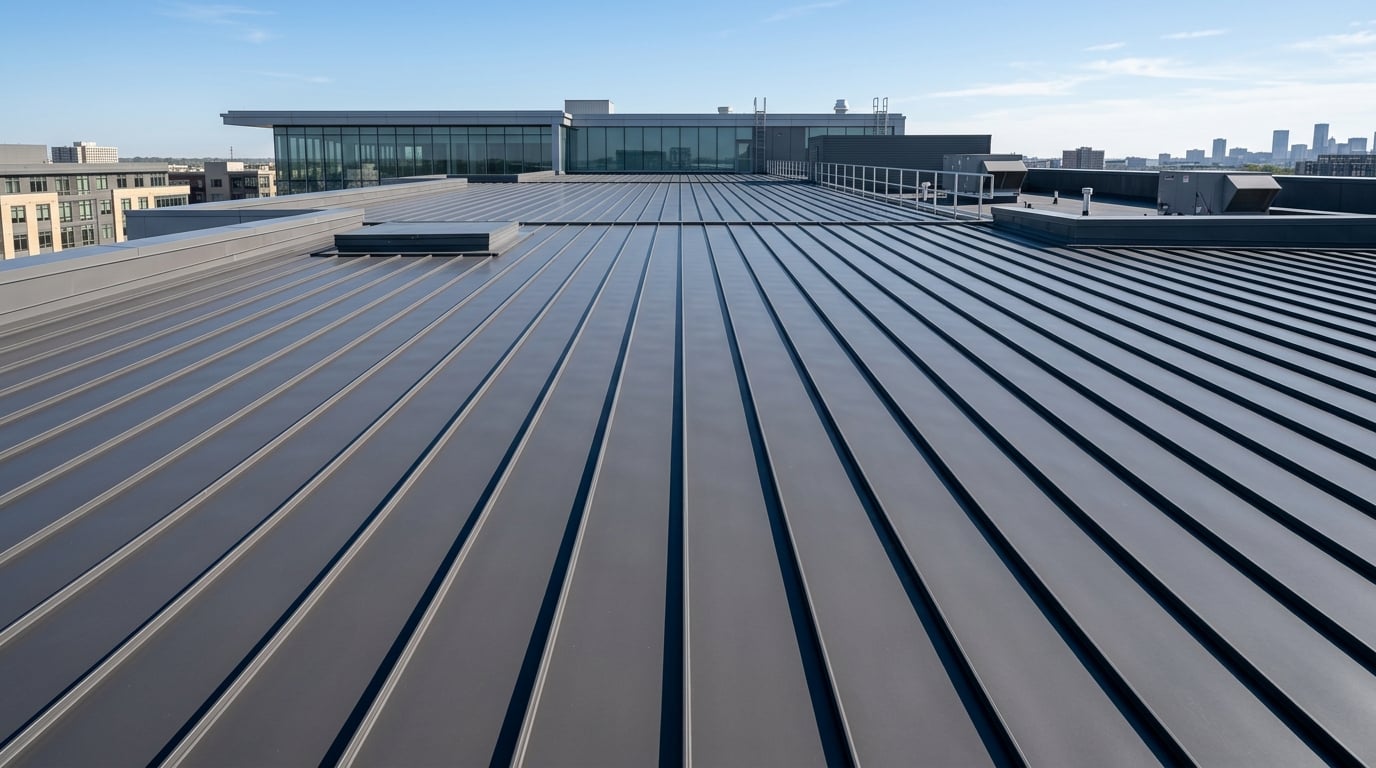
On a commercial building, the thickness of the metal, its gauge, is one of the quietest line items on a bid and one of the most important. It sets how the roof handles wind uplift across wide spans, technicians walking it to service equipment, hail, and decades of thermal cycling.
We build commercial standing seam roofs in 24 and 22-gauge steel, never the thin 26-gauge that some bids quote to hit a lower number. That single spec is the difference between a roof that stays flat and tight for decades and one that oil-cans and loosens early.
Until 2026 we worked only for other roofing companies and general contractors, so on your building you are hiring the contractor they hire and skipping the markup.
What Gauge Should a Commercial Metal Roof Be?
A commercial standing seam roof should be 24-gauge steel at a minimum, stepping up to 22-gauge on larger or more wind-exposed buildings. We do not install 26-gauge steel on commercial work, and we will not warranty it.
The reason is service life under load. A commercial roof runs long panels across wide spans and takes wind uplift, rooftop foot traffic, and equipment vibration that a small roof never sees. Heavier steel holds those forces without flexing, denting, or loosening at the seams. Aluminum, when a building calls for it, is measured in inches of thickness rather than gauge, at .032 or .040 inch.
Why Does a Lower Gauge Number Mean Thicker Steel?
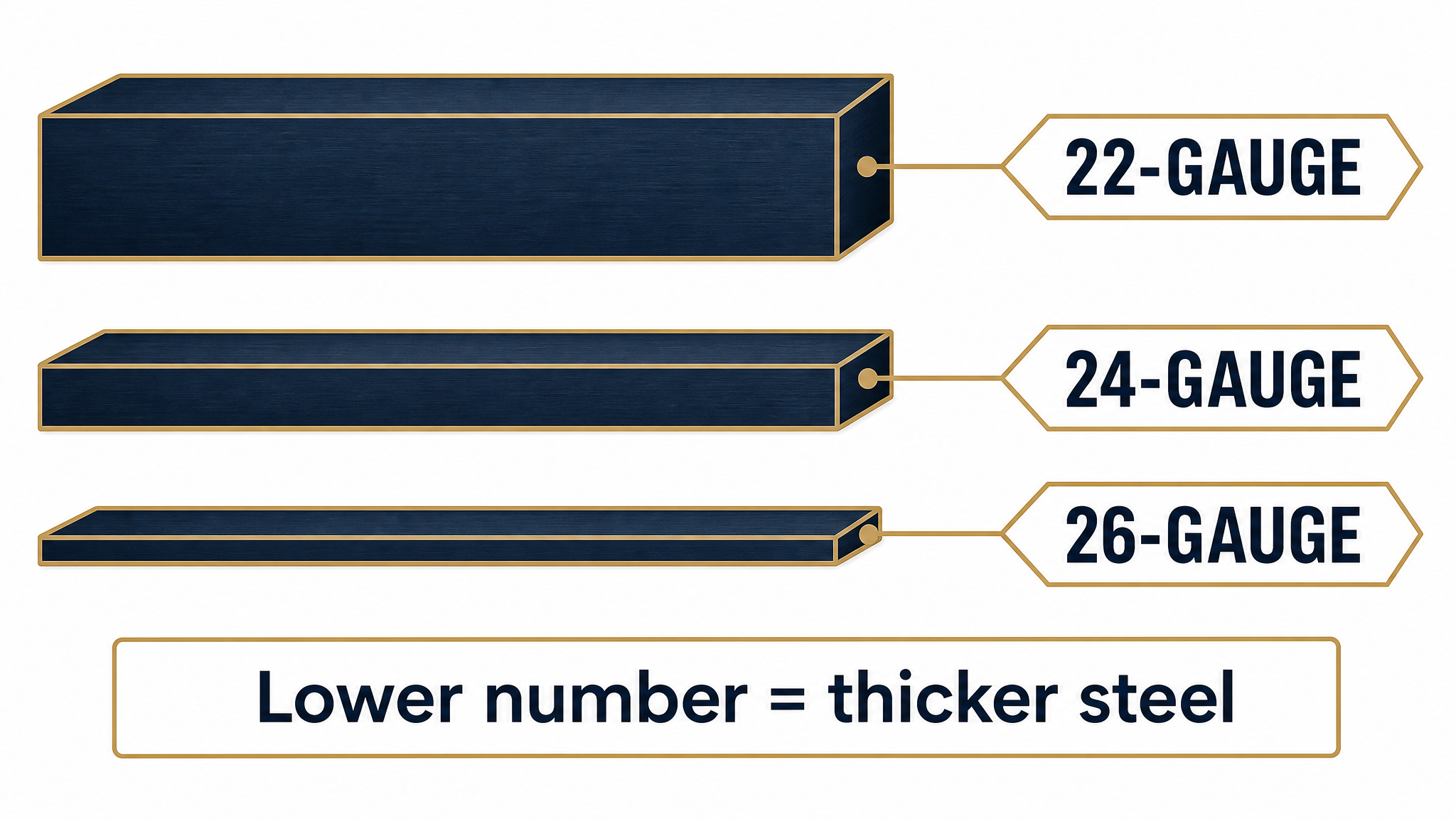
A lower gauge number means thicker steel because gauge runs on an inverse scale, where the number counts down as the metal gets heavier. So 22-gauge steel is thicker and stronger than 24-gauge, which is thicker than 26-gauge.
This is where bids get slippery. Because "26" is a larger number than "24," a thinner, cheaper roof can look on paper like more roof. When a quote quietly steps from 24-gauge to 26-gauge, the building is actually getting less steel, not more. Knowing the scale runs backward is the easiest way to compare two commercial bids honestly.
Why Does Gauge Matter More on a Commercial Roof?
Gauge matters more on a commercial roof because the panels are longer, the spans are wider, and the surface carries loads a house never faces. Every one of those conditions punishes thin metal.
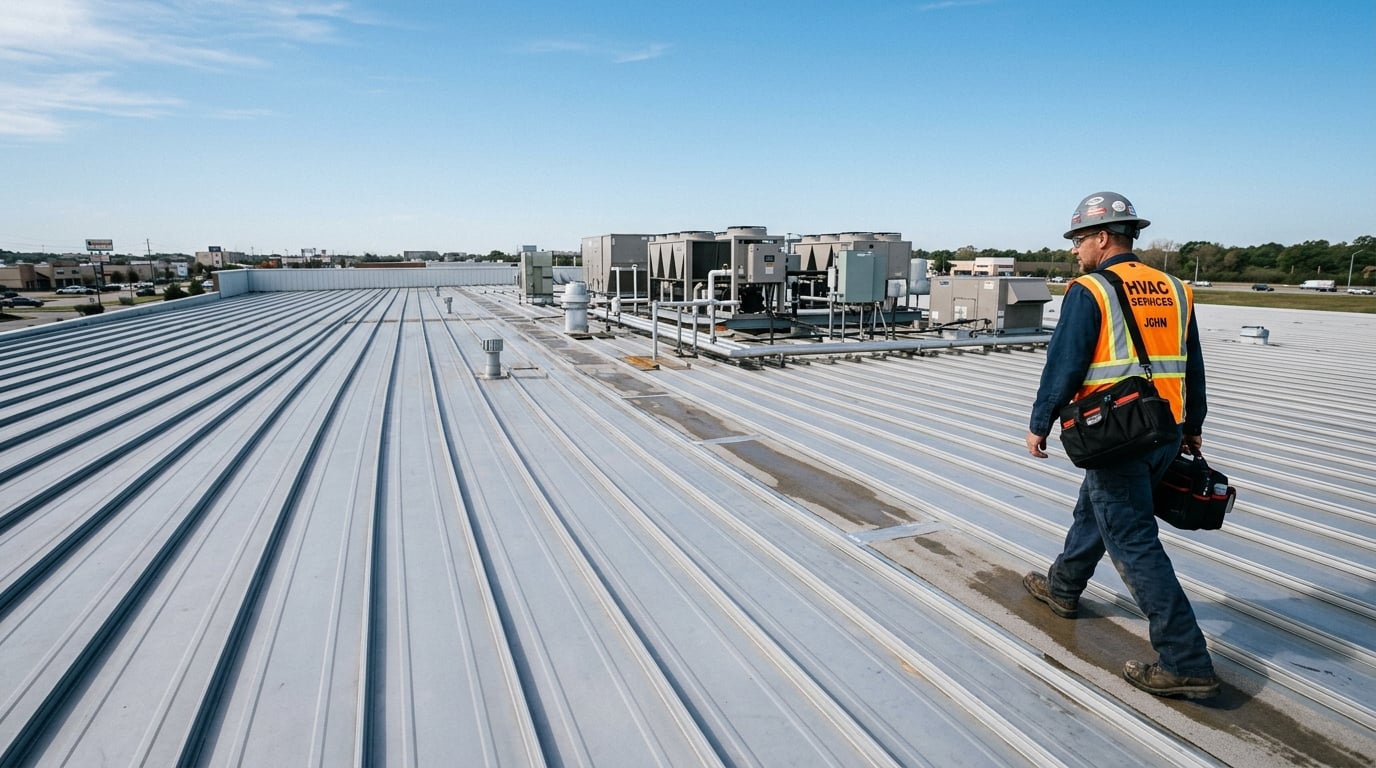
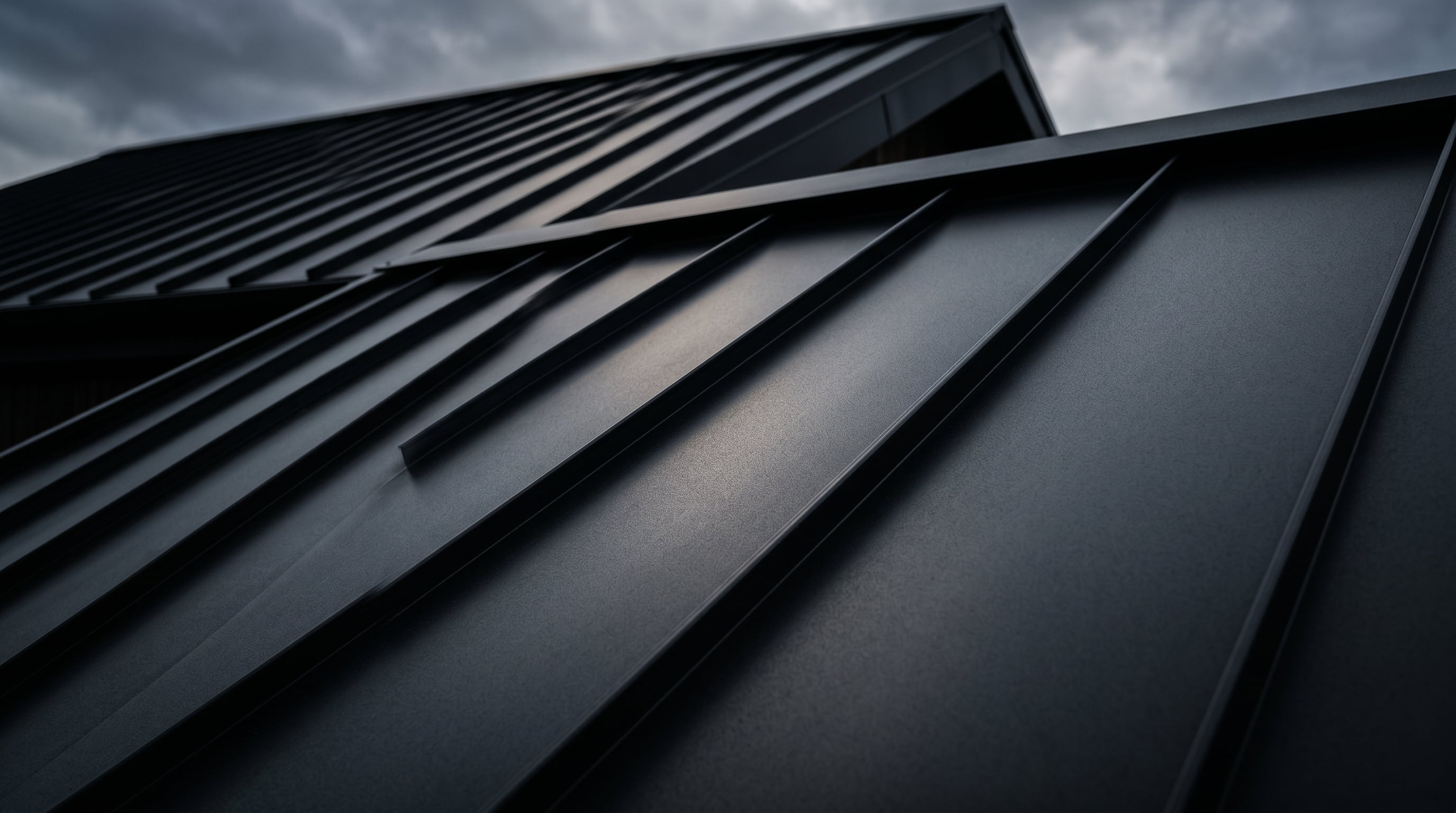
Long panel runs are the first place thin steel shows itself, oil-canning into visible waves across a wide roof in flat sunlight, while heavier gauge stays flat. Wide, low-pitch expanses catch strong wind uplift, and thicker steel anchored to the structure resists it. Rooftop foot traffic from crews servicing HVAC and other equipment dents thin panels but not heavier ones. Add decades of daily thermal expansion, and the roof built from 24 or 22-gauge steel is the one still holding its shape and its seams long after a thin roof has loosened.
Steel Gauge or Aluminum Thickness for Your Building?
The choice between steel and aluminum comes down to the building's environment, and each is specified differently: steel in gauge (24 or 22) and aluminum in inches (.032 or .040). Most inland commercial buildings are well served by 24 or 22-gauge steel, which pairs strength with cost.
Buildings near the coast or in corrosive industrial settings are better served by aluminum, because aluminum does not rust. Note that aluminum is never specified in gauge, so a bid listing "24-gauge aluminum" is a sign the contractor is guessing. We spec the metal and thickness to how your building is exposed, then form the panels to match.
What Other Questions Should I Ask?
Reach Us
Get a free satellite quote for your commercial metal roof. We will email your estimate and answer your questions, with no salesperson visit.
Call (818) 937-4500 or use the contact form in the footer. On your building, you are hiring the contractor other roofing companies and general contractors hire.