Commercial Metal Roofing
Structural Fastening for Los Angeles Commercial Metal Roofs
A commercial standing seam roof stays on the building because of what you cannot see: the concealed clips that anchor the panels and let them move. Get the fastening right and the roof holds flat through decades of wind and heat. Get it wrong and the panels loosen, oil-can, or lift.
We engineer the fastening to the building's structure and wind loads, using concealed clips that grip the panels without a single hole through the face of the metal.
Until 2026 we worked only for other roofing companies and general contractors, so on your building you are hiring the contractor they hire and skipping the markup.
How Is a Commercial Standing Seam Roof Fastened?
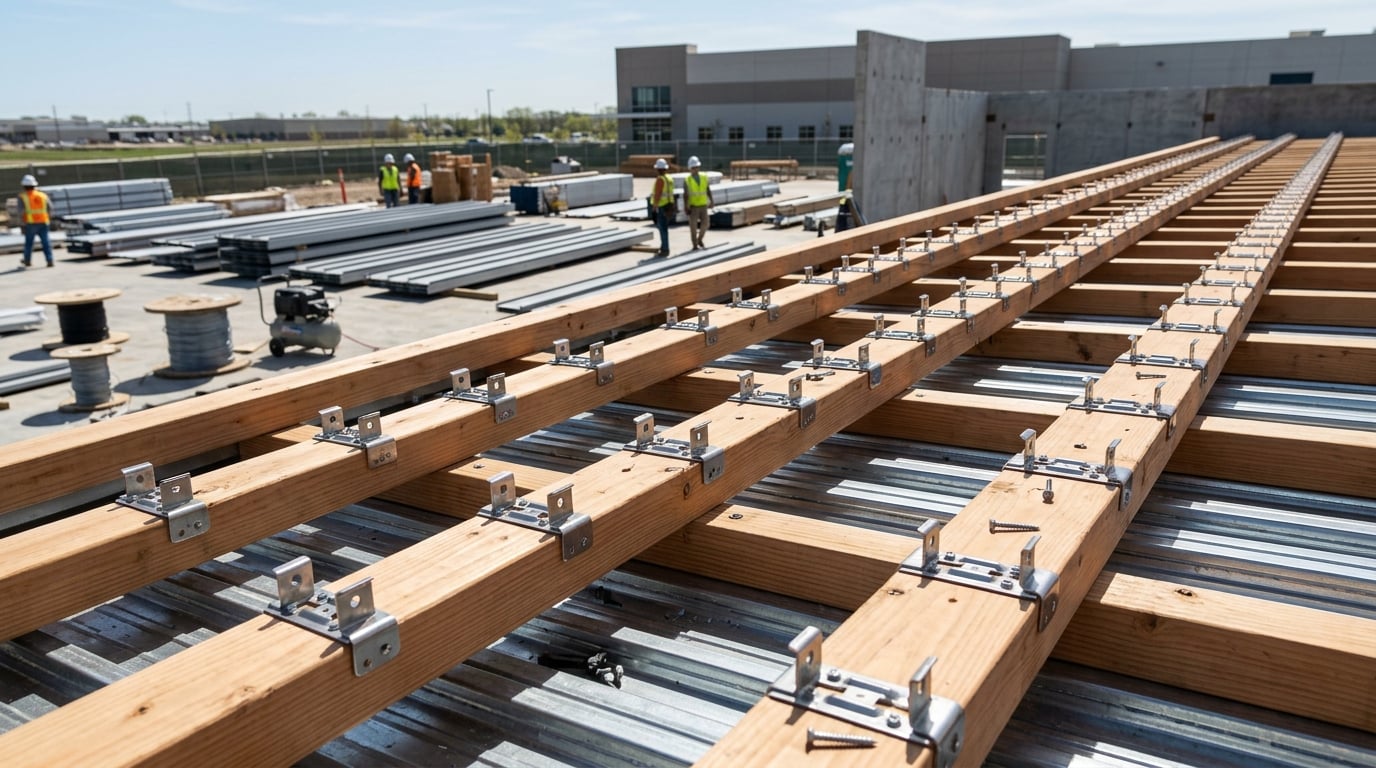
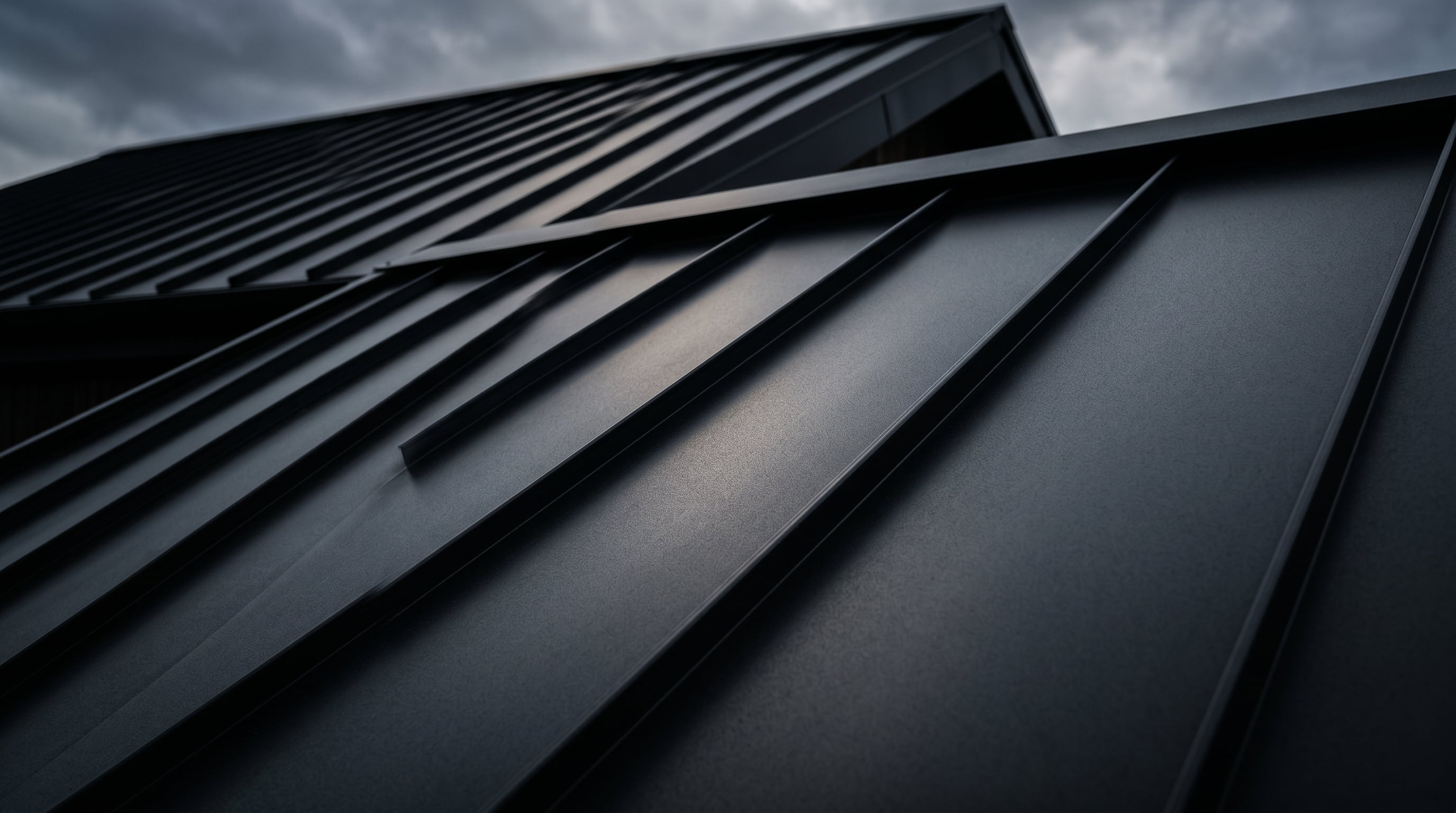
A commercial standing seam roof is fastened with concealed clips that lock into the panel seams and screw into the structure, so no fastener ever penetrates the face of the metal. Each clip is heavy-duty and set with two fasteners into the deck or framing below.
On an architectural roof the clips anchor into a solid deck, and on a structural roof they anchor directly to the purlins or bar joists the panels span. Either way, the panels are held by the seams rather than by screws driven through the surface, which is the core reason standing seam outlasts an exposed-fastener roof.
Why Do the Clips Need to Float?
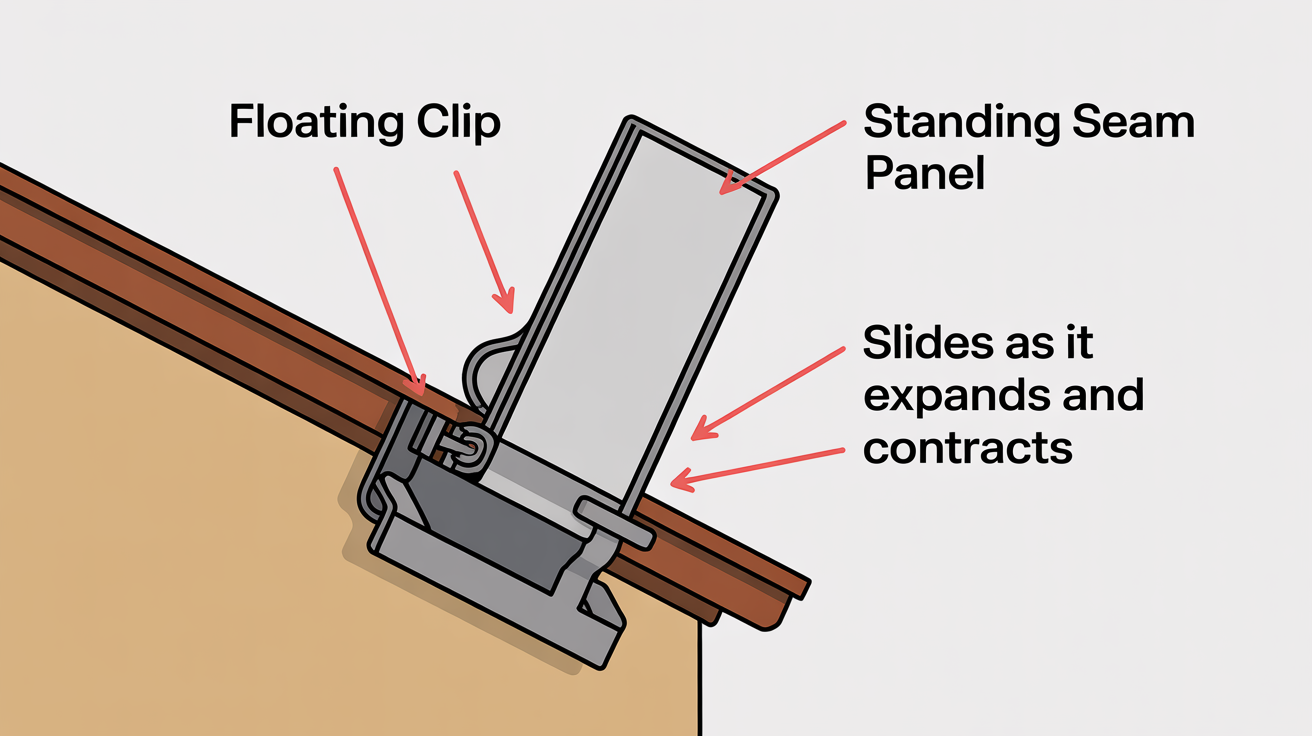
The clips need to float because metal expands and contracts with temperature, and a long commercial panel can move a meaningful amount between a cold morning and a hot afternoon. A floating clip lets the panel slide with that movement instead of fighting it.
If the panels were pinned solid, that daily movement would have nowhere to go, and the forces would show up as buckling, oil-canning, and stress on the seams and fasteners. Floating clips absorb the movement, so the roof stays flat and tight across long runs year after year.
How Do You Engineer Fastening for Wind Uplift?
We engineer the fastening to the building's wind loads, tightening the clip spacing where uplift is strongest. Wind does not pull evenly on a roof; it pulls hardest at the perimeter and corners, so those zones get more clips than the open field.
The assembly itself is chosen from tested systems with published wind-uplift ratings, such as UL 580, that the manufacturers document for the project. That way the roof is not fastened by feel, it is fastened to a rated, engineered standard the design team and building department can verify.
Should a Commercial Metal Roof Use Concealed Clips or Exposed Fasteners?
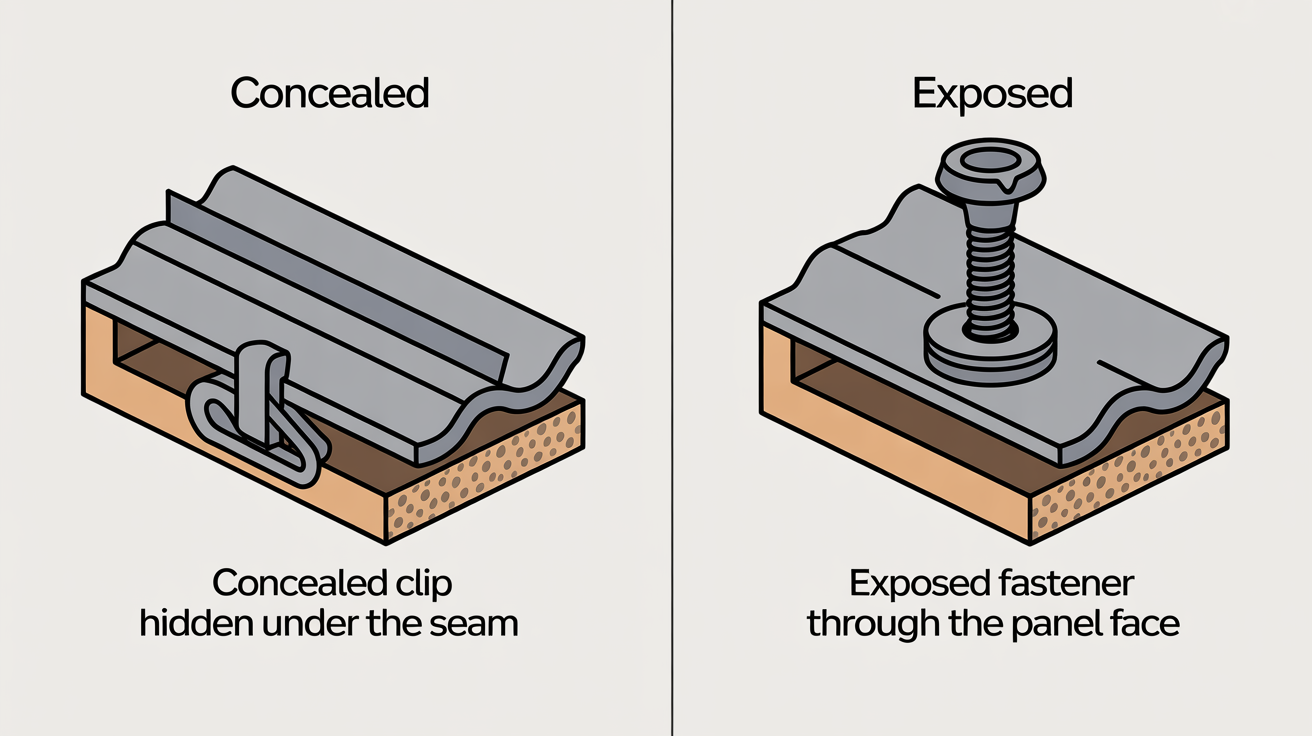
The difference between concealed clips and exposed fasteners is where the screws live, and it decides how the roof ages. A standing seam roof hides its fasteners under the seam, while a screw-down roof drives fasteners with rubber washers through the face of the panel.
Those exposed washers are the weak point of a screw-down roof. Over years of sun and thermal movement they dry out, and the screws can loosen and back out, turning each fastener into a place a leak can start and a line item on the maintenance schedule. A concealed-clip roof carries none of that on its surface, which is why we use standing seam wherever the building and budget allow.
What Other Questions Should I Ask?
Reach Us
Get a free satellite quote for your commercial metal roof, fastened and engineered to your building's wind loads. We will email your estimate and answer your questions, with no salesperson visit.
Call (818) 937-4500 or use the contact form in the footer. On your building, you are hiring the contractor other roofing companies and general contractors hire.