

Why Rain Gutters Matter: How They Protect Your Home
Every roof sheds water. Rain gutters decide where that water goes, protecting your fascia, siding, windows, walkways, landscaping, and foundation from concentrated roof runoff.
Why Do Rain Gutters Matter on a Metal Roof?
Every roof sheds water. Rain gutters decide where that water goes.
Without a controlled drainage system, rainwater pours off the roof edge and lands wherever gravity takes it. A properly designed gutter system collects that runoff, carries it through downspouts, and discharges it a safe distance from the house.
That simple process helps protect your fascia, siding, windows, walkways, landscaping, and foundation from repeated exposure to concentrated roof runoff.
This guide explains why rain gutters are important, what happens when a home does not have them, how they help protect different parts of your property, and the basic maintenance that keeps them working properly. If you are looking for information about seamless gutters, gutter guards, gutter materials, colors, sizes, or installation, visit our Rain Gutters page. You can also browse more homeowner guides in our Learning Center.
Why Are Rain Gutters Important?
Rain gutters are important because they control where roof runoff goes after it leaves the roof.
Every time it rains, thousands of gallons of water can flow off a roof over the course of a year. Without gutters, that runoff falls directly beside the home. Gutters collect the water along the roof edge, move it through the gutter system, and direct it through downspouts to a safe discharge point away from the house.
By controlling roof runoff, gutters protect the fascia, siding, windows, walkways, landscaping, and foundation from repeated water exposure. Instead of allowing water to spread unpredictably around your home, they create a controlled drainage path that helps keep the exterior dry and functioning as intended.
If you're interested in choosing the right gutter system, materials, or installation options, see our Rain Gutters guide.
What Happens if You Don't Have Gutters?
A home without gutters is exposed to repeated water damage every time it rains.
As roof runoff falls directly beside the house, the soil becomes saturated and begins to shift over time. That repeated exposure can contribute to foundation cracking and settling, while water collecting around the home can also lead to crawlspace moisture.
Elsewhere around the property, uncontrolled runoff can erode landscaping, rot fascia boards, stain siding, and create the persistent damp conditions that allow mold to develop.
Not every home requires gutters on every roof edge, but when rainwater is not managed properly, it eventually finds its own path, and that path is rarely where you want it.
How Do Gutters Protect Your Foundation?
Gutters protect your foundation by directing roof runoff away from the base of your home instead of allowing it to soak into the surrounding soil.
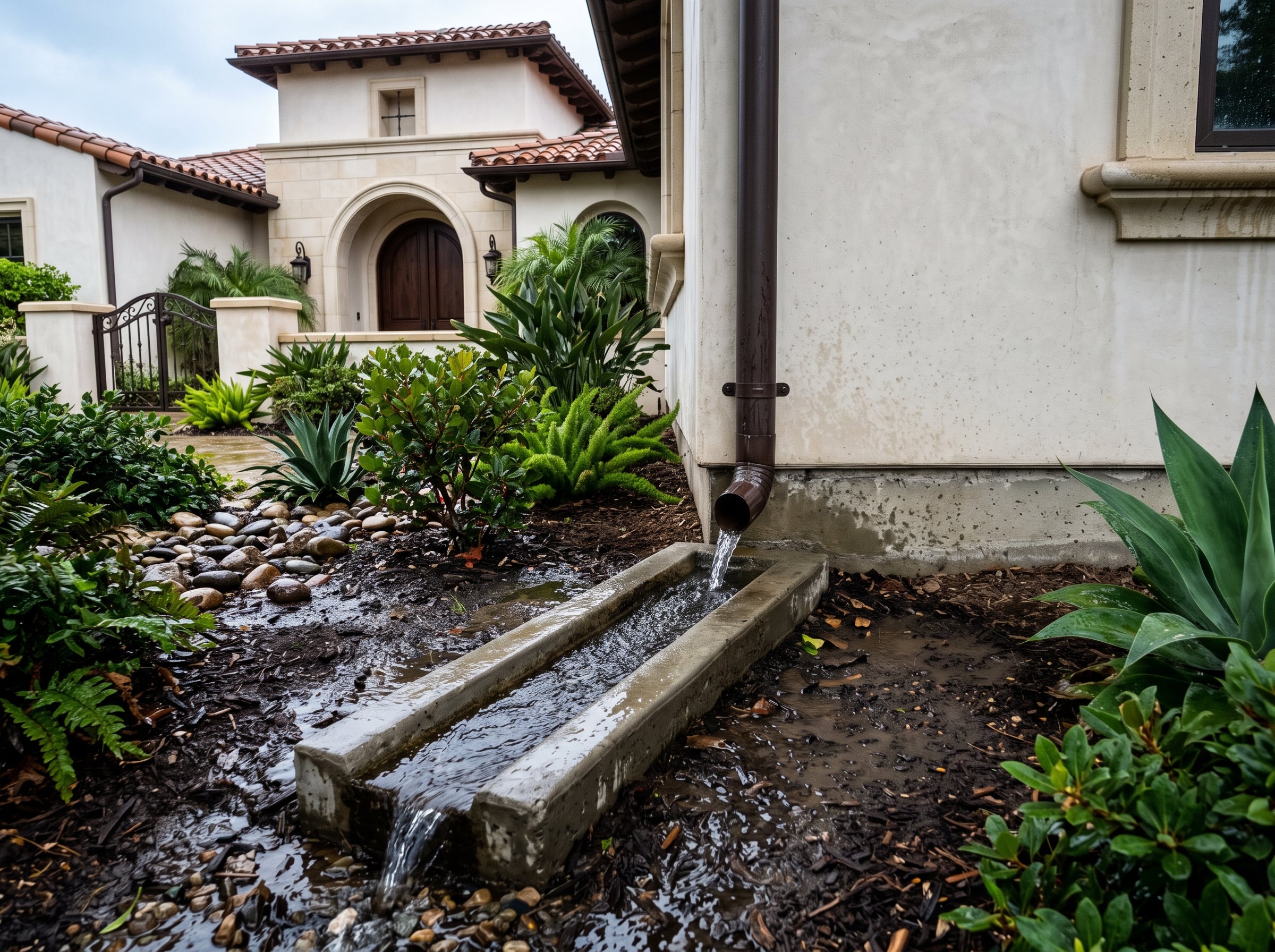
A foundation performs best when the soil around it remains as stable as possible. During a rainstorm, a roof concentrates water into a relatively small area. Without gutters and properly placed downspouts, that water is repeatedly deposited next to the foundation.
By carrying runoff away from the house before it can saturate the surrounding soil, gutters help maintain more consistent ground conditions around the foundation. This controlled drainage is one of the primary reasons gutters are installed on homes in areas that receive seasonal rainfall.
If you would like to learn more about gutter systems, installation methods, or seamless gutter options, visit our Rain Gutters page.
How Do You Keep Gutters Working Properly?
Most gutters should be cleaned about twice a year, although homes with heavy tree cover often require more frequent cleaning.
Leaves, twigs, and other debris can prevent water from flowing freely through the gutter system. Routine cleaning keeps water moving efficiently and allows you to spot small issues before they become larger repairs.
For homeowners who want to reduce maintenance, micro-mesh and surface-tension gutter guards help keep debris out while reducing how often the gutters need to be cleaned.
This article focuses on maintenance. If you'd like to compare gutter guard options, learn about seamless gutter systems, or see what we install, visit our Rain Gutters page.
What Are Gutters Made From?
Aluminum is the most common gutter material because it will not rust, and quality seamless aluminum gutters typically last 20 years or more.
Steel and copper are also available. Steel provides additional strength for some applications, while copper is a premium option chosen primarily for its distinctive appearance and long service life.
Material selection is only one part of choosing the right gutter system. If you want to compare aluminum, steel, and copper gutters, learn about seamless gutter systems, or explore installation options for your home, visit our Rain Gutters page.
Are Seamless Gutters Better Than Sectional Gutters?
Seamless gutters perform better because each gutter run is formed as one continuous piece, leaving far fewer joints where leaks and clogs can develop.
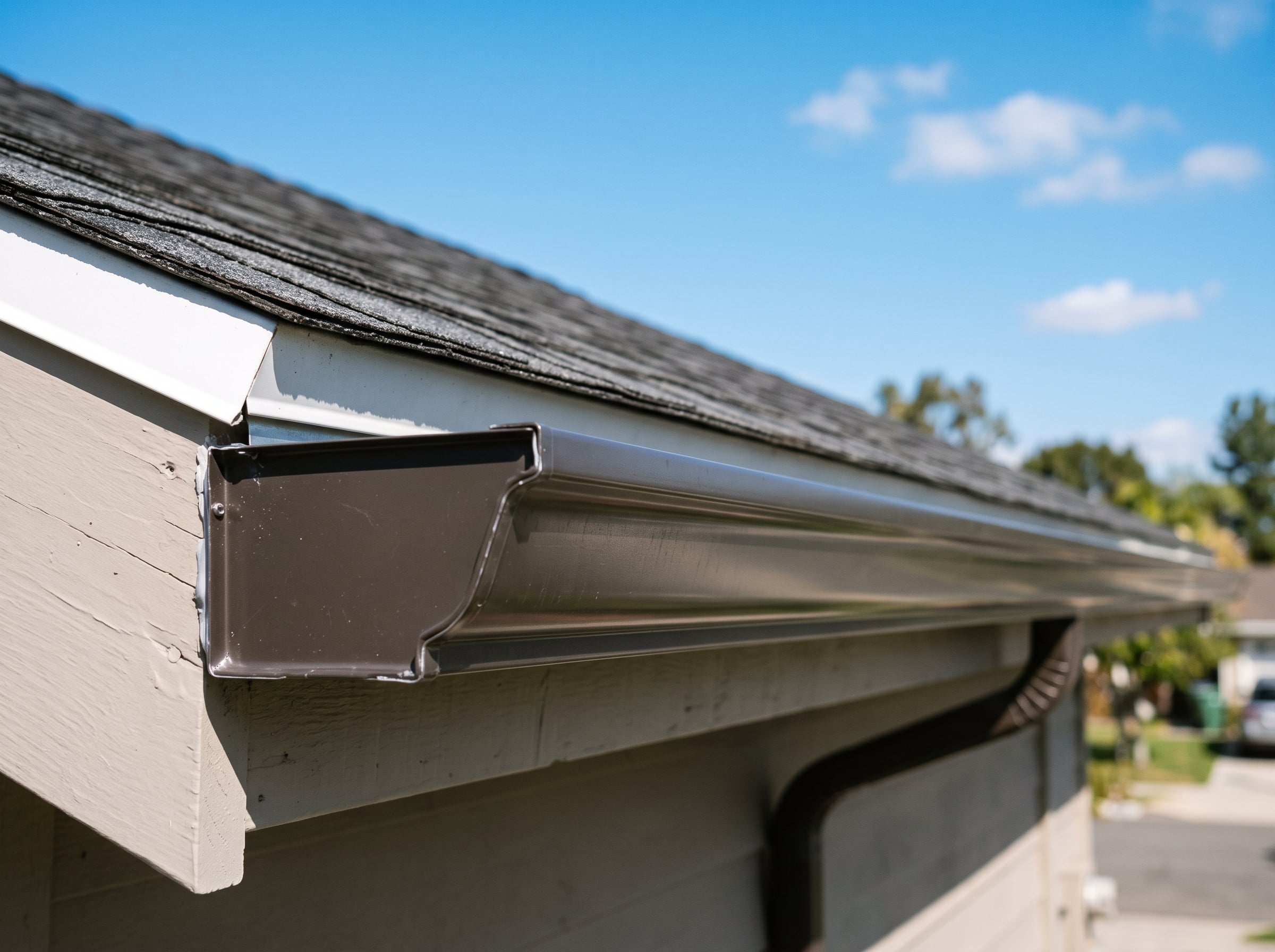
Sectional gutters are assembled from multiple pieces connected together, creating a seam every few feet. Each connection is another place where water can escape or debris can accumulate over time.
This article explains the basic differences. If you'd like to learn more about seamless aluminum gutters, installation methods, or the gutter systems we install, visit our Rain Gutters page.
When Should Gutters Be Installed or Replaced?
The best time to install or replace gutters is when you replace your roof, because the roof edge is already accessible and the entire drainage system can be fitted correctly from the start.
If your existing gutters are leaking at multiple locations, pulling away from the fascia, sagging between supports, or showing widespread corrosion or physical damage, replacement is usually more practical than repeated repairs.
For homes with standing seam metal roofing, we install color-matched seamless aluminum gutters beneath the metal drip edge for a clean appearance and proper water management. If you'd like to learn more about gutter installation, available colors, sizing, or request a free quote, visit our Rain Gutters page.
What Other Questions Should I Ask?
Reach Us
Whether you're replacing your roof, adding seamless gutters to an existing home, or deciding which gutter system fits your property, start with a free satellite quote.