Wildfire Rebuild | Eaton & Palisades
Tile Cracks and Lets Embers In. Steel Doesn't.
- Fireproof steel panels on top
- Fire-resistant underlayment beneath
- Roof vents that swell shut in heat, sealing embers out
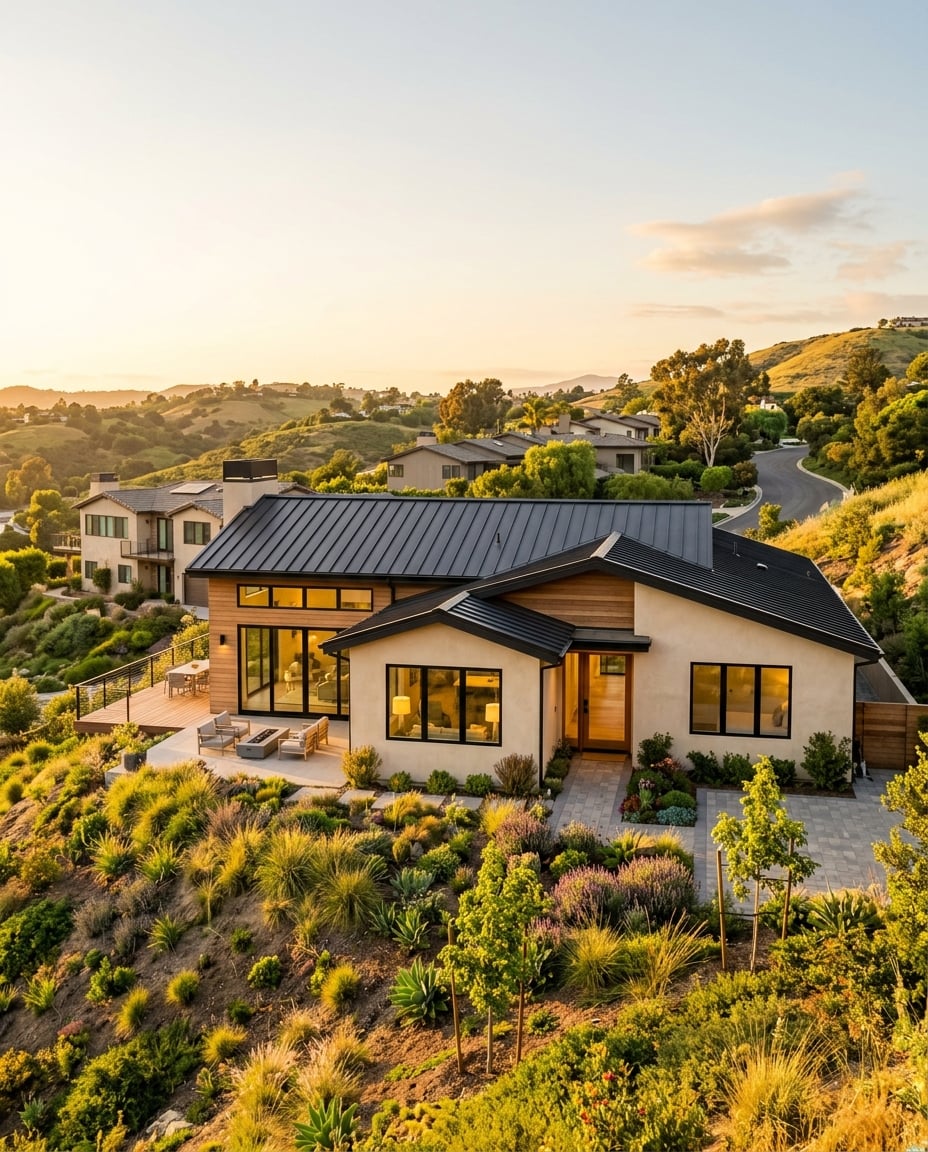
The Eaton and Palisades fires did not spare the homes with tile roofs. Embers found the cracks, slipped underneath, and lit the wood deck on fire.
You are rebuilding now. This is your chance to put on a roof that slams the door on embers for good.
Where Does the Fire Actually Start?
Most homes do not burn down because the flames overtake them. Instead, they ignite from embers, blown for a mile or more, that land on the roof or go into roof vents and burn the house from the top down. Your roof is the first thing the fire reaches, and a crucial part you can build to win.
Wind-driven embers can travel a mile or more ahead of the flames.
They land on the roof and vents and burn the house from the top down.
Why Did So Many "Fire-Safe" Roofs Still Burn?
Clay and concrete tile look tough, but they crack and shift, leaving wide open gaps for embers to enter.
Windblown embers blow straight into those gaps and ignite the underlayment and wood underneath.
The tile survived. The house did not.
Standing seam steel gives an ember nothing to enter. It is one continuous panel, fasteners hidden under the seam, every edge sealed.
Class A Roof Assembly
The code-compliant path back into your home in California's high fire hazard severity zones.
Rebuilding in a High Fire Zone? Chapter 7A Already Decided Your Roof.
Rebuilds in California's high fire hazard severity zones must meet Chapter 7A of the building code, which requires a Class A roof assembly. Standing seam metal is one of the very best Class A options.
Why Does Tile Fail Where Metal Holds?
If you are rebuilding in the canyons of Pacific Palisades or the foothills of Altadena, a standing seam metal roof is the only logical choice to harden your home.
Why tile fails and standing seam wins:
Tile creates ember tunnels: The curved barrels of clay and concrete tiles leave open gaps. Wind-driven embers blow straight underneath, igniting the wood deck. Metal panels lock together seamlessly with zero gaps.
Tile cracks under heat: Extreme thermal shock shatters clay and concrete, exposing the raw structure to fire. Metal tolerates the heat without breaking.
Tile traps fuel: Leaves and pine needles pile up in tile curves and valleys. Metal sheds debris completely, removing the fuel source.
Do not rebuild the same vulnerability.
What Makes Polystick XFR the Right Underlayment for a Fire Zone?
Because metal panels conduct exterior heat efficiently during a wildfire, your plywood roof deck needs a severe thermal block. We install Polyglass Polystick XFR directly to the deck before the metal panels go down. This heavy duty, stick down underlayment provides a bulletproof waterproof barrier and a critical shield against intense heat.
How It Protects Your Structure
Patented Burn Shield Technology: Polystick XFR is engineered with built in fire retardants that stop flame spread and penetration. It allows a standard wood deck to achieve a UL Class A fire rating, the highest protection level available.
High Temperature Defense: Rated to withstand intense heat, it will not melt, degrade, or fail under hot metal panels when a wildfire passes over.
Seamless Self-Adhering Seal: Unlike traditional felt that requires thousands of nail holes, this underlayment glues itself directly to the deck. It seals completely around every fastener, eliminating tiny gap vulnerabilities where hot gases could breach the attic.
It is CAL FIRE BML listed and approved for Wildland Urban Interface (WUI) zones. This underlayment ensures your roof assembly is protected from the deck up.
How Do Vulcan Self-Closing Vents Keep Embers Out?
When a wildfire threatens your community, standard home vents can act as an open invitation for destructive embers. Vulcan Vents completely redefine property safety in high-risk zones, delivering unmatched protection without sacrificing daily airflow.
How the Technology Works
The Daily Grind: Under normal conditions, the specialized honeycomb aluminum mesh allows for optimal, healthy attic and crawlspace ventilation.
The Fire Defense: Under extreme heat, a built-in intumescent coating expands rapidly, automatically sealing the vent to block out dangerous embers and flames.
Why Choose Vulcan Vents?
Proven WUI Protection: Fully tested and approved to meet strict Wildland-Urban Interface (WUI) standards, giving you a field-tested safeguard against the devastating effects of wildfires.
Upgrading your vents is one of the smartest, most effective steps you can take to harden your home against a wildfire.
How Does Attic Insulation Block Radiant Heat?
During a wildfire, your roof can experience external temperatures exceeding 1000 degrees. Even if flames don't breach the metal panels, that extreme radiant heat can transfer into your attic and instantly ignite standard building materials. Fire-resistant insulation is your last line of defense.
The True Fireproof Contenders
Mineral Wool (Rockwool): The absolute gold standard for fire zones. Made from actual volcanic rock and slag, it is completely non-combustible and can withstand temperatures up to 2150°F without melting, smoking, or burning.
Unfaced Fiberglass Batts: Because this insulation lacks the combustible paper or foil backing found on standard retail rolls, the pure glass fibers will not ignite or feed a fire.
Why Standard Insulation Fails in a Fire
The Spray Foam & Paper Trap: Standard spray foam is an organic plastic that will ignite and burn when exposed to high heat. Regular fiberglass with paper facing adds fuel to the attic. True fire-hardening requires switching to dense, mineral-based or completely unfaced materials that refuse to cooperate with fire.
Upgrading your attic insulation ensures that even if the canyon heat peaks, your home's interior stays decoupled from the threat outside.
Why Do Other Roofers Hire Us?
Metal is all we do. Other roofing companies and general contractors hire us to install their metal roofs.
Until March 2026 we worked strictly B2B. Now we also work directly with homeowners, to cut out the middleman and pass on the same wholesale pricing we give general contractors and other roofing companies.
We are licensed and specialized in every part of the system. Our co-founders, partners, and crew hold:
- C-39 (roofing),
- C-43 (sheet metal, the metal expertise general roofers lack),
- C-10 (full electrical, beyond the limited C-46 solar-only license), and
- Class B (general building, the whole structure under your roof).
Our C-43 specialist runs every job. He leads our crew on the roof, forming each panel by hand.
Every panel is a different length, even the ones right next to each other, sometimes by as little as 1/8 inch. That is why panels cannot be ordered ahead and shipped.
Each one has to be formed on site by a true sheet-metal specialist who understands how metal moves, not just any roofer who does asphalt or tile, no matter how experienced.
We offer an 8-year workmanship warranty in addition to the standard manufacturer's warranty.
What Proof Do We Have That This Works?
800+
roofs installed, most of them for other contractors
5.0
Google rating
43
years of roofing experience
Get a Free Standing Seam Roof Quote by Email
Upload or email your plans and we send a free quote to your inbox. No pushy salesmen, no appointments until you are ready, no phone calls.
What Other Questions Should I Ask?
How Do You Build a Roof That Shuts Embers Out?
Get a free online quote or call and speak to Karen, the owner, for personalized service.
No salesperson, no obligation.